

The Redfish Cup Championship returns to Port Aransas on November 6-8, 2026, with a compact 10-team field, a two-redfish daily limit, and a coastal bay system that can reward both long runs and patient local reads. From an organizer’s chair, this is the kind of event where the public schedule, fish-care rules, sponsor visibility, and community traffic all matter as much as the final weight.
The published event details put daily takeoffs from Ferries Wharf at 6:45 a.m. CT and weigh-ins at 2:45 p.m. CT, with Port Aransas Fisherman’s Wharf listed as host for the Yamaha Bassmaster event presented by Skeeter Bassmaster event notice. That schedule gives local businesses a clear window for morning dock traffic and afternoon weigh-in crowds, while giving teams a defined competitive day across a broad saltwater and bay-water playing field.
Redfish Cup Championship Schedule And Format
Why The Redfish Cup Championship Format Matters
The format is simple on paper and demanding on the water. Each two-angler team may weigh two redfish per day, and each fish must fit inside the Texas 20- to 28-inch slot limit cited in the event research. The champion is determined by cumulative three-day weight. That keeps the pressure steady because one short limit or one missed high-slot fish can carry through all three competition days.
The $75,000 top prize raises the stakes, but the limited field changes the competitive tone. With only 10 teams, the event does not create the same crowding pattern as a large open-style tournament. It does, however, magnify each decision. A team cannot hide behind a middle-of-the-pack day if the field is small and the format rewards steady high-end slot fish.
| Event Element | Verified Detail | Competitive Read |
|---|---|---|
| Dates | November 6-8, 2026 | Three straight days reward repeatable areas |
| Daily Takeoff | 6:45 a.m. CT from Ferries Wharf | Morning run choice becomes part of risk control |
| Daily Weigh-In | 2:45 p.m. CT | Teams must manage fishing time against travel time |
| Limit | Two slot redfish per boat per day | Quality beats volume once a legal pair is found |
| Field | 10 teams | Every ounce has higher scoreboard value |
Hybrid Teams Create A Different Kind Of Pressure
The field includes hybrid pairings that match redfish pros with Progressive Bassmaster Elite Series anglers. Confirmed pairings in the research include Clark Jordan and Easton Fothergill, Robbie Hunziker and Brandon Palaniuk, David Christian and Justin Hamner, Tony Vercillo and Darren Frost, Mike Laur and Jesse Craddock, Fred and Carter Myers, Recie Tisdale and Jeremy Reeves, Bo Farve and Mark Robinson, and Chris Smith and Mark Trevino.
That mix matters because redfish tournament judgment and bass tournament judgment are not identical. Redfish teams often lean hard on tides, water color, bait presence, wind direction, and how fish use shallow edges. Bass anglers bring tournament discipline, casting efficiency, electronics experience, and decision-making under clock pressure. The best pairings usually settle roles early: who reads water, who manages time, who controls the boat, and who makes the call to leave fish.
Aransas Bay Gives Teams Room To Choose
Southern Water Versus Northern Water
The research identifies Port Aransas as the base, with competition waters including Aransas Bay, Corpus Christi Bay, Copano Bay, San Antonio Bay, Espiritu Santo Bay, and Gulf outlets from Port O’Connor to the south Bird Island Basin. That is a broad playing field, and it asks a direct question: should a team burn time reaching an area it trusts, or stay closer and make more casts?
Past editions have often pushed attention toward the southern expanse of Laguna Madre, according to the research notes. The same notes also identify the area north of Port Aransas toward Port O’Connor as increasingly promising because freshwater inflow sources, including the Guadalupe and Nueces River deltas, can help produce larger, heavier redfish. That does not guarantee a winning zone. It does explain why run direction may be one of the key decisions of the week.
For anglers studying the competitive setup, the related Port Aransas strategy preview is useful because this tournament is not only about finding redfish. It is about finding the right two redfish, inside the legal slot, three days in a row.
High-Slot Fish Change The Math
The event research notes that high-slot redfish near the 28-inch maximum often weigh about 7 1/2 to 7 3/4 pounds in purely saltwater areas, with brackish water likely capable of producing heavier fish. That matters in a two-fish format. A team catching many legal fish may still trail a team that sees fewer bites but lands two heavy upper-slot fish.
The 2025 champions, Tony Vercillo and Darren Frost, posted daily limits listed in the research at about 15 pounds, 6 ounces on Day 1; 13 pounds, 5 ounces on Day 2; and 12 pounds, 6 ounces on Day 3, for a total of 41 pounds, 1 ounce. That past result gives context, not a fixed target. Weather, water level, clarity, pressure, and slot-fish availability can shift the winning pace quickly in coastal redfish events.
Community And Sponsor Value In Port Aransas
Why The Host Footprint Matters
Port Aransas Fisherman’s Wharf hosting the event gives the tournament a defined public center. That helps visiting families, media crews, sponsor teams, volunteers, and local staff work from the same daily rhythm. In a coastal town, that kind of timing matters. Morning takeoff can support early foot traffic near the docks, while the afternoon weigh-in gives restaurants, lodging operators, fuel stops, and tackle shops a second event-related window.
For sponsors, the Redfish Cup Championship offers a smaller field than many national bass events, but the tradeoff is clarity. Yamaha, Skeeter, B.A.S.S., the host site, and the paired anglers are attached to a clear schedule and a fishery that is easy for fans to understand: two anglers, two redfish, three days, legal slot only. That simplicity makes sponsor messaging easier to explain without overselling what the tournament can prove.
Community impact should still be discussed carefully. The research confirms the host, schedule, field size, and competition format. It does not provide hotel-night counts, attendance estimates, spending totals, or tax figures. Any claim about direct economic value would need local records or event reporting after the weigh-ins. A cautious read is better: the event creates concentrated fishing-related activity in Port Aransas, but the dollar impact has not been established in the provided materials.
Readers who follow fishing coverage across related sports sites in the same network may also recognize SCAR Sports for broader event insights and community-driven sports discussions, linking enthusiasts with related content.
What The Event Can Show Anglers
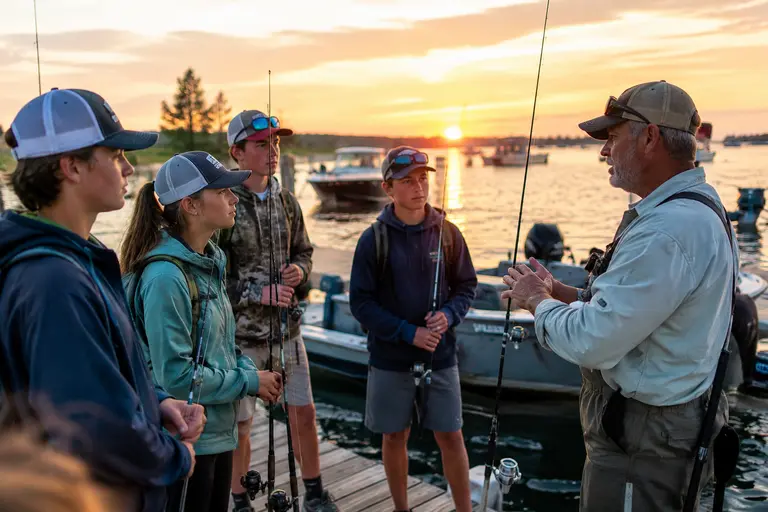
Boat Time, Fish Care, And Slot Discipline
The Redfish Cup Championship is built around small margins. A team has to locate legal fish, avoid oversize heartbreakers, protect the fish in the livewell, and return with enough time for weigh-in. Slot discipline is not a side detail; it is the rule structure that shapes every cast. The most productive water is not always the best tournament water if it produces too many fish outside the legal range.
That is a lesson local anglers can use without copying tournament routes. Recreational fishermen still need to follow Texas rules, watch weather, respect private shorelines, and handle redfish responsibly. A televised or public tournament can show patterns, but everyday fishing decisions should be scaled to safe boat operation and legal harvest.
Redfish Cup Championship In Aransas Bay
The most useful way to read this Redfish Cup Championship is as a test of repeatability. Aransas Bay and the connected coastal waters offer enough room for teams to separate, but the two-fish daily format punishes wasted time. The verified details point to a clean competitive setup: November 6-8, 2026; 6:45 a.m. CT takeoffs; 2:45 p.m. CT weigh-ins; 10 teams; three days of cumulative weight; and a $75,000 first-place prize.
From the local side, the event gives Port Aransas a focused fishing showcase at a known waterfront host. From the angling side, it asks whether teams can repeat upper-slot quality across changing water. That is the balance that makes this championship worth studying before the first boat leaves Ferries Wharf on November 6, 2026.