

The Lake Murray BFL All-American is arriving at exactly the kind of moment that can separate good anglers from complete ones. A late-May tournament on a clear South Carolina herring lake is not just a test of who can find bass; it is a test of who can manage timing, pressure, electronics limits, and the uncomfortable gap between seeing fish and making them bite.
That is why the 43rd annual Phoenix Bass Fishing League All-American at Lake Murray has more appeal than a standard grassroots championship. The event brings a $100,000 boater prize, a REDCREST invitation, a $50,000 co-angler prize, and a lake that could turn the final leaderboard into a referendum on modern offshore bass fishing.
Lake Murray BFL All-American Could Become a Timing Tournament
Lake Murray is dangerous because it gives anglers too many believable options. A competitor can chase schooling fish, run cane piles, check points, lean on grass, work docks, or slide toward dirtier water if the clean-water bite gets crowded. That variety sounds generous, but in a three-day championship it can become a trap.
The biggest mistake may be treating Lake Murray as a simple “find them and catch them” tournament. Postspawn bass on a blueback herring lake often behave like moving targets. They may show themselves in short windows, roam with bait, suspend around offshore cover, or refuse presentations that look almost right but arrive at the wrong angle.
That makes timing the central issue. An angler who reaches the right cane pile too early may see nothing. Arrive too late, and the school may already have fed. On a fishery where clear water rewards distance and precision, the winner may be the angler who understands that location is not enough.
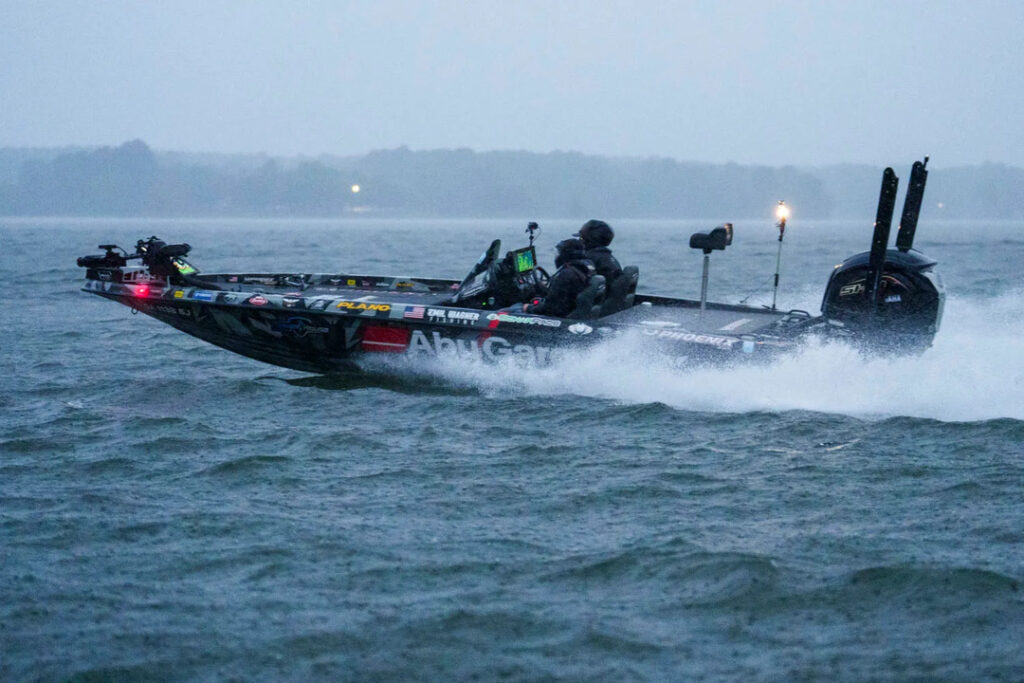
The Offshore Bite Has the Most Obvious Ceiling
The strongest pre-tournament storyline points offshore. Lake Murray has the bait, clarity, and structure to create a high-end postspawn event, especially if blueback herring movement pulls better fish toward points, cane, and deeper staging areas.
That is the version of the tournament most fans will want to see: long casts, wolf-pack bass, topwater explosions, and anglers waiting on the right school to fire. The official Lake Murray All-American event preview frames the week around strong weights and an offshore showdown, which is exactly the kind of setup that can create both big bags and brutal misses.
The risk is that the best-looking offshore pattern may also be the most crowded and the most fragile. Grassroots championships do not lack local knowledge anymore. The field will have enough anglers who understand herring behavior, enough who can read electronics, and enough who know that one right group of fish can carry a day.
That puts a premium on decision-making after the first bite. Does an angler stay and wait for another school to rise, or leave before the window closes elsewhere? Does he protect a productive area or burn it down while the bite is active? Those decisions may decide more than bait selection.
Electronics Limits May Make Old-School Instinct Matter Again
The forward-facing sonar limitation may be the wrinkle that keeps this tournament from becoming a pure technology contest. Anglers can still use modern tools, but they cannot simply stare at a screen all day and let electronics dictate every cast.
That creates a better competitive balance. The most dangerous anglers will be the ones who use electronics to confirm a pattern without becoming dependent on them. They will need to understand where herring should move, where bass should position, how wind affects schooling activity, and when to stop looking and start fishing.
That is where Lake Murray becomes fascinating. A limited sonar window does not eliminate the advantage of technology; it raises the value of planning. Anglers who waste their best electronics period idling unproductive water may never recover. Anglers who already have a strong milk run can use that window like a scalpel.
The tournament could reward hybrid fishing intelligence modern electronics blended with traditional boat positioning, casting discipline, and seasonal judgment.
The Lake Murray Paths Do Not All Carry the Same Risk
A comparison table helps explain why this event could split the field into very different strategies.
| Tournament Path | Upside | Risk | Best Fit |
|---|---|---|---|
| Offshore cane and points | Biggest weight potential if herring schools fire | Crowded, timing-sensitive, hard to repeat | Anglers confident in long casts and fish movement |
| Grass pattern | Healthier fish and less obvious pressure | Scattered bass and slower daily adjustments | Anglers willing to commit and grind |
| Docks and shallow cover | Can produce steady bites if offshore fish stall | May lack winning ceiling over three days | Anglers protecting limits and avoiding dead water |
| Dirtier river water | Could avoid clean-water pressure | May not produce enough quality | Anglers needing a contrarian lane |
| Mixed rotation | Flexible and adaptable | Can become unfocused quickly | Anglers with strong practice discipline |
The table shows the real problem. The safest pattern may not win, and the highest-ceiling pattern may collapse without warning. That is the tension that makes this event so strong editorially.
The champion probably will not be the angler who samples every option. It will more likely be the angler who chooses a lane early enough to build confidence, then adjusts without panicking when Lake Murray changes by the hour.
The Money Raises the Pressure Beyond a Normal Grassroots Event
The All-American matters because it sits at the intersection of grassroots credibility and career acceleration. A $100,000 boater prize is serious by itself. Add the REDCREST invitation, and the event becomes more than a payday. It becomes a bridge from regional success to a larger professional stage.
That is why this week should not be treated like a small event with a bigger trophy. The All-American roster for Lake Murray includes anglers trying to convert regional performance into a defining opportunity. For some, this may be the biggest competitive platform they have had. For others, it may be the next step toward a full-time national profile.
Bass fishing has been leaning harder into big moments, big checks, and personalities who can pull casual readers into the sport. That same momentum showed up in a $200,000 finish that proved one fish can change everything, and the All-American carries a different but related kind of pressure. It is not only about catching bass. It is about converting one week into career movement.
The best anglers will have to fish through that pressure without letting it distort their choices. A risky run, a stubborn pattern, or one extra hour waiting on a school can look brilliant if it works and reckless if it does not.
The Real Signal Will Come From How the Winner Adapts
The detail to monitor is not simply whether the winner fishes offshore, shallow, grass, or cane. The better question is how quickly the winner changes pace when the first plan stops producing.
If Lake Murray turns into a pure offshore shootout, expect precision to matter as much as fish-finding. Long casts, clean angles, quiet boat control, and timing around schooling activity could become the difference between a limit and a missed window. If grass or shallow cover becomes more relevant, the event could shift toward patience and pattern expansion.
Weather and fishing pressure will matter, but the bigger variable is decision fatigue. Three-day tournaments expose anglers who keep chasing yesterday’s clues. The field will know enough to find bass. The winner must know when those fish are no longer the right fish.
That is why the most valuable skill this week may be controlled adjustment. Not panic. Not stubbornness. Adjustment with discipline.
Lake Murray Is Set Up to Reward the Complete Angler
The Lake Murray BFL All-American has the ingredients of a standout tournament: meaningful money, a REDCREST path, a strong field, and a lake capable of producing both offshore drama and strategic confusion. It is the kind of event where the winning pattern may sound obvious afterward but feel painfully uncertain in real time.
That uncertainty is the point. Lake Murray may show who can find postspawn bass, but it will more importantly show who can read changing fish behavior under championship pressure. If the event becomes the offshore shootout it appears ready to become, the winner will not just be the angler with the best waypoint list. It will be the one who knows when to trust it, when to leave it, and when one more cast is worth the risk.