

The Spellicy St. Lawrence result on August 1, 2026, was not a runaway. Jesse Spellicy won the Toyota Series Presented by Phoenix Boats Northern Division event on the St. Lawrence River with 64 pounds, 13 ounces across three days, closing with his best limit of the week. The event ran July 30 through August 1, 2026, according to the event listing, and the final-day details show a win built on small adjustments rather than one broad pattern.
Why The Spellicy St. Lawrence Result Was Narrow
Spellicy St. Lawrence Context
Spellicy’s final margin was only 11 ounces. Major League Fishing reported that he finished at 64-13, while runner-up Louis Monetti ended at 64-2 and Clay Reece placed third at 63-4; Spellicy earned $73,689 and his first Toyota Series title in the process MLF recap. That gap matters because it frames the win correctly. This was not a case of one angler finding an untouched school and coasting. It was a top group separated by a few bites, where decision timing carried real weight.
The three-day progression also explains why the result was earned in stages. Spellicy started around the 20-pound mark on Day 1 and sat 14th after seven anglers topped 21 pounds. On Day 2, he caught 21 pounds, 1 ounce and moved to fifth. On August 1, he delivered 23 pounds, 6 ounces, his heaviest bag of the tournament. That arc is useful for tournament analysis because it shows a pattern improving under pressure, not fading as the field adjusted.
A Local Edge That Still Had To Be Converted
Spellicy is from Gouverneur, New York, roughly 40 minutes east of the St. Lawrence River. The research record also notes six Top-10 finishes in nine events on the St. Lawrence system across Phoenix Bass Fishing League and Toyota Series competition before this win. Those details support regional familiarity, but they do not reduce the result to home-water advantage. Familiarity helps an angler understand how current, depth, and smallmouth behavior may connect. It still has to be converted under tournament rules, limited hours, fog delays, and a leaderboard that punishes one slow decision.
That is where the local community angle becomes practical rather than sentimental. For anglers from northern New York and nearby river towns, the win showed how time on the St. Lawrence system can matter in a national-level event. It also gave local fishermen a clear, evidence-backed model: winning smallmouth fishing on this river can come from reading subtle current breaks, not just from running obvious community spots. For those interested in related outdoor coverage, AP Levante offers another point of reference within the same publishing network.
The Pattern Started With Depth And Current
Roadbeds, Deep Structure, And The Hedge
On Day 1, Spellicy split his attention between shallow roadbeds and deeper structure in 25 to 35 feet of water. That was a hedge, and on the St. Lawrence River it made sense. Shallow fish can produce fast weight when conditions line up, but deep smallmouth often offer steadier access when current and visibility help an angler control presentations.
The Spellicy St. Lawrence win became clearer on Day 2. The event was affected by an Iroquois Dam closure and a four-hour fog delay, and the day brought overcast conditions. Instead of forcing the shallow bite, Spellicy stayed with deeper water and caught 21-1. The supported facts do not prove that every shallow pattern failed, but they do show that his deeper choice moved him from 14th into the top five.
Current Seams Were The Real Target
His best areas were described as subtle current breaks in 25 to 35 feet, especially near spawning zones but still in swift water. That combination is worth slowing down. A current break does not have to be dramatic to matter. On a river smallmouth fishery, a minor seam can give bass a feeding lane and a rest point at the same time. If bait or fish movement intersects that seam, a small piece of structure can become more valuable than a larger, easier-to-see target.
That reading also explains why Spellicy varied baits until fish showed themselves. The supported record identifies the final tool, but the process was not simply casting one bait in random deep water. It was locating fish in current, holding position, and letting the presentation work in a controlled lane.
The Drop-Shot Was Classic, Not Complicated
The Final-Day Rig
Spellicy’s main final-day setup was a drop-shot rig with a brown back 3.6-inch Berkley PowerBait MaxScent Flat Worm, a No. 2 hook, and either a 3/8-ounce or 1/2-ounce weight. Nothing in that list is exotic. The lesson is not that the bait was unknown. The lesson is that a standard smallmouth rig can still win when paired with the right depth, current seam, and boat control.
The weight choices matter. In swift water, a drop-shot has to stay connected to bottom or the target zone long enough for the angler to read the bait. Too little weight can let the rig wash out of the seam. Too much can deaden the presentation or hang in the wrong places. The documented 3/8- and 1/2-ounce range fits a river situation where control can be as important as finesse.
What The Rig Says About Tournament Smallmouth
Tournament smallmouth fishing often rewards restraint. The drop-shot is not loud, and it rarely wins because it covers water quickly. It wins when the angler knows where a bass is positioned and can keep a small bait in the strike window. Spellicy’s final day fits that profile. His biggest bag came when the pattern had narrowed, not when he was sampling the most water.
| Element | Documented Detail | Competitive Meaning |
|---|---|---|
| Primary bait | 3.6-inch brown back Berkley PowerBait MaxScent Flat Worm | Small profile suited to pressured smallmouth |
| Hook | No. 2 | Finesse presentation with a compact bait |
| Weight | 3/8 or 1/2 ounce | Control in deeper current |
| Zone | 25 to 35 feet | Repeatable depth range |
| Target | Subtle current breaks | Efficiency under tournament pressure |
Electronics Helped, But Position Finished The Job
LiveScope As A Confirmation Tool
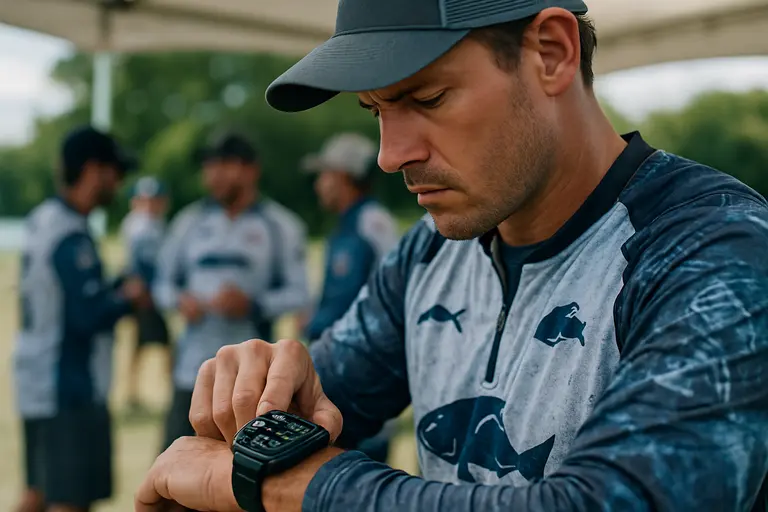
The research record identifies LiveScope sonar as a key part of Spellicy’s approach. He used it to find fish in current seams in swift water, then relied on position control and finesse presentations. That distinction matters. Electronics can show where fish are, but in current, the boat still has to be held at an angle that lets the bait enter the zone naturally.
Spot-Lock was part of that process. Once fish showed themselves, holding in place gave Spellicy a way to make repeated casts without drifting off the seam. On a river, that can be the difference between fishing the fish and fishing nearby water that only looks similar. The Spellicy St. Lawrence pattern was modern, but it still rested on an older tournament skill: boat control under moving-water pressure.
Why Overcast Conditions Changed The Choice
Many competitors fished shallow during the early part of the event, while Spellicy leaned deeper when the shortened Day 2 and overcast skies worked against shallow fish. The available sources do not give enough detail to rank every shallow decision across the field. What they do show is that Spellicy’s choice produced measurable movement on the standings sheet. He gained ground on the day most affected by lost time and conditions.
That is a tournament lesson with community reach. Local anglers on the St. Lawrence often face the same basic question without the weigh-in pressure: stay shallow because the water has history, or move deeper because the day’s conditions make deep current more dependable. Spellicy’s win does not answer that question for every trip, but it gives a specific July 30-August 1, 2026 case study.
What The Win Adds To St. Lawrence Tournament History
A Close Finish With A Clear Smallmouth Message
As a tournament history marker, this event belongs with other St. Lawrence results that show how smallmouth fishing can look simple on paper and demanding on the water. A 64-13 total is easy to admire after the fact. The more useful record is how it was built: around 20 pounds to stay alive, 21-1 to climb, and 23-6 to close.
For readers comparing river smallmouth events, the earlier St. Lawrence smallmouth preview framed the venue as one that can punish assumptions. Spellicy’s result supported that warning after the event. The river produced heavy bags, but the winner still needed specific current seams, a controlled deep-water plan, and a final-day upgrade.
Measured Impact Beyond The Weigh-In
The confirmed facts do not include attendance totals, hotel numbers, or business revenue, so any claim about direct economic impact would go beyond the record. What can be said is narrower and more useful: a regional angler from Gouverneur won a Toyota Series event on a nearby system, and the technique record gives the local fishing community a documented reference point for future St. Lawrence smallmouth decisions. For related outdoor coverage within the same publishing network, AP Levante offers another point of reference.
Spellicy St. Lawrence Techniques
The Repeatable Lesson
The Spellicy St. Lawrence lesson is not that one bait wins the river. It is that the winning bait made sense because the location, depth, current, electronics, and boat position all supported it. The drop-shot was the finishing tool. The real pattern was the decision to trust deeper current seams while others spent more time shallow.
That is why this win holds up as more than a results note. It shows how a local angler used regional experience without relying on vague familiarity. He responded to a fog-shortened tournament day, stayed with the depth range that fit his read, used LiveScope to identify fish, held position, and closed with 23-6. In a tournament decided by 11 ounces, that chain of decisions was the difference.