

The Dave Lefebre Heavy Hitters win at Orange Lake was not just another tournament result. It was the rare bass fishing finish where money, timing, career pressure, and one giant Florida largemouth all collided in the final act.
Lefebre left Orange Lake with the kind of story tournament fishing keeps chasing: a $100,000 event win, a $100,000 Big Bass bonus, and a final-round performance that turned a difficult week into one of the most memorable moments of his career. The result mattered because it showed how quickly a high-stakes bass tournament can swing when the format rewards both consistency and one enormous bite.
The Dave Lefebre Heavy Hitters Win Was Built for Drama
Heavy Hitters is designed to make big bass feel bigger. A normal tournament already carries pressure, but this format adds another layer because the largest single fish can be nearly as valuable as the overall win. That changes the emotional math for every angler on the water.
Lefebre finished the Championship Round with 31 pounds, 3 ounces on seven scorable bass, enough to beat Ron Nelson by 3 pounds, 12 ounces. But the defining fish was the 9-pound, 3-ounce largemouth that also secured the Big Bass bonus. That one catch turned a strong victory into a $200,000 payday.
The full event arc is captured in Major League Fishing’s Heavy Hitters recap, but the bigger takeaway is clear: this was not a runaway built on nonstop action. It was a tense, narrow, high-value finish where one decision, one cast, and one fish changed the meaning of the week.
That is why the story has wider appeal than a standard tournament headline. It was pressure with a payout.
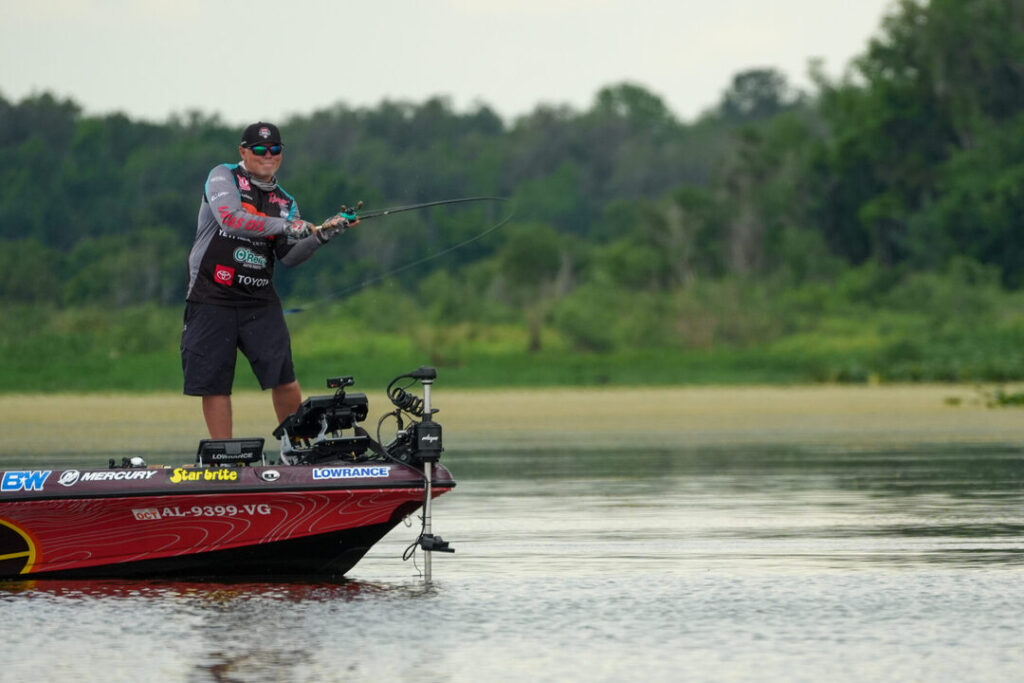
Orange Lake Rewarded Patience More Than Pure Speed
Florida bass fishing often punishes anglers who move too fast. Orange Lake made that point again. Lefebre’s path to the win was not built on running every shoreline, chasing every rumor, or forcing a pattern that looked good in practice. The winning version of his week came when he narrowed down productive water and trusted the details.
His key area involved ditches near the mouth of a bay, with hydrilla and deeper access shaping the setup. That kind of structure can reload when fish are moving, but it also demands patience. A spot may be right before the fish prove it. That is the uncomfortable part of tournament fishing: the best water does not always look best on the scoreboard early.
Lefebre’s adjustments told the story. He moved away from the bait and line setup that had carried him through earlier bites and refined his presentation around the hydrilla. Slowing down, feathering the bait, using shorter pitches, and letting wind help the drift all became part of the winning equation.
The lesson is not simply that he found the right lure. It is that he found the right pace. On Orange Lake, patience became strategy.
Why the $200,000 Finish Hit Harder Than a Normal Win
The money matters here because it changed the stakes. A $100,000 tournament title is already significant. Adding another $100,000 for Big Bass created a storyline that felt almost too clean: the angler who won the event also caught the fish that carried the biggest single-bite reward.
That is what made Lefebre’s win feel different. In most tournaments, the audience follows total weight. Heavy Hitters forces fans to track two races at once. An angler can be chasing the title, protecting position, and still know that one giant bass could rewrite the financial outcome.
Here is the clean comparison that explains why this finish had such strong reader appeal:
| Story Element | Standard Tournament Win | Lefebre at Orange Lake |
|---|---|---|
| Main pressure | Total weight across the event | Total weight plus Big Bass bonus |
| Defining moment | Building a winning limit | Catching a 9-3 largemouth late |
| Reader appeal | Who finished first | How one fish changed everything |
| Tactical lesson | Find enough quality bites | Stay close until the biggest bite appears |
| Emotional hook | Trophy chase | Career moment with major money attached |
The key takeaway is that Heavy Hitters turns tournament bass fishing into a more layered spectacle. It gives serious anglers tactical depth and casual fans a simpler reason to care: one fish can carry massive consequences.
That is also why stories like this help push bass fishing toward a broader audience. Tournament fishing is increasingly being packaged around personalities, livestream drama, big payouts, and crossover attention. That same mainstream pull is visible when figures outside the traditional fishing lane bring new eyes to the sport, including the growing conversation around bass fishing’s mainstream spotlight.
Lefebre’s Career Context Makes the Win Feel Personal
The result carries extra weight because Lefebre has not been framed recently as the obvious dominant force on the Bass Pro Tour. That makes the Orange Lake win feel less like another chapter in a predictable run and more like a veteran finding the exact right moment to remind everyone what experience still does.
He had to fight just to stay alive in the event. He made a late qualifying push, survived the cut pressure, reached the Championship Round, and then converted when the biggest moment arrived. That sequence matters because it removes the idea that the win was just about one giant fish.
The 9-3 largemouth gave the finish its headline. The days before it gave the finish its credibility.
There is a difference between getting lucky and staying close enough for luck to matter. Lefebre’s week showed the second version. He had to keep himself in position long enough for Orange Lake to finally hand him the fish that separated the entire event.
That is the kind of outcome readers understand even if they do not follow every tournament detail. A veteran angler, a high-pressure format, a late giant, and a payout big enough to change the emotional tone of the season that is a real sports story, not just a fishing result.
The Format Is Becoming Part of the Star Power
Heavy Hitters works because it is easy to understand. The biggest names chase the biggest fish, and the biggest fish can be worth serious money. That gives the format a built-in narrative engine.
Bass fishing sometimes struggles with casual fans because the details can feel technical: scorable bass rules, cut lines, fish management, presentation choices, grass conditions, and forward-facing electronics debates. Heavy Hitters cuts through some of that complexity. Big fish are universally understandable.
That does not mean the format is simple for anglers. The opposite is true. It forces them to weigh risk differently. Should they chase numbers or swing for fewer, bigger bites? Should they protect a productive area or hunt for a single bonus fish? Should they fish the safest pattern or the highest-upside water?
Those choices make Heavy Hitters valuable editorially because the format creates tension without needing artificial hype. The results page for Orange Lake Heavy Hitters shows the competitive spread, but the drama came from how close the top anglers remained to both the win and the bonus.
That is the pressure point the sport should lean into more often: simple stakes, complex decisions.
The Next Signal Is Whether Big-Money Bass Fishing Keeps Expanding
The most important thing to monitor after Lefebre’s Orange Lake win is not only where he goes next. It is whether more events continue to emphasize the elements that made this one so compelling: live drama, big-fish bonuses, recognizable personalities, and payouts that make casual fans stop scrolling.
Tournament fishing has always had technical credibility. What it needs more often is emotional clarity. Heavy Hitters delivered that by making the audience understand exactly what was on the line every time a bigger bass appeared on the screen.
That does not mean every event should copy the same format. Too much bonus-driven structure could reduce the value of full-tournament consistency. But used correctly, big-bass money adds a sharp edge. It gives fans a second race to follow and gives anglers another way to create defining moments.
For Orange Lake, that edge worked. Lefebre did not just win; he produced the kind of finish that can travel beyond the usual bass fishing audience.
The Dave Lefebre Heavy Hitters story matters because it showed the sport at its most accessible and most intense. One angler stayed alive, solved enough of the lake, landed the fish that mattered most, and turned a final round into a $200,000 moment. If bass fishing wants more mainstream attention, this is the kind of ending that does the work.