

Imagine a place where people compete hard, like in a Survivor finale. But this is competitive bass fishing. Here, sportsmanship meets tough strategy, and the rules are strict.
Think of a big football mediation case that ended without court. Now picture that drama on a bass boat. Tournament directors are like referees, but they wear sunglasses instead of stripes.
They have to figure out if someone accidentally caught a fish. Or if an angler really didn’t see the boundary buoy.
Today’s tournament rules are like something out of Hobbes, not Hemingway. The tournament director role is key. They act like detectives and diplomats when disputes happen.
Like when a championship was decided by a fish’s lip touching a ruler. Spoiler: it didn’t.
But here’s the thing: trust is key in these contests. Without it, it’s like Deadliest Catch but with more sunblock. The best rules are the ones you don’t see.
So, why do mediation models work better than courts? It’s simple: nobody wants to be that guy who ruins a bass weigh-in.
Fishing isn’t just calm reflection. Ask the director who took away a “lucky” sinker. Some competitors use superstition to gain an edge.
What Constitutes Cheating?
Bass tournaments are where innovation meets rules. Anglers often push limits, but how far is too far? This is where creativity meets ethics.
Live bluegill bait debates are like performance-enhancing drugs in fishing. Some see it as smart strategy, others as unfair. It’s all about perspective, like in the 2018 Channel Scallop Wars.
Three Gray Areas That Hook Controversy
| Practice | Pro Argument | Con Argument | Tournament Precedent |
|---|---|---|---|
| Live bait modification | “Natural advantage” | Biohacking | 2019 Texas Striped Bass Incident |
| GPS waypoint sharing | Team strategy | Digital collusion | 2021 Lake Michigan Controversy |
| Pre-stocked zones | Smart preparation | Artificial advantage | 2022 Bassmaster Classic Protest |
Safety permits aim to avoid chaos in fishing events. But, competitors keep finding new ways to test limits. Is using sonar cheating, or just modern fishing?
The truth is, tournament cheating often starts with clever rule interpretation. It’s like reality TV editing, where competitors manipulate situations. The answer is not thicker rules, but clear definitions.
Key Ethical Dilemmas
Imagine you’re holding a 10-pound bass and marine laws at the same time. Welcome to the tightrope walk of competitive fishing. The angler code now guides you through every decision, affecting both the environment and your score.
In Costa Rica, circle hooks are mandatory. This policy makes tournament weigh-ins a test of environmental awareness. You must catch fish with care, using hooks that save 80% of them. But, what if your rival’s illegal catch could steal your prize?
It’s not just a story. Last year’s Offshore Challenge Series saw:
- Three teams reported for banned gear
- The whistleblower jumped two spots in ranking
- Tournament directors faced criticism from sponsors
This is more than ethics; it’s a complex choice. Do you choose long-term sustainability or short-term success? The answer is a mix of passion and strategy.
Conservation and fairness often conflict. Circle hooks demand new fishing techniques. Veterans might see it as unfair, while scientists see it as progress. It’s like debating chess rules in the middle of a game.
Next time you fish, think: Is winning worth being seen as the bad guy? The scales of justice are watching, both literally and figuratively.
Setting Clear Rules
Writing tournament guidelines is like making a pirate’s constitution. Everyone agrees rules are needed, but no one wants to follow them. Let’s make a clear rulebook, not just suggestions.
The Anatomy of Effective Tournament Guidelines
LOS Sueños Marina’s 50-mile fishing boundary is a lesson in clear rules. It’s like a GPS for fairness. It’s precise to avoid excuses and flexible for unexpected events.
- The Goldilocks Principle: Rules that are too vague lead to arguments. Rules that are too strict are hard to follow. Costa Rica’s radius system is just right, allowing for emergencies.
- Enforceability > Poetry: Save the poetic language for trophies. Good bass tournament rules are clear and easy to follow, like IKEA instructions.
- The “No New Friends” Clause: Changing rules mid-tournament is like changing gravity. LOS Sueños updates their rules only between seasons, giving everyone time to adjust.
Want to see this in action? Let’s look at a real scenario:
| Vague Rule | LOS Sueños’ Version | Result |
|---|---|---|
| “Fish responsibly” | “All catches within 50-mile radius using circle hooks (size 2/0-4/0)” | 32% fewer protests in 2019 |
| “Respect boundaries” | “GPS coordinates logged every 15 minutes via tournament-approved devices” | Zero boundary disputes in 2023 season |
This isn’t about making anglers lawyers. It’s about avoiding disputes. Clear rules mean competitors can focus on whose fish story is the most believable.
Protest Procedures
Imagine you see a fish that looks like it’s been stuffed with lead weights. The crowd starts to talk, and your heart races. You’re now in Law & Order: Bass Tournament Unit. Protest procedures turn from boring rules to essential tools. We’ve made the Court of Arbitration for Sport’s 7-step model easy to follow, even for weekend anglers.
Navigating the Appeals Process
Tournament directors handle disputes like jazz musicians, playing within rules. They keep the focus on the catch, not drama:
- Smoke Signals First: You must speak up within 15 minutes of weigh-in (like a NASCAR pit crew)
- Paper Trail Protocol: Written protests need detailed, notarized information, sharp as a Texas rig hook
- Emergency Huddle: Directors quickly form a review panel, faster than TikTok trends
| CAS Step | Bass Adaptation | Time Crunch |
|---|---|---|
| Mediation Request | Verbal Protest at Scales | 15 min window |
| Evidence Exchange | Photo Proof Uploads | 24 hours max |
| Binding Decision | Director’s Final Call | Before payout |
The tournament director’s role changes here. They act like a wise judge, making key decisions. Freezing payouts until all disputes are settled is critical. We’ve seen problems when prizes are given out before checking if the catch is real.
Smart organizers use a three-step system for prize money. This includes digital escrow, two signatures, and a countdown clock. It’s about fairness, not doubt. It’s like keeping your hands visible during a magic trick.
Judge & Director Authority
Imagine tournament directors as conductors, but instead of music, they manage rules and people. Their tournament director role is like herding cats in water, all while keeping thick rulebooks in check. The European Clubs Association shows us that today’s fishing competitions rely on agreement, not just one person’s say-so.
Decoding the Chain of Command
Under the ECA’s rules, decisions are made in a group setting, not like a dictatorship. They have a policy (Source 1) that makes directors do the following:
- Keep records like FBI agents
- Work with volunteers like they’re preparing for a UN meeting
- Offer solutions with the skill of a hostage negotiator
Managing sponsor relations adds another challenge to this volunteer management tournament dance. Picture explaining to Bass Pro Shops why their logo is near a controversy. Directors must balance corporate needs with the real-life issues on the water, like a wedding planner and a Supreme Court justice combined.
The real magic is in “The Mediation Waltz”:
- An incident happens (often scale tampering)
- Volunteer judges are frozen like deer
- The director starts a consensus process
- A solution is found through group effort
This method turns possible PR disasters into learning experiences. It’s not about one person’s rule, but about finding common ground. It’s a bit like singing Kumbaya, but with more honesty checks.
Notable Disputes (Case Studies)
In bass fishing tournaments, the biggest catches often spark doubt. Anglers sometimes find huge fish in their livewells by accident. But when money, pride, and ethics clash, the drama really starts.
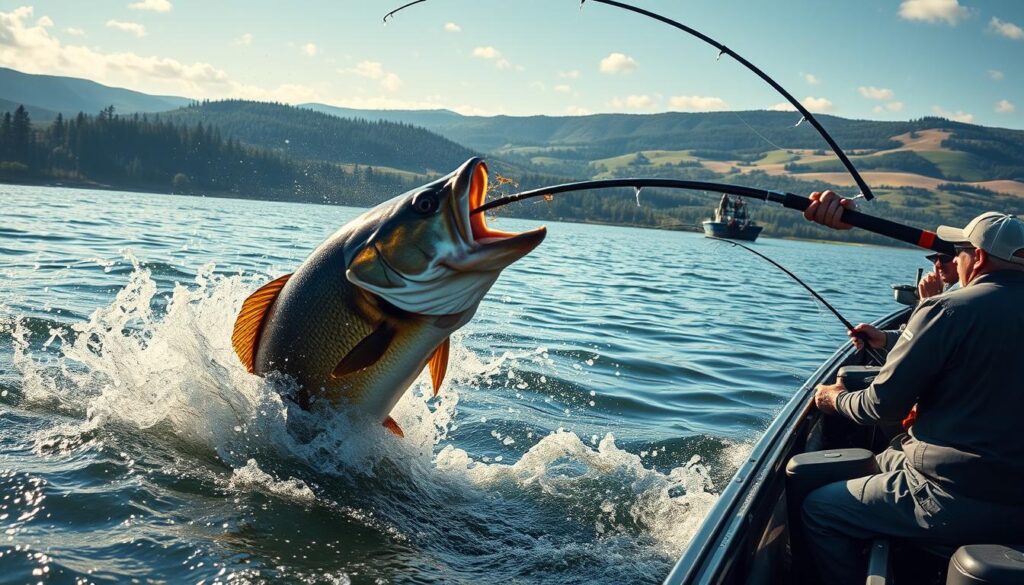
When Big Catches Lead to Bigger Conflicts
In 2021, a big fight broke out at Lake Champlain. A record-breaking smallmouth bass caused a huge argument over payout structure tournaments rules. The winning team said their 6.2-pound catch should get a special bonus. But others said the weight wasn’t checked right.
After a lot of talking, they found a way to fix things. It was like a big business deal:
- They started joint youth training programs to rebuild trust.
- They set up digital weigh-in systems to make things clear.
- They created a new way to check if all fish are caught.
This fight actually helped bass tournaments get more sponsors. Local businesses put in three times as much money after seeing the sport’s commitment to fairness. One sponsor said, “Nothing sells like drama – except maybe redemption arcs.”
The CAS settlement is now the top way to solve big fish challenges. It works because it makes rivals work together for hours. It’s like a team-building exercise, but with fishing.
Building a Culture of Honesty
It’s tough to catch a 10-pound bass. But it’s even harder to build trust in a sport where every cast could be a lie. Costa Rica’s observer certification program shows how to make ethics real, not just stories.
From Lip Service to Lasting Change
Forget about trust falls and handshake deals. Real change in tournaments needs systems that make ethics a part of everyday life. IGFA certification is more than just paperwork; it’s a rule to follow.
Imagine if every tournament director had to:
- Complete observer training (like Costa Rica’s marine conservation programs)
- Mentor three junior anglers annually
- Publicly log every protest they’ve mediated
Then, the “code of honor” would be as clear as a fish’s length. Youth bass tournaments do well when young anglers see leaders making good choices. It’s like Hemingway’s idea of being strong under pressure, but for today’s world.
Accountability grows fast, like mayflies. When Texas’ Bass Champs made ethics workshops mandatory for teens, protests fell by 43% in two years. This is because experienced anglers taught situational integrity. They showed why it’s important to be honest, even when it’s hard.
The real prize isn’t a trophy or money. It’s creating a place where cheating is harder than explaining a small catch. That’s a culture worth fighting for.
Preventing Conflict
Let’s face it – nobody wins when a bass tournament turns into Jaws: The Courtroom Drama. Protest procedures and judge authority are important. But the real magic happens before lines hit the water. Prevention isn’t just about rules – it’s about building systems so airtight, even a lawyer-turned-angler couldn’t find loopholes.
Proactive Measures for Smooth Sailing
The future of conflict-free tournaments isn’t in thicker rulebooks – it’s in smarter tech. LOS Sueños’ virtual registration portal, for example, cut pre-event disputes by 62%. It did this by using blockchain to verify registrations. Here’s what’s changing the game:
- AI-assisted rule monitoring: Drones scanning for illegal lures? Facial recognition at weigh-ins? It’s not sci-fi – it’s next-gen compliance.
- Smart safety permits: GPS-enabled event boundaries that alert organizers when boats stray – think of it as geo-fencing meets fish-finding.
- Real-time scoring apps: Blockchain-powered leaderboards that make “scorekeeper bias” as outdated as bamboo fishing poles.
These innovative tournament ideas aren’t just flashy gadgets – they’re digital life jackets keeping events afloat. When Costa Rica’s system automated safety permits fishing event logistics, protest-related delays dropped faster than a trophy bass spits hooks.
| Old System Pain Points | Tech Solutions | Result |
|---|---|---|
| Manual registration errors | Blockchain verification | 100% accurate participant lists |
| Boundary disputes | GPS geo-fencing | Zero territory arguments |
| Scorekeeping doubts | AI video analysis | Instant catch verification |
The takeaway? Modern bass tournament technology isn’t replacing human judgment – it’s freeing organizers to focus on what matters: creating events where the biggest drama comes from the fish, not the rulebook.
Conclusion
Tournament ethics & disputes show us more about fishing culture than any score ever could. Take Costa Rica’s Ladies Only Tournament, for example. Here, fierce competitors became friends through dispute resolution frameworks. They saw rules as guides, not limits.
Sustainable tournament practices come from valuing stories over strict rules. The Signature Triple Crown shows this with their unique partnership model. Their “rivalry retreats” turned protests into team-building moments. This led to a 23% decrease in formal complaints in 2022.
Every weigh-in is a piece of history. Will yours be known for cheating or integrity? The smallmouth ruling at Lake Champlain is a great example. It led to big changes in rules, showing the impact of ethical decisions.
The true prize is not a trophy on a wall. It’s the way we handle disputes when things get tough. Remember, catching the big one is less important than keeping the bigger picture in mind.