

As of November 6, 2026, the No-Information Rule had already moved from policy announcement to practical tournament administration. The December 4, 2025 B.A.S.S. update and the September 29, 2025 NPFL amendment did not create the same calendar, but both changes clarified how professional bass anglers could gather information, practice, and enter other events during the 2026 season.
What The No-Information Rule Changed In B.A.S.S.
On December 4, 2025, B.A.S.S. announced an updated policy for the 2026 season covering the Elite Series, Bassmaster Classic, Elite Qualifiers, and Opens, according to the official B.A.S.S. announcement. The change mattered because it separated two questions that often get treated as one: when an angler may be on the water, and when an angler may obtain competitive information.
The revised B.A.S.S. structure began the information restriction either when the Elite Series schedule was announced or when an angler became definitively aware of a tournament location, whichever happened first. From that point, competitors were barred from purchasing or exchanging goods or services for information or waypoints. Publicly available information remained allowed.
No-Information Rule Triggers
The No-Information Rule trigger was tied to notice, not merely to the final month before competition. That distinction gave the rule reach as soon as venues were known, while still leaving room for anglers to use public material. In tournament history terms, that was a move toward defining unfair information by access and transaction, not simply by geography.
The earlier 2025 approach, announced after the 2025 Elite Series schedule release, had started immediately on September 8, 2024 and barred Elite anglers from using any non-public source of venue information. The 2026 update kept Elite Qualifiers within the restriction once venues were released, but it changed the practical shape of the rule by drawing a clearer line around paid or exchanged intelligence after schedules became known.
What Stayed Off-Limits
The traditional 28-day off-limits period stayed in place for B.A.S.S. events. During the 28 days immediately before a tournament began, competitors could not be on tournament waters and could receive information only from other registered competitors for that specific event. Outside that 28-day window, anglers could fish tournament waters with family or friends, or in other tournaments, provided they were not purchasing information or exchanging services for waypoints or competitive insight.
The Bass Pro Shops Bassmaster Classic presented by Under Armour had a different start point for the full rule. For that championship, the full scope of the policy took effect on January 1, 2026, rather than only 28 days before the event. That date gave the Classic a longer information-control window than the standard final-month restriction.
Why The 2026 Shift Mattered To Anglers And Hosts
The B.A.S.S. update was developed with the Association of Bass Professionals, a panel of Elite Series anglers elected by the field. B.A.S.S. reported that a 2025 survey of pros found 75% preferred a 28-day full-scope off-limits window, while most also supported banning the purchase or exchange of information once schedules were announced. That combination helps explain the hybrid rule: broad protection against paid intelligence, paired with a preserved final off-limits period.
The Competitive Balance Question
The rule did not say that every conversation or every public resource was improper. It targeted purchased information, exchanged services, waypoints, and non-public competitive advantage within defined windows. For a field that includes established professionals, qualifiers, and anglers managing sponsor, travel, and practice calendars, that distinction was significant.
From a historian’s view of tournament fishing, the policy also showed how modern rules have had to account for waypoints as a form of competitive property. Older off-limits debates often centered on physical presence. By 2026, the governing issue also included whether information could be acquired without a boat ever launching.
Community And Event Impact
The local impact is best described without assigning unverified dollar figures. The policy affected how anglers could schedule practice, family fishing, and participation in other tournaments outside the final off-limits period. For host communities, that meant the rule did not automatically erase all angler activity on a lake for months, but it did restrict paid information channels after the schedule or venue was known.
That distinction matters to marinas, tackle shops, local clubs, and volunteer tournament staffs because the rule created a clearer separation between ordinary public participation and private competitive intelligence. The same local-impact lens used across related community publishing, including insights similar to those from Ambikapur City, applies here: rules are not just paperwork for competitors; they shape how events interact with towns, ramps, and local fishing networks.
NPFL No-Information Rule Amendment
The National Professional Fishing League made a related but different change. On September 29, 2025, NPFL announced an amendment to Rule 4 for the 2026 season, effective immediately, shifting its restriction period to begin 30 days before official practice for each event rather than from January 1 of each year, as reported by Hookset’s NPFL rule report.
The NPFL amendment was important because the prior January 1 structure made some venues effectively closed to information gathering for much longer stretches. The revised window reopened those venues earlier, which gave anglers more flexibility for mid-season relocation and for fishing other events without violating the policy.
A Different Calendar Choice
The No-Information Rule in NPFL therefore became more event-specific than season-wide. Instead of starting the clock at the beginning of the calendar year, the 2026 version tied the restriction to the 30 days before official practice. That made the rule easier to map against each event date, though anglers still had to track the exact practice schedule for every stop.
B.A.S.S. and NPFL did not land on one shared national standard. B.A.S.S. used a schedule-announcement trigger for information purchases and exchanges, plus its 28-day off-limits period. NPFL used a 30-day period before official practice. The common thread was not identical timing; it was a move toward defining information access more precisely.
Event Planning Lessons For Tournament Series
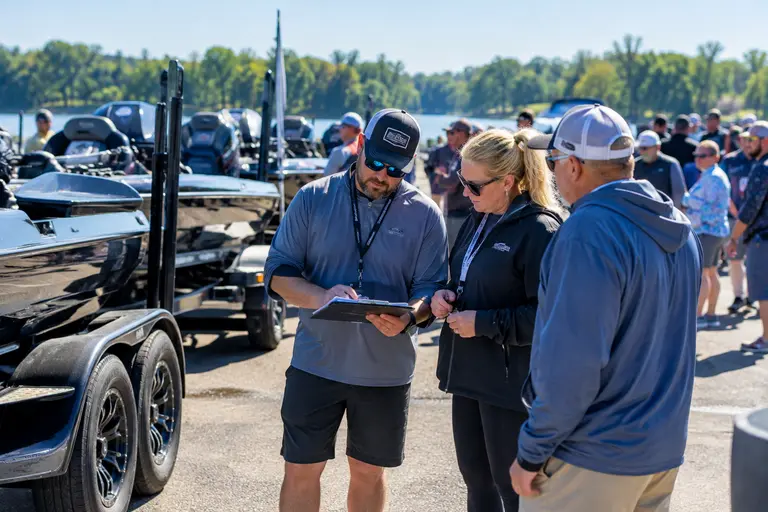
By November 6, 2026, the most concrete lesson was administrative discipline. Anglers needed to know when a schedule was released, when they first became definitively aware of a location, when official practice began, and when the final off-limits period started. Missing one of those dates could change what information was allowed.
For anglers comparing rulebooks across circuits, the related Toyota Series rules checklist is a useful reminder that tournament planning is increasingly about calendars as much as casting. Entry priorities, practice limits, information rules, and event budgets all interact before a competitor ever reaches the ramp.
What Competitors Needed To Track
- Schedule release date: Under the B.A.S.S. update, that date could start the first information restriction.
- Definitive venue awareness: If an angler knew the location before a public trigger, that awareness also mattered under the B.A.S.S. language.
- Final off-limits window: B.A.S.S. kept 28 days before the tournament start; NPFL moved to 30 days before official practice.
- Information source: Public information remained distinct from purchased or exchanged waypoints and private competitive insight.
- Other-event participation: Both rule structures required anglers to understand whether fishing another event created an information problem.
The list shows why written tournament calendars became a competitive safeguard. The issue was not only whether an angler found fish. It was whether the path to that information fit the rule in place for that specific series.
What The Updates Mean For Future Tournaments
The safest reading for tournaments after the 2026 cycle is that rule clarity will remain part of event preparation. The verified record does not support claiming a single industry-wide model. B.A.S.S. and NPFL used different clocks, and each series tied its policy to its own event structure.
What can be said with confidence is narrower but useful: these No-Information Rule updates placed greater weight on published schedules, official practice dates, and the distinction between public knowledge and private competitive help. For anglers, that meant compliance began before practice. For host communities, it meant the rules could shape when competitors appeared locally and what kinds of information exchanges were permitted around an event.
The future tournament lesson is not that information stopped mattering. It is that information became more formally regulated. In a sport built on local knowledge, seasonal movement, and repeated lake experience, the 2026 rule changes marked another step in defining where preparation ends and unfair advantage begins.