

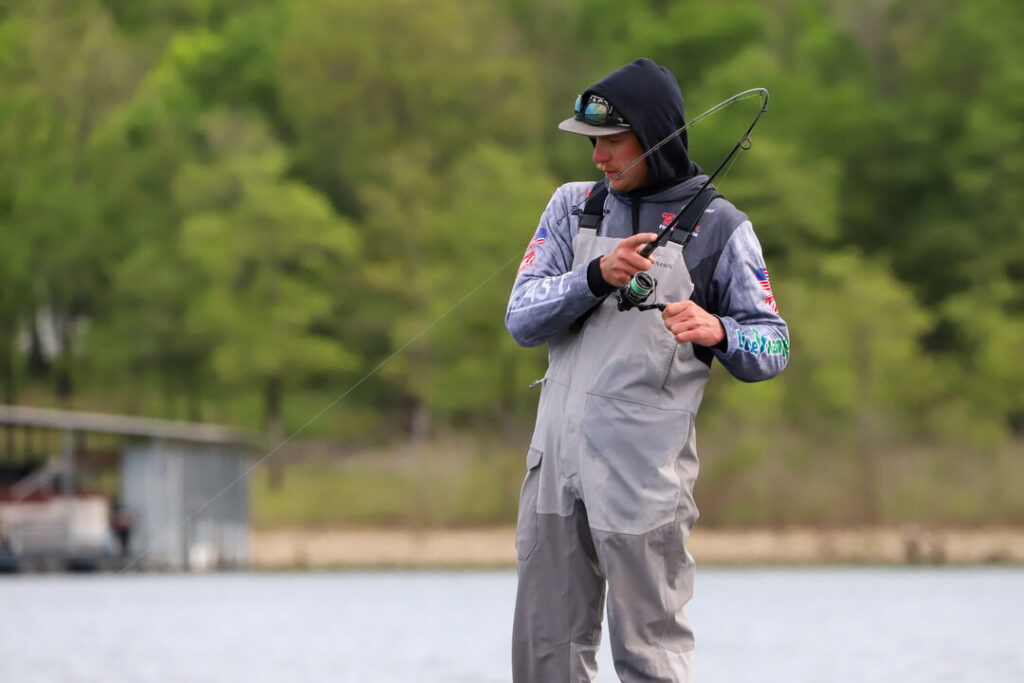
The professional bass fishing calendar sharpens this week as the MLF Bass Pro Tour Beaver Lake event arrives in Rogers, Arkansas, with competition scheduled from April 30 through May 3. I see Stage 5 as more than another stop on the circuit; it is a timely test of adaptability, electronics discipline, spring transition timing, and competitive nerve on one of the sport’s most strategically demanding lakes.
Why MLF Bass Pro Tour Beaver Lake Matters Now
The timing of this event is what makes it compelling. Late April and early May often force anglers to make decisions in real time as bass move through overlapping seasonal phases. Some fish may still relate to spawning areas, others may be guarding fry, and another wave may already be sliding toward postspawn feeding routes. That creates a tournament where the winning pattern is unlikely to be simple, static, or obvious.
For serious fans, the MLF Bass Pro Tour Beaver Lake stop carries high informational value because it reveals which anglers can interpret changing water quickly under pressure. A pro who succeeds here is not simply finding fish; he is reading a lake in motion.
Event Snapshot
| Detail | Information |
|---|---|
| Event | Bass Pro Tour Stage 5 |
| Location | Beaver Lake, Rogers, Arkansas |
| Dates | April 30–May 3 |
| Launch Time | 7:10 a.m. CDT |
| Weigh-In / Coverage Window | 3:00 p.m. EDT |
| Competitive Theme | Spring transition, pattern management, decision speed |
The Strategic Complexity Of Beaver Lake
Beaver Lake is not a one-dimensional fishery. Its clear water, varied structure, steep banks, docks, points, creek arms, and offshore options can reward very different approaches within the same tournament day. That is precisely why it can expose weak assumptions.
In a spring event, anglers must decide whether to commit shallow, play a mixed-depth game, or target fish that are already recovering and feeding after the spawn. A shallow bite may look obvious in practice and fade by competition. A deeper bite may be harder to build but more durable across multiple days. The best anglers will not merely chase what worked yesterday; they will anticipate what the lake is becoming tomorrow.
The central question is not where the bass are. It is where the most catchable bass will be during tournament hours.
Key Storylines I Am Watching
The first storyline is whether forward-facing sonar dominates or simply becomes one tool among many. Beaver Lake’s clarity and structure can make electronics powerful, but the spring transition often rewards visual instinct, bank fishing, and pattern expansion as much as screen discipline.
The second storyline is pressure management. A Bass Pro Tour field can quickly compress around similar-looking water. When multiple pros identify the same category of points, pockets, or offshore targets, the event becomes a chess match over rotation, timing, and efficiency.
The third storyline is whether the winning angler builds a broad pattern or leans into a narrow, high-quality bite. On a lake like Beaver, both approaches can work, but the risk profile is different.
Important factors include:
- Water clarity and how it affects lure selection
- Wind direction and its influence on baitfish positioning
- Spawning-stage variation across lake sections
- Boat pressure on obvious community areas
- The ability to convert limited bites into scorable momentum
Why This Format Raises The Stakes
The MLF format changes how anglers manage a day. Because every scorable bass matters, there is less room for passive waiting and more incentive to keep generating opportunities. A traditional five-fish mindset can encourage anglers to hunt selectively for quality. The Bass Pro Tour structure rewards a more dynamic balance: catch enough to stay relevant, then upgrade strategy when the lake reveals a bigger opportunity.
That creates a different kind of drama. Momentum can shift quickly. An angler who appears buried can climb with a flurry. Another who starts hot can stall if his area dries up or if he misreads the next movement window. Viewers should pay close attention to pace, not just totals.
The Angler Skill Set That Should Win
I expect this event to favor a complete angler rather than a specialist. Beaver Lake can reward finesse, power fishing, dock work, suspended-fish tactics, and precise casting around cover. But the champion will likely be the angler who knows when to abandon a good-looking plan before it becomes a bad one.
That means decision-making may outweigh raw bait selection. The winning approach could involve moving between shallow targets early, mid-depth staging fish later, and isolated high-percentage areas when the bite slows. The pros who can connect those phases without losing time will have the advantage.
In my view, the most dangerous competitor at Beaver Lake is not necessarily the angler with the most impressive practice. It is the one who leaves practice with multiple ways to survive.
What Fans Should Watch During The First Day
Opening day will define the tournament’s tone. If the leaderboard is tightly packed, expect anglers to preserve flexibility and avoid overcommitting too soon. If one or two competitors separate quickly, the rest of the field may be forced into higher-risk decisions earlier than planned.
The most revealing signals will be:
- Whether top anglers are catching shallow or offshore
- Whether the bite improves as the day warms
- Whether wind creates obvious feeding windows
- Whether fish are grouped or scattered
- Whether top performers repeat areas or constantly rotate
A scattered bite usually favors versatility. A grouped bite can produce explosive scoring, but it also creates vulnerability if the school shuts down or competitors converge.
The Business And Brand Significance
Beyond the water, Stage 5 matters because professional bass fishing is competing for attention in a crowded sports and outdoor media environment. Events like this need more than results; they need storylines, personalities, tactical clarity, and real-time stakes. Beaver Lake offers all of that.
For sponsors, tourism partners, tackle brands, and regional outdoor businesses, a high-profile event in Rogers brings visibility that extends beyond tournament fans. It showcases the lake as a destination and reinforces northwest Arkansas as a serious outdoor market. For the league, the event is another chance to demonstrate that tournament bass fishing can be both technically sophisticated and accessible to viewers.
The Bigger Competitive Implication
By this point in the season, every decision starts to carry cumulative weight. Anglers are not only fishing for a trophy; they are managing points, momentum, qualification paths, sponsor exposure, and confidence. A strong finish at Beaver Lake can reset a season. A poor finish can compound pressure heading into the next stretch.
That is why I view MLF Bass Pro Tour Beaver Lake as a measuring-stick event. It tests whether an angler can turn preparation into execution when the fish are changing, the clock is moving, and the leaderboard refuses to sit still.
Conclusion: A Timely Test Of Modern Tournament Fishing
The MLF Bass Pro Tour Beaver Lake event matters right now because it sits at the intersection of seasonal change, elite pressure, and modern bass-fishing strategy. From April 30 through May 3, the winner will likely be the angler who blends technology with instinct, patience with urgency, and confidence with fast adjustment.
For fans, this is not just another tournament to track. It is a live case study in how professional bass fishing is evolving and why adaptability remains the most valuable skill in the sport.