

Michigan fishing regulations have already reshaped tournament planning for the 2026-27 license cycle, so directors working events after Nov. 4, 2026, need to treat the rulebook as part of the event plan, not as a last check at the ramp. The 2026 rules took effect on April 1, 2026, and remain in force through March 31, 2027, according to the Michigan Department of Natural Resources season announcement.
Michigan Fishing Regulations Set The Event Baseline
Michigan Fishing Regulations And Registration
For bass, walleye, and competitive muskellunge events, the research record for the 2026 rules states that tournaments must register through Michigan’s Fishing Tournament Information System under Fisheries Order 250. It also states that results must be reported annually by Dec. 31. From an organizer’s chair, that reporting date matters because it falls after many late-season events but before winter planning fully resets.
The tournament definition is also practical, not just legal wording. The research notes state that a qualifying fishing tournament is an event where winners are determined by cumulative weight or length, the duration does not exceed five days, the event uses a single boating access site, and the competition takes place on one waterbody or connected waters. That matters for small clubs because a casual derby can cross into regulated event status if it meets the definition.
Why The April 1 Date Matters
The April 1 effective date means spring and summer events already ran under the current rules. As of Nov. 4, 2026, late-fall events and early 2027 planning should not be treated as if these are proposed changes. They are active rules for the current cycle. That timing affects permit preparation, rules meetings, scoring formats, and sponsor materials.
A director who posts a flyer, collects entries, and then discovers that slot limits or possession limits narrow the eligible fish has created confusion that can be avoided. In my experience around local events, anglers will accept strict rules if they are clear before launch. They push back when the weigh-in table gives them a different standard than the captain’s meeting.
Species Rules That Change Tournament Math
Walleye Slots Narrow Eligible Fish
The Upper Peninsula walleye changes are the clearest example of rules changing tournament math without stopping fishing. The DNR announcement states that Lake Independence and Teal Lake in Marquette County now have a 15-inch minimum size for walleye, with fish from 18 to 23 inches required to be released. Anglers may keep up to five walleye per day, with no more than one longer than 23 inches.
For a walleye tournament on either lake, that protected slot would reduce the fish available for a traditional weigh-in. A five-fish bag is still possible under the daily limit, but legal fish are constrained by the protected range and the one-over-23-inch allowance. That is where event design has to match biology and regulation. A scoring system based on legal fish only, with clear release language, protects anglers from bringing in fish that cannot be possessed.
Photo-based scoring may be one way some organizers address protected slots, if their event rules and state requirements allow it. That broader shift is already showing up in conversations about Michigan CPR tournaments, especially where fish care and sponsor visibility both matter.
Lake Trout, Splake And Burbot Limits
The Lake Superior change is narrower geographically but still relevant for events that target cold-water species. At Stannard Rock and Big Reef, the combined daily possession limit for lake trout or splake is now one fish. That number is simple, but it changes how any competitive format would need to be written for those areas.
The research also states that a statewide daily possession limit of five burbot per angler has been established. Burbot may not be the central species for most large Michigan tournament schedules, but local winter or mixed-species events should still account for the limit. A side pot or multi-species points system can run into compliance issues if the event rules do not reflect possession limits by species.
| Rule Area | Event Planning Effect | Organizer Response |
|---|---|---|
| Walleye slot on Lake Independence and Teal Lake | Protected fish cannot be weighed in | Write scoring rules around legal fish |
| Lake trout or splake at Stannard Rock and Big Reef | One-fish combined daily limit | Avoid formats that assume multi-fish bags |
| Statewide burbot limit | Five fish per angler per day | Align side contests with possession rules |
| Bead definition for trout and salmon | Gear rules are clearer | Explain legal tackle before launch |
Pike And Sturgeon Changes Need Careful Scheduling
Pike Rules Took Effect On October 15, 2026
The northern pike changes took effect on Oct. 15, 2026, so they had already been active for nearly three weeks by Nov. 4, 2026. The research notes state that Michigan removed a spawning marsh closure in Otsego Lake Pike Marsh in Otsego County. They also state that Au Sable Lake, Clear Lake, Gibson Lake, and Hanbury Lake were added under a rule allowing five northern pike daily, with only one fish at least 24 inches.
For a pike event on those waters, the one-fish-over-24-inch condition is the planning point. A tournament director cannot assume that the biggest-fish format works the same way across all waters. If the prize structure encourages anglers to retain multiple larger pike where only one is allowed, the event design is out of step with the rule.
Sturgeon Seasons Are Not Standard Weigh-In Events
The Menominee River lake sturgeon rule is even more specialized. The research states that a catch-and-immediate-release season runs from the first Saturday in June through the first Sunday in March between Grand Rapids Dam and Sturgeon Falls Dam. For the 2026-27 cycle, that means June 6, 2026, through March 7, 2027. A possession season ran from Sept. 5, 2026, through Sept. 30, 2026, with a 60-inch minimum size and a one-sturgeon-per-angler-per-season limit.
That is not a normal weigh-in structure. If a local group builds an educational or community event around sturgeon, the safest planning lens is conservation-first handling, rule clarity, and immediate release where required. For sponsors, that means value comes from stewardship, youth education, and local participation, not from a heavy bag photo.
Sponsor And Community Duties At The Ramp
Clear Rules Protect Local Trust
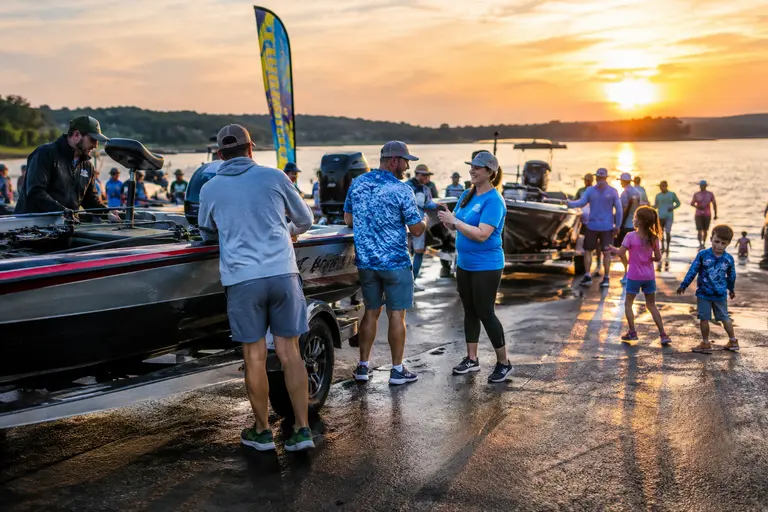
Local sponsors want visibility, but they also want an event that does not create conflict at the launch. Rule confusion can put volunteers, marina staff, and conservation officers in hard conversations. A clean captain’s meeting, printed species chart, and weigh-in staff trained on legal fish can prevent most problems before a boat leaves the dock.
For community partners across outdoor recreation, shared awareness helps. Readers comparing event planning, access, and gear culture across our network can also visit Triple T Powersports for related outdoor coverage.
Prize Tables Should Match Legal Fish
Sponsor strategy should follow the rule structure. If a protected slot removes many prime-size fish from the weigh-in pool, prizes can shift toward legal-length categories, youth participation, conservation awards, or accurate catch-photo documentation. That keeps the sponsor attached to good conduct rather than to a format that pressures anglers toward mistakes.
The same principle applies to tackle partners. The research states that, for trout and salmon, a bead used on the hook or attached to the line no more than four inches above the eye of a single-pointed hook is now defined as an artificial lure. That clarification gives tackle sponsors and tournament officials cleaner language for gear checks where trout or salmon rules apply.
Michigan Fishing Regulations In Local Event Planning
Practical Steps For Directors
Michigan fishing regulations should be built into every stage of an event after Nov. 4, 2026: registration, rules meetings, launch control, scoring, fish care, and post-event reporting. The supported facts do not identify specific tournament dates, entry fees, or named events for late 2026 or early 2027, so direct event-by-event impact cannot be verified from the research provided. What can be verified is the rule framework those events must work within.
For bass, walleye, and muskellunge competitions, directors should confirm whether the event meets the tournament definition, register where required, and prepare the Dec. 31 reporting obligation. For walleye, pike, trout, salmon, lake trout, splake, burbot, and sturgeon-related events, the species-specific rules should be written plainly into the event packet.
The practical goal is not to make tournaments harder. It is to make them fair, legal, and easier for local communities to support. Anglers fish better when they know the measuring board, the livewell, and the weigh-in table are all working from the same rulebook.