

Bassmaster Live Sonar coin flips moved a gear debate into the event-planning column. On September 2, 2025, B.A.S.S. announced that, starting with the 2026 Progressive Bassmaster Elite Series, forward-facing live sonar would be permitted in up to five of nine regular-season Elite Series events, with the event assignments set randomly by coin flips among paired events, according to the official 2026 rule announcement.
That decision mattered because it did not simply say yes or no to a tool. It created two types of Elite events inside the same schedule. For anglers, sponsors, local hosts, and club-level tournament directors watching the top circuit, the result was a season structure that rewarded both electronics skill and conventional fish-finding discipline.
Why Bassmaster Live Sonar Coin Flips Matter
Bassmaster Live Sonar Basics For Anglers
The coin-flip method gave B.A.S.S. a clear way to split events without assigning the format by public preference, lake reputation, or angler style. The 2026 coin-flip results were revealed during a live show on September 5, 2025, at 10 a.m. Central Time on Bassmaster.com. The resulting 2026 Elite Series split allowed live sonar at Lake Martin, the Arkansas River, Lake Murray, the Pasquotank River/Albemarle Sound, and the St. Lawrence River. It prohibited forward-facing live sonar at Lake Guntersville, the Tennessee-Tombigbee Waterway, Santee Cooper Lakes, and Lake Champlain.
That mix gave the schedule a built-in comparison point. Anglers were not just competing against the field; they were proving how their process held up under different information limits. A no-sonar event put more weight on visible cover, seasonal movement, mapping, history, current, grass, docks, and practice decisions. A sonar-allowed event let anglers use real-time returns to track fish position and presentation response, but it still required casting accuracy, timing, and fish care.
The 2026 Classic Stayed All-Tech
The 2026 Bass Pro Shops Bassmaster Classic had a separate status. It remained an all-tech event under rules established in 2025 because qualifiers had earned their Classic spots under those rules. That was a practical competitive decision. Changing the technology rules after qualification would have affected preparation for anglers who had already built their Classic path under the prior rule set.
For local tournament organizers, that detail is worth remembering. Rule changes are easiest to defend when anglers know them before they invest entry fees, practice time, travel, and equipment choices. The biggest community impact is not only who wins. It is whether competitors believe the format was communicated early enough for fair preparation.
How The Coin Flip Format Changed Preparation
Practice Plans Became Format-Specific
The Bassmaster Live Sonar split also creates a sharper practice question: what information is legal during competition, and what habits will carry over when it is not? An angler preparing for a sonar-allowed event can build a plan around seeing fish, judging distance, and making repeated casts to individual targets. An angler preparing for a no-sonar event has to make a broader read. That can mean committing to bank cover, offshore structure found by mapping and traditional sonar, current seams, vegetation edges, or seasonal staging areas.
That does not make one format pure and the other artificial. It makes them different tests. From the back of a local weigh-in line, I see the same divide at smaller events. Some anglers want to refine a screen-based approach because that is how they fish at home. Others want a rule set that keeps the emphasis on casting, patterning, and water-reading. The Bassmaster model did not erase that disagreement, but it gave both groups real tournament data points.
For anglers trying to apply Elite-level lessons to weekend competition, the practical move is to separate transferable skill from event-specific gear. Boat control, casting angles, fish landing, culling decisions, and time management matter in both formats. For more on how recent winners balanced technique and decision-making, the site’s review of bass tournament techniques connects well with this same discussion.
Equipment Choices Became Budget Decisions
There is also a financial side, even without verified public data on exact spending changes tied to the rule. An Elite angler already operates at a high equipment level, but the format can influence how practice time, rigging attention, transducer setup, and backup systems are prioritized. A no-sonar event does not remove the value of mapping or standard electronics, but it can reduce the direct value of live target tracking during competition hours.
At the local level, that distinction matters. Many community events depend on mixed fields: younger anglers, working anglers, retirees, high-school teams, and sponsors that may be supporting a weigh-in with modest budgets. A split-format model gives directors a reference point if they want to hold one event with open technology and another with limits. The research available here does not prove that such a model increases entries or sponsor income, so any local adoption should be tested carefully and communicated early.
Sponsor And Community Effects
Bassmaster Live Sonar Sponsor Messages
For sponsors, the coin-flip system changes the story they can tell without forcing one message across every venue. Electronics companies can still show product use at sonar-allowed events. Tackle makers, boat-control brands, line companies, rod builders, and local marine shops can point to no-sonar events as proof that execution and presentation still matter. That is useful for community partners because most local anglers do not buy gear the same way an Elite pro rigs a boat.
A sponsor table at a local ramp works best when it connects to what anglers actually face. If the next club event bans live sonar, the conversation can shift to shallow-water presentations, casting gear, mapping study, fish care supplies, and safety. If the event permits live sonar, the conversation can include screen interpretation, mounting choices, power management, and practice discipline. Local organizers can pair tournament pages with community listings and related network resources such as a related site in the same network, efficientdirectory.com, when they are trying to make event information easier to find.
Community Trust Depends On Clear Rules
The biggest lesson for smaller circuits is procedural. A coin flip is simple, public, and easy to explain. It reduces the appearance that a director picked a format to favor one group. That matters in fishing communities where the same anglers may compete together for years and where disagreements over technology can carry from one weigh-in to the next.
Still, the method needs written rules. Directors should state whether live sonar is banned only during competition, whether it can be used during official practice, how enforcement will work, and what penalty applies. Without those details, a fair format can become a dispute at the ramp.
What 2027 Keeps In Place
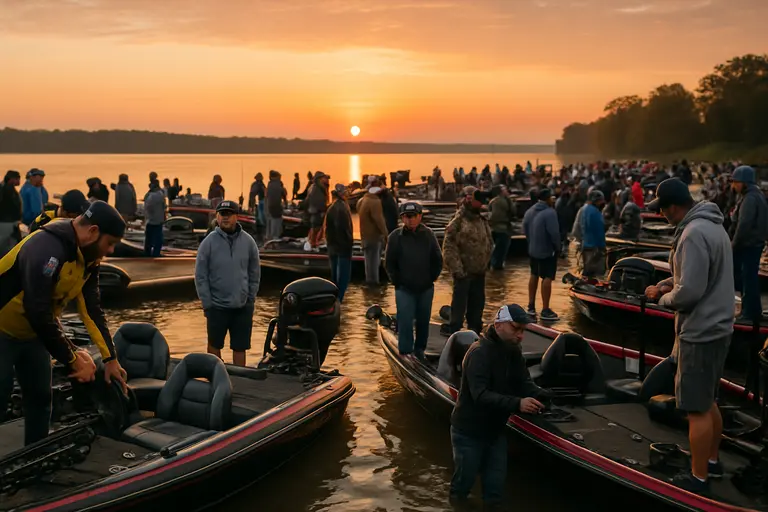
The 50/50 Format Continued
In September 2026, B.A.S.S. announced that the 50/50 live-sonar format introduced in 2026 would continue in 2027, meaning the Elite Series would again be split between sonar-allowed and no-sonar events through coin flips, as reported by BassResource. As of October 17, 2026, that announcement had already been made, so it should be treated as a settled policy direction for the 2027 schedule rather than a pending decision.
On October 6, 2026, during the Bassmaster Coin Flip Show presented by Walls, B.A.S.S. revealed the 2027 designations for all nine Progressive Bassmaster Elite Series events, plus the live-sonar status for the 2027 and 2028 Bassmaster Classics. For 2027, live sonar will be allowed at Lake Okeechobee on February 11-14, the Bassmaster Classic at Lake Hartwell on March 19-21, Lake Fork on April 22-25, Santee Cooper Lakes on May 20-23, the Tennessee-Tombigbee Waterway on June 17-20, and the Mississippi River at La Crosse on August 19-22. It will be prohibited at the Kissimmee Chain of Lakes on February 18-21, the Sabine River on April 8-11, Lake Seminole on May 6-9, Lake St. Clair on August 5-8, and the 2028 Classic, whose date and site were listed as to be determined in the research notes.
The Classic flip is especially direct. One flip determined whether the 2027 Classic would permit live sonar; the opposite status then applied to the 2028 Classic. The result means live sonar will be permitted at the 2027 Classic on Lake Hartwell, while the 2028 Classic will be a no-live-sonar event.
Bassmaster Live Sonar Coin Flips And Local Events
What Smaller Circuits Can Take From It
For community tournament directors, Bassmaster Live Sonar is not just a pro-circuit rule. It is a planning example. The useful part is not copying every Elite Series detail. The useful part is adopting the clarity: publish the format, explain the selection method, give anglers enough time to prepare, and keep enforcement language simple.
For anglers, the lesson is equally plain. A serious competitor now needs two playbooks. One should sharpen live-target skills where the rules allow them. The other should preserve traditional pattern-building: seasonal timing, cover selection, structure fishing, casting accuracy, and confidence without watching every fish react. The coin flip did not settle the technology debate. It made versatility part of the scoreboard.