

Bass tournament techniques from recent 2026 winners show a clear pattern: the winning edge was rarely one bait, one cast, or one piece of electronics. It came from practice time, controlled depth choices, quick reading of fish behavior, and enough discipline to change without guessing. Dylan Nutt’s Bassmaster Classic win on March 15, 2026, is the cleanest example. He won with 66 pounds, 13 ounces after spending a month in pre-tournament practice, fishing prespawn staging areas for largemouth and smallmouth in roughly 1.5 to 8 feet with a soft-plastic minnow and forward-facing sonar, according to Bassmaster’s Classic report.
Bass Tournament Techniques Start Before Launch
Bass Tournament Techniques In Practice Windows
The strongest theme from the 2026 examples is preparation. Nutt’s month of practice mattered because prespawn fish were not sitting still. They were moving in and out of staging areas, which means an angler had to understand routes, holding spots, and timing. That is not the same as simply marking fish and returning later. It is pattern-building.
For local anglers, this is where tournament fishing gives the community something useful beyond the trophy photo. A winning pattern can become a teaching point at a ramp, a club meeting, or a youth event. I have always believed fishing brings people together best when the talk gets specific: depth, water color, bait choice, and why one bank produced while another did not. The research here does not include attendance or spending figures, so the community impact should not be overstated. The supported point is more practical: these events create shared case studies that everyday anglers can test on their home water.
Nutt’s practice also shows why a tournament plan has to account for movement. Prespawn bass can slide shallow, back off, or shift with clarity and temperature changes. In that setting, a soft-plastic minnow and forward-facing sonar worked not as a shortcut but as part of a larger read: shallow to mid-shallow depth, staging behavior, and mixed-species opportunity.
Why Preparation Beats Random Adjustment
A random adjustment is a reaction. A prepared adjustment is a decision made from evidence. In the 2026 Classic material, competitors dealt with different conditions between Fort Loudoun and Tellico, including warmer, dirtier water on Fort Loudoun and cooler, clearer water on Tellico during the practice period. That kind of split forces choices in bait profile, retrieve speed, and how close an angler expects fish to hold to cover.
These bass tournament techniques are not reserved for full-time pros. A weekend angler can apply the same thinking by logging depth, water color, wind direction, and the exact place each bite happens. The point is not to copy a champion’s bait blindly. The point is to copy the habit of testing a pattern until it either holds or breaks.
Electronics Helped, But Location Still Led
Forward-Facing Sonar Worked Best With A Defined Target
Forward-facing sonar appears across several recent winning examples in the research, but the better reading is not that electronics won by themselves. The better reading is that sonar sharpened decisions after anglers had already narrowed the field. Nutt used it around staging fish. Yui Aoki, who finished third in the same Classic, used it to target fish positioned on current-swept banks with structure in 5 to 10 feet and caught four largemouth and one smallmouth on the final day.
That distinction matters for local fishing communities because sonar can divide opinions at the dock. Some see it as the future; others worry it replaces instinct. The recent results suggest a more balanced view. Electronics can confirm fish, show how they follow, and help an angler make a better cast. They do not remove the need to understand current, bottom, seasonal timing, or depth.
For anglers trying to learn from tournament winners, the lesson is simple but demanding: pick a reason before picking a screen target. If the reason is current on a bank, fish the current. If the reason is a prespawn route, fish the route. If the reason is a dock line holding bedding largemouth, fish the dock line. The technology should support that reason, not replace it.
Depth Bands Kept Decisions Manageable
Depth control was another repeated signal. Nutt’s winning work came in roughly 1.5 to 8 feet. Aoki focused in 5 to 10 feet. Chris Johnston’s Santee Cooper Lakes win, reported after the 2026 Yokohama Tire Bassmaster Elite event concluded in May 2026, centered on southern largemouth, docks, LiveScope, bed-fishing, and jerkbait-style twitches after he located fish in his preferred depth range. He won with 113 pounds, 12 ounces and a margin of 19 pounds, 12 ounces over second place, according to the Manning Times report.
Depth bands keep anglers honest. They reduce wasted casts and help separate a real pattern from a single bite. If every meaningful bite comes from a narrow zone, the angler gains a repeatable plan. If bites scatter across unrelated depths, the plan may need to change.
Lure Choices Followed Fish Behavior
Soft Plastics, Jerkbaits, And Reaction Baits Had A Place
The research set shows that successful anglers did not treat lure choice as fixed. Nutt’s soft-plastic minnow matched his staging-fish program. Johnston’s jerkbait-style twitches fit located bedding fish around docks. In the 2026 Classic, top competitors rotated through jerkbaits, crankbaits, minnows, and jigs based on depth, clarity, and temperature.
That is where many club and weekend anglers can make a direct improvement. The bait box should not be a guessing box. It should be tied to what the fish are doing. A crankbait can help cover water and deflect around cover. A jerkbait can hang near reluctant fish and trigger followers. A jig-head minnow can stay in front of fish that are visible or suspended. A jig can slow the whole process down when the fish are tight to cover.
JT Thompkins’ fifth-place Classic adjustment, as described in the research, is a useful example. He shifted away from crankbaits toward jerkbaits late in the practice and tournament phase, working them down with twitches and pauses to trigger fish that followed but did not commit to crankbaits. That is not a lure fad. That is reading refusal.
Power And Finesse Were Not Opposites
Recent winners also showed that power and finesse are not locked in separate lanes. Kane Weekley’s February 20, 2026 Lake Guntersville win in the research combined LiveScope work around grass edges with lipless crankbaits and bladed jigs in afternoon periods. Justin Lucas’ August 9, 2026 Lake Erie win, also in the research, leaned on dropshotting a Berkley MaxScent Flat Worm for smallmouth while revisiting known high-value structure.
The common thread is controlled commitment. A winning angler may fish fast to find the right area, then slow down once the clues line up. Or he may use finesse gear in a way that still covers key structure efficiently. That blend is one reason tournament lessons travel well into local fishing. It gives anglers a way to talk across skill levels: one person may love a bladed jig, another may trust a dropshot, but both can learn from why and where the bait was used.
Team Events Reward Fast Pattern Recognition
The ICAST Cup Example Shows Time Pressure
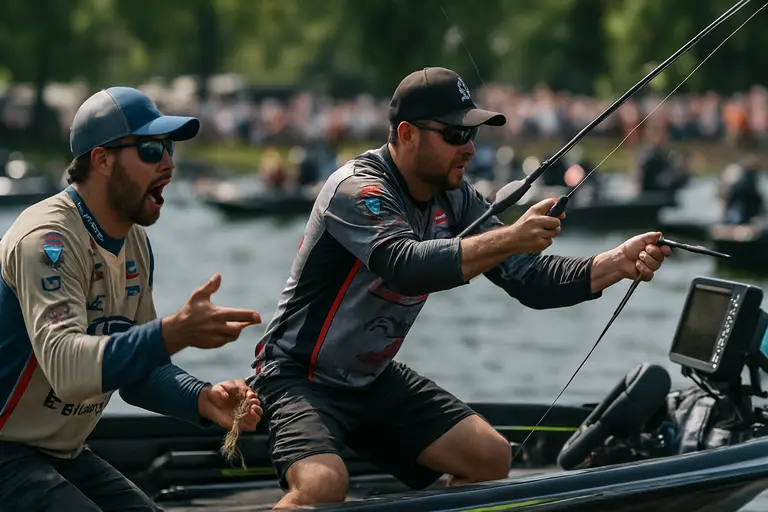
The 2026 ICAST Cup example in the research adds a team angle. On July 15, 2026, the winning team of Dylan Quilatan, Don Mitchell, and Diane Cobbs caught 18 bass for 96 pounds, 10 ounces in a four-hour event, including three bass over 8 pounds. Their approach emphasized catching larger bass early, making quick decisions, and taking advantage of big-bait opportunities after the pattern appeared.
A short team event changes the decision tree. There is less room to slowly build a limit and then upgrade. The team has to communicate clearly, divide attention, and decide whether a big-fish pattern is worth the risk. That format also has a community value because it makes fishing feel shared rather than solitary. Team success depends on trust, not just casting skill.
For local clubs, high school teams, and charity events, this is a lesson worth keeping. Teams should define roles before launch. One angler may search. Another may slow down behind the first bait. A third may watch fish behavior and call out changes. None of that requires inventing a professional setup. It requires honest communication and a plan the whole boat understands.
Community Learning Comes From Comparing Notes
The healthiest fishing communities I know are built around useful comparison, not bragging. A tournament result gives everyone the same reference point. Why did shallow prespawn fish matter in one event? Why did docks and bed-fishing decide another? Why did a jerkbait outproduce a crankbait when fish followed but would not eat?
That kind of discussion helps new anglers feel included. It also keeps experienced anglers sharp. Readers who track outdoor skill stories across the same network may also recognize that same practical learning thread at My All Time Best. On this site, the fishing application is direct: use tournament results to teach decisions, not just celebrate standings.
For anglers who want to turn pro-level lessons into usable weekend habits, the same idea carries into tournament bass fishing lessons that strip away sponsor decks and focus on decisions any boat can make.
Bass Tournament Techniques And Community Value
Bass tournament techniques from these 2026 examples point toward a practical model for success: prepare before the event, identify the right depth band, use electronics with a reason, match lure choice to fish behavior, and adjust only when the evidence says to adjust. Nutt’s Classic win and Johnston’s Santee Cooper Lakes win were different events on different fisheries, but both rewarded anglers who combined technology with location discipline.
The wider community lesson is just as valuable. Tournament fishing can unify anglers when the conversation stays grounded in what happened on the water. A winning pattern gives local fishermen a shared language: staging areas, docks, current, grass edges, drops, depth, and timing. That language crosses age, skill level, and boat size.
Not every weekend angler has a month to practice. Not every local team has the same electronics. But every angler can ask better questions after a tournament result: What depth held the fish? What condition made them bite? What lure matched their mood? What did the winner stop doing? Those questions are where bass tournament techniques become more than pro-level headlines. They become community knowledge, passed from one dock conversation to the next.