

The Lake Seminole bass fishing pattern matters right now because the leaderboard is not being shaped by one magic bait, one clean lane, or one obvious seasonal deal. Matt Baty’s 40 pounds, 15 ounces after Day 2 tells a more useful story: the anglers who are adjusting fastest are the ones putting themselves in position to win.
Why This Tournament Feels Different
I pay close attention when a major bass tournament refuses to simplify itself. Some events reveal their hand early. A shallow grass bite dominates. A ledge bite turns into a drag race. A forward-facing sonar pattern takes over and forces the entire field into a narrow technical lane. Lake Seminole, at least through this phase of the event, is not behaving that neatly.
That is what makes the current situation so interesting.
Baty leading with 40-15 after two days is impressive on its own, but the weight is only part of the story. The more revealing detail is how the fish are being caught. Anglers are catching them in several different ways, which usually means one of two things: either the lake is wide open, or nobody has fully solved it yet. In this case, I think both are partly true.
Seminole is not giving the field a single dominant deal. It is rewarding anglers who can move between techniques without losing conviction. That sounds simple until you try to do it under tournament pressure. Most anglers are more comfortable when the day has a theme. Pick up a crankbait and cover water. Slow down with a soft plastic. Scope individual fish. Fish shallow targets. Commit to grass. Commit to wood. Commit to offshore.
Here, commitment still matters, but rigidity is dangerous. The better approach appears to be controlled flexibility: knowing when to run a reaction bait, when to pick apart a target, when to swim something through cover, and when to trust electronics without letting them consume the whole day.
That is classic Seminole tension. The lake can make an angler feel like the winning bite is everywhere and nowhere at the same time.
The Lake Seminole Bass Fishing Pattern Is Really A Decision-Making Test
The phrase “junk fishing” gets thrown around casually, but in tournament bass fishing, it can mean two very different things. Bad junk fishing is random. It is an angler reaching for bait after bait because nothing feels right. Good junk fishing is strategic. It is an angler building a day from multiple small, repeatable clues.
The Lake Seminole bass fishing pattern right now fits the second version.
Baty’s lead does not read like the product of one bait doing all the work. It reads like the product of an angler managing a changing lake with several tools. Crankbaiting, Coike-style presentations, swimming a worm, shallow power baits, and selective forward-facing sonar all have a place. The key is not that every technique works equally well. The key is knowing which one belongs in which situation.
That is where high-level tournament fishing separates itself from weekend pattern fishing. A recreational angler may go to Seminole, catch a few on a crankbait, and decide the crankbait is the pattern. A tournament angler has to ask a harder question: what kind of cover, what kind of depth, what kind of bottom, what kind of fish behavior, and what part of the day made that crankbait bite happen?
The same applies to a swimming worm. Was it a grass-related bite? A water-column bite? A pressure bite? A way to keep bait moving through a productive zone without overpowering fish? Those distinctions matter.
The current tournament is not simply about finding bass. It is about interpreting fish behavior quickly enough to make the next right decision before the window closes. The real advantage is judgment.
What Baty’s Lead Says About The Bite
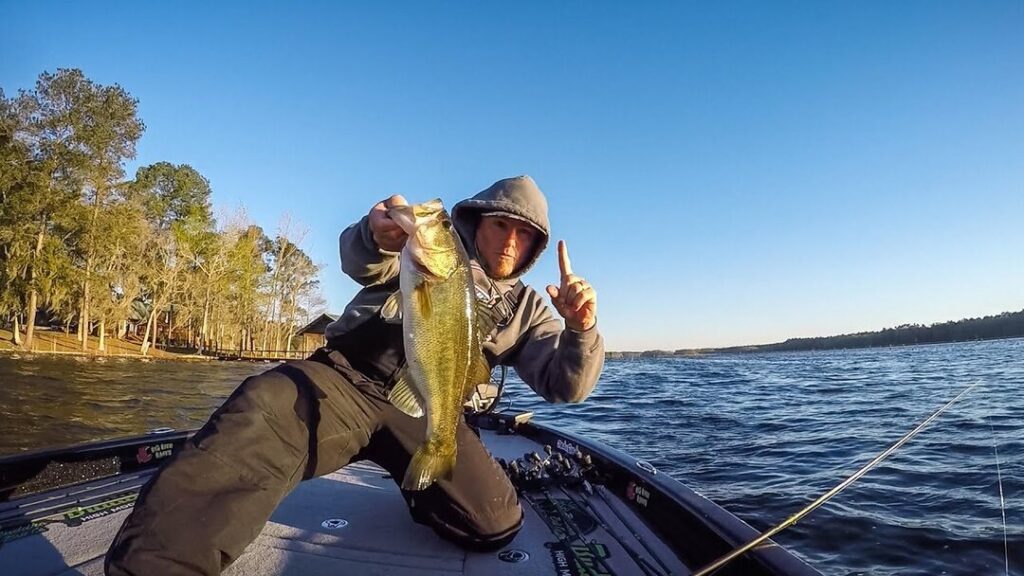
A 40-15 total after Day 2 is strong, but it is not the kind of runaway number that makes the rest of the field feel irrelevant. It gives Baty control, not immunity. That distinction matters because Seminole can swing hard. One productive area can dry up. A weather shift can reposition fish. Pressure can make obvious targets less reliable. A competitor can unlock a small adjustment and erase a margin quickly.
What I find most compelling is that the lead has been built in a way that seems adaptable. A single hyper-specific pattern can be powerful, but it can also be fragile. If the fish stop feeding on that one deal, the day can collapse. A multi-method approach gives an angler more ways to survive.
That does not mean Baty is simply fishing everything. Successful versatility still requires discipline. It means the day can be broken into phases.
A crankbait may be useful when fish are active enough to react. A swimming worm can cover water while staying more subtle around grass or cover. A Coike-style bait around stumps or holes can target fish that are not willing to chase. A swim jig or spinnerbait can capitalize on shallow power-fishing opportunities. Forward-facing sonar can help confirm fish position or pick off specific targets, but it does not appear to be carrying the whole program.
That last point is significant.
For much of modern tournament bass fishing, the conversation around forward-facing sonar has become almost unavoidable. Some events become defined by it. Some lakes reward it so heavily that traditional patterns feel secondary. Seminole, at least in this setup, appears more balanced. Electronics can help, but they are not replacing local interpretation, target selection, and bait rotation.
That makes the tournament more interesting, not less.
The Core Techniques In Play
The clearest way to understand this event is to look at the techniques not as isolated choices, but as parts of a broader decision tree. Each one solves a different problem.
| Pattern | How It Is Being Used | What It Reveals About The Bite |
|---|---|---|
| Crankbait | Covering water and triggering reaction bites | Some fish are willing to chase when the angle and location are right |
| Coike-Style Bait | Working around stumps, holes, and specific targets | Target fish may be positioned tightly to cover or subtle depressions |
| Swimming Worm | Moving a soft plastic through grass or cover | Fish may want motion but not always the flash or vibration of hard baits |
| Swim Jig / Spinnerbait | Shallow power fishing around productive lanes | The lake still offers classic reaction opportunities up shallow |
| Selective FFS | Used as a supporting tool, not the entire strategy | Electronics help, but they are not dictating every bite |
That table matters because it shows the shape of the tournament. This is not a one-bait derby. It is a situational event. The winning angler has to understand which technique best fits the next stretch of water.
A crankbait can be a confidence bait when the goal is efficiency. It contacts cover, deflects, triggers instinctive strikes, and helps an angler cover enough water to locate groups. But crankbaits also require the right conditions. If the fish are too tight, too neutral, or too pressured, the bait may show them too much too quickly.
A Coike-style bait belongs in a different category. It is more targeted. Around stumps and holes, it gives an angler a way to tempt fish that are positioned in specific places. That can be especially valuable when a lake is not producing clean, aggressive schools. It lets the angler slow down without completely abandoning the search for better-quality bites.
The swimming worm is one of those deceptively important tools. It can look simple, but in the right hands it bridges the gap between power and finesse. It moves through cover, stays natural, and can be fished around grass in a way that keeps the bait in front of fish without forcing the issue. On Seminole, that kind of middle-ground presentation can be extremely valuable.
The swim jig and spinnerbait represent the more traditional shallow power side of the event. Those baits shine when fish are using cover, responding to movement, or feeding in lanes where vibration and profile help them commit. They are not delicate tools. They are tools for making bass react.
Forward-facing sonar, meanwhile, sits in the background as a selective advantage. Used well, it can sharpen decisions. Used poorly, it can burn time.
Why Junk Fishing Is Not Guesswork
I have always thought “junk fishing” is one of the most misunderstood terms in bass fishing. From the outside, it can look messy. An angler has rods on the deck, baits everywhere, and no obvious theme. But the best version of junk fishing is not messy at all. It is organized improvisation.
The current Seminole bite demands that kind of thinking.
An angler may start with a moving bait to test activity level. If the fish show themselves but do not fully commit, he may shift to a slower soft plastic. If a stretch produces one good bite, he may look for similar cover rather than assume the whole area is loaded. If electronics show fish that will not respond, he has to decide whether they are worth more time or whether they are a distraction.
Those choices accumulate. Tournament days are built from dozens of small decisions that never make the highlight reel.
The danger in junk fishing is over-adjustment. One missed bite can send an angler into bait-changing chaos. One slow hour can make him abandon water that may reload. The discipline is knowing the difference between a clue and noise. That is why the approach requires more experience than people give it credit for.
On Seminole, the field appears to be dealing with fish in multiple stages, multiple positions, and multiple moods. Some are catchable with reaction baits. Some require a more deliberate target presentation. Some may be visible with electronics but not easy to trigger. Some may be shallow enough to power fish. Some may be tied to cover that demands slower work.
The winning approach is not a pile of techniques. It is a hierarchy.
The Forward-Facing Sonar Question
No modern bass tournament analysis is complete without asking how much forward-facing sonar is shaping the outcome. In this case, the answer seems refreshingly nuanced.
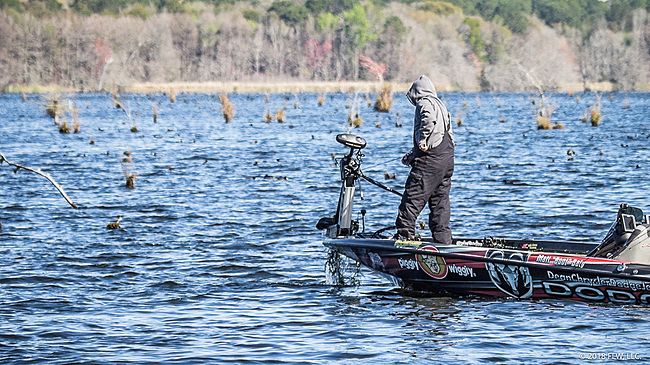
Forward-facing sonar is involved, but it does not appear to be the dominant force behind the lead. That matters because it changes how I read the event. If sonar were carrying the tournament, the main analysis would revolve around suspended fish, bait positioning, individual target selection, and screen management. Instead, the better read is that sonar is just one layer in a broader system.
That is how many anglers probably prefer to use it on a lake like Seminole anyway. It can confirm what is in front of them. It can help identify fish around specific cover. It can prevent wasted casts. But the lake still asks for old-fashioned fishing sense: where the fish should be, how they relate to cover, whether they are feeding, and what presentation matches their mood.
The broader implication is balance.
There is a tendency to divide tournament fishing into two camps: electronics-driven fishing and traditional fishing. Seminole is showing why that division can be too simplistic. The most effective anglers are often not choosing between technology and instinct. They are blending both. They may use sonar when it gives them an edge, then put their heads down and fish visible cover when the situation calls for it.
That is a healthier, more realistic view of where competitive bass fishing is headed. Technology is part of the game, but it does not erase decision-making. If anything, it punishes poor decision-making faster because it can tempt anglers into staring at fish that are not catchable.
What The Pattern Means For The Final Stretch
When a tournament reaches this point without a single overwhelming pattern, the final day becomes especially volatile. A leader with a versatile program can protect against changing conditions, but the same openness that helped him build a lead can help someone else make a charge.
The final stretch likely comes down to three practical questions.
First, can the shallow reaction bite produce enough quality? If swim jigs, spinnerbaits, and crankbaits continue generating bigger bites, an angler can cover water efficiently and build weight quickly. That is the dream scenario for a power fisherman.
Second, can targeted cover produce repeatable upgrades? Stumps, holes, and isolated features can hold the kind of fish that change a final-day outcome. The Coike-style approach matters here because it suggests some better fish may be catchable only when an angler slows down and makes precise presentations.
Third, will sonar create a late-day difference? Even if forward-facing sonar is not dominating, it only takes a few key fish to change the standings. A selective scoping approach could be especially valuable if the moving bait bite fades or the obvious shallow water gets pressured.
The final day also tests emotional control. A junk-fishing event can make an angler feel like he is always one bait change away from solving the lake. That can be empowering or dangerous. The best anglers stay flexible without becoming frantic. They make changes for reasons, not out of anxiety.
That is the line to watch.
How I Would Read Seminole As A Fishing Puzzle
If I were breaking down Seminole from the outside, I would not start by asking, “What bait is winning?” I would ask, “What problem is the lake forcing anglers to solve?”
Right now, the problem appears to be fish distribution. Bass are available in enough places and on enough techniques that the event has not narrowed cleanly. That usually means seasonal movement, mixed cover, fishing pressure, and changing conditions are all interacting at once.
The lake is giving anglers options, but options can be deceptive. Too many options can slow decision-making. If everything looks possible, nothing feels certain. That is where a leader with a coherent system has an edge.
I would look for a strategy built around controlled rotation:
- Start with a reaction bait where fish should be active.
- Use a swimming worm to stay efficient when the bite softens.
- Slow down around stumps, holes, and high-percentage targets.
- Use sonar selectively to verify fish position.
- Avoid spending too long on fish that show themselves but will not commit.
That kind of plan sounds obvious, but executing it under tournament conditions is not. Every choice costs time. Every bait change has an opportunity cost. Every decision to leave a stretch carries risk. The lake does not tell you whether you left too early until someone else catches what you missed.
That is why the leader’s program feels credible. It is not dependent on one fragile clue.
Why This Matters Beyond One Tournament
The Seminole event is worth studying because it reflects a larger shift in competitive bass fishing. The best anglers are becoming less defined by one style and more defined by adaptability. Pure specialists can still win, especially when conditions line up perfectly. But more often, the modern tournament angler has to be fluent in several languages at once.
He has to understand shallow power fishing. He has to manage soft-plastic presentations. He has to know when hard baits trigger fish and when they show too much. He has to use electronics without surrendering to them. He has to read pressure, weather, water clarity, cover, and timing.
That is a lot to ask, but it is also what makes the sport compelling. The most interesting tournaments are rarely the ones where everyone does the same thing. They are the ones where the lake leaves room for interpretation.
Seminole is doing exactly that.
For everyday anglers, the lesson is practical. When a lake is not giving up one obvious bite, do not mistake variety for confusion. Build a system. Let each bait answer a question. A crankbait asks whether fish will react. A worm asks whether they want something subtler but still moving. A target bait asks whether they are pinned to cover. Electronics ask whether your assumptions match what is actually in front of you.
That mindset makes an angler better, whether he is fishing a tournament or trying to make sense of a tough Saturday morning.
The Risks For The Leader
A lead built on versatility is strong, but it has its own risks. The first risk is timing. If the best bite windows are short, missing one can change the entire day. A crankbait bite that lasts thirty minutes is only useful if an angler is in the right place when it happens.
The second risk is dilution. When several techniques are working, it becomes tempting to run too many of them. The leader has to avoid fishing yesterday’s memories instead of today’s conditions. What produced on Day 2 may still matter, but the lake is not obligated to repeat itself.
The third risk is pressure. By the final day, productive areas may have been seen, touched, or leaned on repeatedly. Bass that were willing to react earlier may become more selective. That could make the slower target-based presentations more important, especially around stumps and subtle holes.
The fourth risk is the field itself. When the bite is diverse, more anglers remain dangerous. A competitor does not need to copy the leader. He only needs one lane of the broader pattern to become slightly better for one day.
That is the drama of this kind of event. A clean dominant pattern can make a final day feel like a coronation. A mixed-pattern event keeps the door open.
What Readers Should Watch Next
The most useful signals from here are not just weights. I would watch the composition of the bags. Are better fish coming on reaction baits or slower target presentations? Are anglers catching numbers but struggling to upgrade? Are the shallow fish replenishing, or is the bite fading under pressure? Is forward-facing sonar becoming more important as the field tightens, or does the winning program remain mostly rooted in cover and movement?
Those answers will tell us whether Seminole is trending toward power, precision, or electronics.
I would also watch how the leader manages his first two hours. Early decisions often reveal confidence. If Baty starts fast with moving baits, that suggests he still trusts the reaction bite. If he slows down quickly around targets, he may believe quality matters more than coverage. If he spends meaningful time scoping, he may be trying to protect the lead by finding fish others cannot easily reach.
The best tournament anglers rarely tell the whole story with words. They tell it with sequence.
A Practical Takeaway For Anglers
For anyone trying to apply this tournament to their own fishing, I would not copy the bait list blindly. That is the wrong lesson. The better takeaway is how the tools fit together.
A simplified Seminole-inspired approach would look like this:
- Use a crankbait or spinnerbait to locate active fish and establish water quality.
- Pick up a swim jig or swimming worm when cover demands a cleaner, more controlled presentation.
- Slow down around stumps, holes, and isolated targets when a stretch shows promise.
- Use electronics to confirm, not to replace, your fishing instincts.
- Keep moving when the evidence is weak, but stay longer when the clues are specific.
That last point is the hardest. Anglers often leave too quickly because they are impatient, or stay too long because they are hopeful. Seminole rewards the middle path: confidence backed by evidence.
The current Lake Seminole bass fishing pattern is not about chasing trends. It is about reading the lake in layers.
The Bigger Meaning Of A Mixed-Pattern Event
A tournament like this reminds me why bass fishing remains difficult to reduce to formulas. We can talk about bait categories, fish positioning, cover, weather, electronics, and seasonal behavior, but the lake still has the final vote. The best anglers do not force certainty where it does not exist. They build enough structure to make good decisions while staying open to change.
That is the heart of this event.
Baty’s lead is meaningful because it appears to be built on adaptability rather than dependence. He is not simply riding one obvious wave. He is navigating a lake that is offering multiple partial answers. That requires technical range, but it also requires restraint. Not every possible bite deserves equal time. Not every visible fish deserves a cast. Not every productive bait deserves blind loyalty.
The final outcome will likely reward the angler who keeps making the cleanest decisions as the lake changes. Maybe that means leaning into shallow power fishing. Maybe it means slowing down around stumps and holes. Maybe a few key fish seen on sonar decide everything. The beauty of Seminole right now is that all of those scenarios remain believable.
That is why the Lake Seminole bass fishing pattern deserves attention beyond the standings. It shows where tournament bass fishing is at its best: part instinct, part analysis, part adjustment, and always shaped by the pressure of limited time. The opportunity is there for an angler who can stay versatile without becoming scattered. The risk is that one wrong commitment can turn a winning program into yesterday’s pattern.