

The Lake Murray BFL All-American has already produced the kind of opening-day storyline tournament fishing loves: a young angler, a heavy bag, a herring lake, and a leaderboard close enough to punish one bad decision. Jack Story’s 22-pound, 15-ounce Day 1 lead is not just a number; it is an early signal that this tournament may be decided by timing, restraint, and who handles roaming fish best.
That makes the event feel bigger than a simple Day 1 update. It also fits a wider spring pattern where anglers are learning that mid-depth movement, bait positioning, and offshore decisions can matter as much as obvious shallow cover, especially when the 10-foot zone bass fishing pattern becomes part of the seasonal conversation.
Lake Murray BFL All-American Opens With a Human Hook
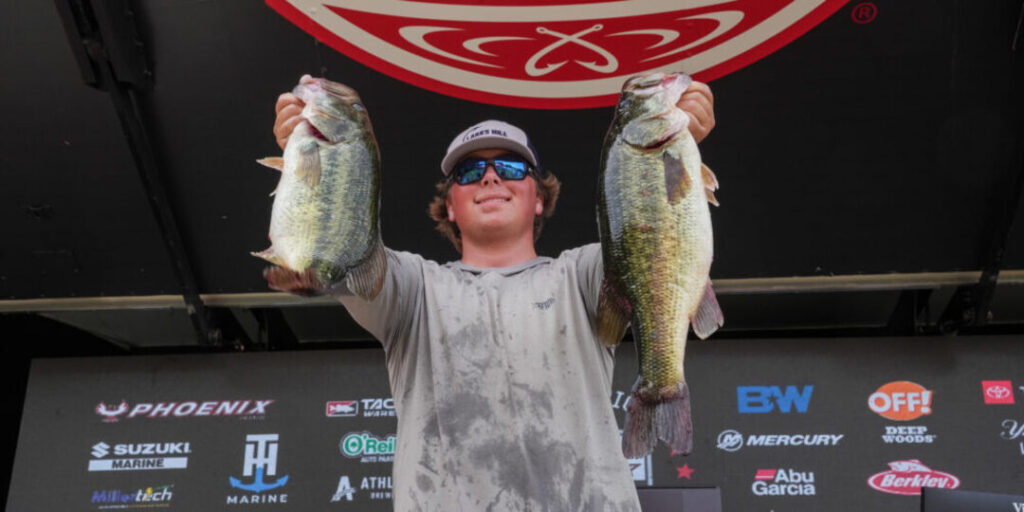
Story leading the boater side would be interesting on its own. The detail that gives the tournament a sharper human edge is that he is the youngest boater in the field and is missing his high school graduation to fish the All-American.
That is not a small lifestyle footnote. It captures the seriousness of the moment. For many anglers, the All-American is not just another tournament; it is one of the biggest grassroots stages in bass fishing. A strong week can change how an angler is viewed, open doors, and create a career marker that lasts longer than one trophy photo.
Story’s first-day weight put him ahead of Caz Anderson at 21-12 and William Bates at 21-3. That margin matters, but it is not comfortable. Lake Murray produced enough quality on Day 1 to make the top of the leaderboard dangerous. The top six boaters broke 20 pounds, while the top 11 cleared 18 pounds, which means the tournament is not waiting for one angler to dominate it.
The first takeaway is simple: this is not over.
The Fluke Story Is Simple, But the Fishing Is Not
The most clickable part of Story’s pattern is that he caught his fish by winding a Fluke. On paper, that sounds almost too easy. In practice, it says a lot about what Lake Murray is asking anglers to do.
A soft jerkbait around herring-driven bass can be deadly because it mimics a baitfish without forcing too much commotion. It can be fished high in the water column, moved steadily, paused subtly, and used around fish that are feeding but not locked to one piece of cover. That matters on Lake Murray because blueback herring lakes often turn bass into movers, not sitters.
The danger is assuming the bait is the whole story. It rarely is. The bigger question is where Story is winding it, when the fish are positioned to eat it, how long the window stays open, and whether those fish reload on Day 2. The lure gets the headline, but timing probably carries the weight.
That is why this tournament has legs as a news topic. It is not only about a young angler throwing a Fluke. It is about whether a simple-looking technique can survive two more days of pressure, limited sonar, and shifting fish movement.
Lake Murray Is Fishing Strong, But It Is Also Setting Traps
A lake that gives up weight on Day 1 can fool anglers into thinking the path is clearer than it really is. Heavy early bags create confidence, but they also create pressure. The field now has proof that good fish are catchable, which can make every missed bite feel bigger.
The official Day 1 leaderboard at Lake Murray shows how tightly packed the top group is, and that is where the tournament becomes dangerous. Story leads, but Anderson and Bates are close enough that one efficient morning rotation could flip the event.
Lake Murray’s personality adds another layer. This is not a pond where anglers can simply camp on one visible target. Herring movement, offshore cane, grass edges, points, and suspended fish all create opportunities that can appear and vanish quickly. A school that fires at 8:30 may not be there at 10. A cane pile that looks empty may suddenly come alive when bait arrives.
That is the pressure of a strong but unstable fishery. The lake gives anglers enough to believe, then forces them to prove they understand why it happened.
Story, Anderson, and Bates Represent Three Different Pressure Tests
The top three after Day 1 create a useful snapshot of how this event could unfold.
| Angler | Day 1 Weight | Early Storyline | Main Pressure Point |
|---|---|---|---|
| Jack Story | 22-15 | Youngest boater leads with a Fluke-driven approach | Proving the bite can repeat under cut-day pressure |
| Caz Anderson | 21-12 | Close enough to take over quickly | Turning missed chances into cleaner execution |
| William Bates | 21-3 | Strong start with grass and offshore clues in play | Managing fish that may move daily |
The table shows why Day 2 matters so much. Story has the lead, but Anderson and Bates both have legitimate paths to overtake him. This is not a tournament where first place has escaped the pack.
The biggest difference may be mental. A young leader has to resist fishing defensively. Chasers have to attack without forcing bad decisions. Everyone near the top has to understand that Lake Murray can reward aggression one hour and punish it the next.
That is cut-day pressure in its cleanest form.
Limited Sonar Makes the Herring Game More Complicated
One of the most important tournament wrinkles is limited sonar. On a herring lake, forward-looking electronics can help anglers track fish movement, but limits change the rhythm of the day. Anglers cannot simply spend unlimited time watching and adjusting to every fish that appears.
That should put more value on pre-existing judgment: knowing where herring are likely to travel, how bass use cane and grass edges, when wind helps a place, and when cloud cover can extend a bite. Electronics still matter, but they do not erase instinct.
That may be good for the tournament. The best events usually come when technology, experience, and decision-making all have to work together. If one tool dominates everything, the story narrows. If the field has to blend modern vision with old-fashioned pattern sense, the leaderboard becomes more revealing.
Story’s herring-lake background makes him especially interesting here. Experience on southeastern herring fisheries can help an angler understand the behavior before the screen confirms it. That can save time, protect decision-making, and turn a short feeding window into a bigger bag.
The winner may be the angler with the best balance of screen time and trust.
The Next Signal Is Whether the Fluke Pattern Survives
The biggest development to monitor is not simply whether Story stays in front. It is whether his Day 1 pattern survives contact with the next round of pressure.
If he catches another strong bag on a Fluke, the story changes from “young angler gets hot” to “young angler may have the best read on the lake.” If the bite fades, the tournament becomes a test of how quickly he can pivot. That is where championships are often won: not on the first pattern, but on the second decision.
Anderson’s position also matters. He is close enough that efficiency could be the difference. Bates, meanwhile, brings another layer because grass and suspending fish could become more important if the main herring deal gets pressured or scattered.
The Lake Murray event page will keep the tournament moving toward the cut and final-day setup, but the editorial story is already clear. This is a fishery producing quality, but not handing out security.
The phrase to remember is repeatability under pressure.
The Lake Murray BFL All-American is compelling because Day 1 gave readers both a face and a tactical puzzle. Jack Story has the lead, the human-interest hook, and the simple Fluke headline. But Lake Murray still has herring movement, limited sonar, close challengers, and enough weight in the field to flip the story fast. If Story holds, it becomes a breakout moment. If he slips, this herring-lake shootout may turn into exactly the kind of cut-day chaos that makes the All-American worth watching.