

Postspawn bass crankbaits matter right now because many anglers are still fishing yesterday’s shallow spawning pattern while better fish are already sliding toward their first feeding stops. The bank may still look tempting, but the real signal is often farther out: points, brush, rock, shell beds, channel swings, and the first drops where recovering bass can feed without wasting energy. That is where a crankbait becomes more than a lure; it becomes a search tool with purpose.
Why Postspawn Bass Crankbaits Work So Well
The postspawn period can frustrate even experienced anglers because bass do not all leave the bank at the same time. Some fish linger around bluegill beds, fry, docks, bushes, and shallow shade, while others begin drifting toward offshore structure. That split creates confusion because both shallow and deeper patterns can be partly true on the same day.
That is exactly why postspawn bass crankbaits are so useful. A crankbait lets an angler cover water quickly, contact cover, test depth zones, and find active fish before slowing down with a worm, jig, shaky head, or Carolina rig. It is not just about getting reaction bites. It is about gathering information.
A good medium-diving crankbait can reveal where bass are positioned. If fish are eating on the front edge of a point, that tells you something. If they only bite after the lure hits brush or deflects off rock, that tells you something different. The lure becomes a moving probe, not just a bait.
For anglers who want a broader technical baseline, postspawn bass crankbaits deserve attention because the technique connects seasonal movement, lure control, and decision-making in a way few other search presentations can match.
The Postspawn Shift Is Not A Simple Move Deep
The biggest mistake is assuming postspawn bass simply “go deep.” Some do, but many do not make that move in one clean line. They may leave beds and stop on the first available structure. They may suspend under docks. They may chase shad or bluegill shallow in low light, then pull to points or brush when the sun climbs.
That makes the postspawn transition a game of positioning. The angler’s job is not to pick a random depth and hope. The job is to identify the most likely migration routes between spawning pockets and summer holding areas.
Start with the exits. Look at the mouth of a spawning pocket, the first secondary point outside a flat, a hard-bottom transition, or a channel swing close to the bank. These places act like rest stops. Bass can recover, feed, and avoid staying exposed in the shallow spawning zone too long.
A crankbait works because it can test those places without committing half an hour to each one. You can make casts across the crown of a point, down the side of a break, or parallel to a rocky stretch and quickly learn whether fish are active. That kind of efficiency matters during a period when bass can feel scattered.
Stop Beating The Bank Too Long
The bank is comfortable because it gives anglers targets. A dock post, laydown, grass edge, or shade line is easy to see. Offshore fishing requires more confidence because the best cast may be aimed at something invisible.
That is why so many anglers stay shallow too long after the spawn. They keep fishing memories instead of conditions. They remember where bass were two weeks ago and assume some version of that bite should still exist. Sometimes it does. Often, the better fish have already shifted.
The clue is usually quality. If the bank is producing smaller males, scattered bites, or fish that swipe without committing, it may be time to back out. A shallow bite does not have to disappear completely before the offshore bite becomes better. The transition can begin while the bank still looks alive.
A crankbait helps make that decision less emotional. Instead of abandoning the bank blindly, you can test the first offshore targets and compare results. If a medium diver starts producing heavier fish in eight to twelve feet, the lake is giving you evidence.
Where To Throw First
The best postspawn crankbait water usually sits between spawning areas and summer structure. That means your first stops should not be random deep spots. They should be logical places bass would use while leaving shallow water.
| Target Area | Why It Matters | Best Crankbait Approach |
|---|---|---|
| Secondary points | First stopping areas outside spawning pockets | Cast across the point and down both sides |
| Brush piles | Holding cover for recovering bass | Deflect the bait through the top and edges |
| Rock transitions | Hard cover concentrates crawfish and bait | Keep bottom contact without overpowering the bait |
| Shell beds | Feeding areas near migration routes | Use long casts and steady retrieves |
| Channel swings | Quick access to depth and cover | Run the bait parallel to the break |
| First drops | Natural staging zones after the spawn | Test multiple angles before leaving |
The pattern often begins in the first ten to twelve feet, but the exact depth depends on water clarity, temperature, baitfish, lake type, and fishing pressure. A stained lake may keep fish shallower. A clear reservoir may pull them farther off the bank. The key is context.
Do not just throw once and leave. Change the angle. A crankbait running uphill across a point may get ignored, while the same lure running down the break gets crushed. Bass often position with their nose into current, wind, or bait movement, and the right angle can create the trigger.
Medium-Diving Crankbaits Are The Workhorse
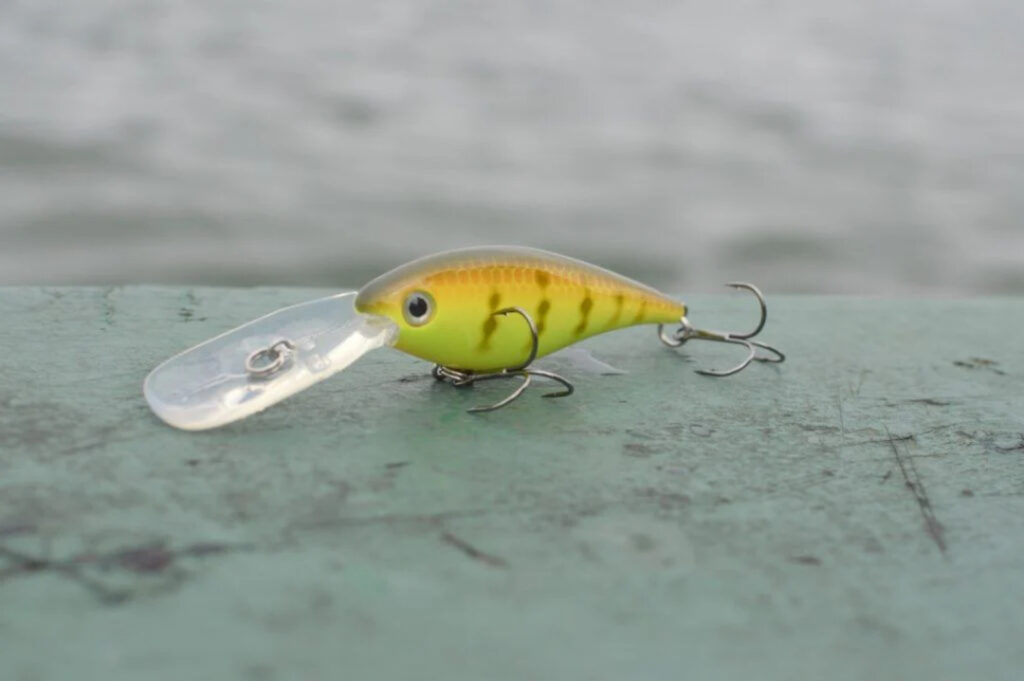
A medium-diving crankbait is usually the best starting point because it covers the most useful postspawn zone without forcing the angler too deep too soon. It can hit rock, tick brush, grind shell, and move quickly enough to find active fish.
The right bait should reach bottom or cover occasionally. If it never touches anything, you may be fishing above the strike zone. If it digs too hard and constantly fouls, you may be using too much bait for the depth. The sweet spot is controlled contact.
This is where crankbait selection matters. A rounder, wider-wobbling bait may work better when fish are aggressive or water has stain. A tighter action can be better when conditions are clear, fish are pressured, or the bite feels weak. There is no universal answer, and that is the point. The lure needs to match the mood of the fish.
A medium diver also gives you feedback through the rod. When the bait starts grinding, deflecting, or suddenly freeing from cover, you can feel how the target lays out. That helps you map the spot cast by cast.
Retrieve Speed Should Follow The Fish
Many anglers retrieve crankbaits at one comfortable speed and never adjust. Postspawn bass often demand more nuance. Some want a steady retrieve. Some react only after a deflection. Others need a stop-and-go cadence that makes the lure look wounded for a split second.
Speed is part of the strategy. If bass are chasing shad or feeding aggressively, a faster retrieve can trigger competition. If they are recovering from the spawn and feeding in short windows, a slower retrieve with hard contact may be better.
The mistake is treating crankbait fishing as mindless winding. The best crankbait anglers are constantly reading the lure. Did the bite come before contact, during contact, or just after the bait cleared cover? Did the fish hit on the first few cranks, halfway back, or near the boat? Each answer improves the next cast.
For technique ideas that fit seasonal bass movement, postspawn crankbait fishing remains a useful editorial lane because it combines lure choice with timing, water reading, and practical adjustment.
Do Not Ignore The Follow-Up Bait
A crankbait is often the best tool for finding fish, but it is not always the best tool for catching every fish in the group. Once you get bit, slow down and test whether more bass are present.
This is where a worm, jig, Carolina rig, shaky head, or swimbait can add value. If the crankbait catches the first aggressive fish off a brush pile, a slower bait may catch the next two. If a bass swipes at the crankbait and misses, a follow-up presentation can turn a missed opportunity into a landed fish.
Think of the crankbait as the locator and the slower bait as the closer. That approach keeps you from leaving productive water too soon. It also prevents the common mistake of assuming one fish means one isolated bite.
The better habit is to mark the cast, note the angle, and repeat the productive lane. Then rotate through a slower presentation. If nothing else happens, move on. If the area reloads or produces multiple bites, you may have found the day’s pattern.
Water Clarity Changes The Whole Plan
Water clarity should influence crankbait depth, color, sound, and casting distance. In stained water, bass may hold tighter to cover and react better to a bait that has more vibration or presence. In clear water, they may follow longer, suspend more often, or require longer casts and cleaner presentations.
Clear water rewards precision. A bait that runs too close to the boat may never get a fair chance. Long casts keep the lure in the strike zone longer and prevent fish from feeling pressured. Clear-water fish may also punish heavy-handed retrieves, especially after the spawn.
Stained water often lets you fish more directly. You can target rock, wood, brush, and shallow points with a little more aggression because fish rely more on vibration and ambush positioning. Still, stained water does not mean careless fishing. Deflection and depth control still matter.
The best anglers do not choose a crankbait because it is their favorite. They choose it because the water tells them what kind of presence the lure needs.
Wind Can Make The Bite
Wind is one of the most important postspawn variables because it moves bait, breaks up visibility, and positions bass. A calm point may look perfect and produce nothing. Add wind, and the same point can suddenly feel alive.
That is why anglers should treat wind as a signal, not an inconvenience. A windblown point, rocky bank, or shell bed can be ideal for a crankbait because bass often face into the movement and wait for food to come to them. The crankbait then becomes an easy meal moving through the strike zone.
Wind also helps hide the bait. In slick water, bass can inspect a crankbait too long. In choppy water, they may react faster and commit harder. That does not mean every windy bank is good, but it means wind can upgrade an otherwise average area.
When the postspawn bite feels stale, I like to revisit structure once the wind changes. A point that looked dead in the morning may become productive later. That kind of patience can be more profitable than running new water all day.
The Best Cast Is Rarely Straight At The Bank
Postspawn crankbait fishing improves when anglers stop casting only toward shore. Offshore targets require different angles. Sometimes the best cast is parallel to a break. Sometimes it is across the end of a point. Sometimes it is from shallow to deep or deep to shallow, depending on how fish are facing.
Angles create leverage. A crankbait that barely touches cover on one line may grind perfectly on another. A brush pile that eats lures from one side may produce bites when approached from the clean edge. Rock can be the same way; the bait needs to deflect without burying constantly.
This is where many anglers leave fish behind. They make two casts, fail to get bit, and assume the spot is empty. A better approach is to make a few deliberate casts from different directions before leaving. If the target is high quality, it deserves a real test.
The goal is not to cover water randomly. The goal is to cover water with intent.
Electronics Help, But They Should Not Replace Fishing
Modern electronics can make postspawn fishing more efficient, especially when looking for brush, hard spots, bait, and fish suspended near structure. Still, electronics should support the process, not control every decision.
A screen may show fish that will not bite. It may miss bass tucked tight to cover. It may encourage anglers to stare instead of cast. The best use is to identify high-percentage places, then let the crankbait reveal whether the fish are active.
That distinction matters. A mark on a screen is potential. A crankbait bite is confirmation. Both have value, but they are not the same.
If you find bait on a point, fish it. If you see brush near a migration route, test it. If the screen is empty but the structure is perfect and the wind is right, make a few casts anyway. Postspawn bass are not always polite enough to show themselves first.
Common Mistakes That Kill The Crankbait Bite
The first mistake is fishing too shallow for too long. The second is fishing too deep too soon. That sounds contradictory, but it reflects the real problem: anglers skip the middle zone where postspawn bass often stop first.
The third mistake is poor execution. A crankbait needs to run correctly. Dull hooks, weak line choices, bad casting angles, and rushed retrieves all cost fish. Crankbait fishing looks simple until the first good bass comes off halfway back.
The fourth mistake is leaving productive areas too quickly. If a point produces one good fish, do not treat it like an accident. Repeat the angle. Change the retrieve. Try a follow-up bait. Give the area a chance to reveal whether more fish are present.
The fifth mistake is ignoring the broader fishing culture around seasonal patterns. Bass fishing is gaining more mainstream attention, and stories like Randy Moss bringing new spotlight to the sport show why more readers are looking for practical technique content that explains what is actually happening on the water.
How To Build A Simple Postspawn Crankbait Plan
Start in spawning pockets, but do not stay there long unless the quality is obvious. Then move to the first exits: secondary points, channel swings, rocky stretches, isolated brush, and hard-bottom areas. Make long casts and use the crankbait to test water quickly.
If you get bit, slow down mentally before you slow down physically. Ask where the bite happened. Was it near the top of the point? Was it after the lure hit cover? Was it on the pause? Was it in shade, wind, or cleaner water? Those clues create clarity.
Once you identify a productive zone, expand it. If one secondary point works, check the next three with similar depth, angle, and cover. If one brush pile produces, look for more brush at the same depth. If rock is better than clay, stop wasting time on clay.
That is how a crankbait becomes part of a larger system. It finds fish, defines the zone, and gives you a way to build a pattern without guessing.
What To Think About Next
The postspawn period punishes anglers who fish the past and rewards those who read the present. Bass leaving the beds do not always announce where they are going, but their route usually makes sense once you connect spawning areas, cover, structure, bait, and depth.
That is why postspawn bass crankbaits deserve a serious place in any May or early-summer fishing plan. They help anglers stop guessing, search efficiently, and find active fish before slowing down with more deliberate presentations. The bank will still produce at times, and shallow fish should never be ignored completely. But when the better bites start sliding away from the obvious targets, the angler who backs out first often gains the advantage.
The next move is simple: stop treating offshore water like a mystery. Use the crankbait to test the first structure outside the spawning zone, listen to what each bite or empty cast tells you, and adjust before the day gets away. Postspawn bass crankbaits are not magic, but they are one of the fastest ways to turn a fading shallow bite into a smarter, more productive plan.