

Postspawn bass near bluegill beds create one of early summer’s most visible patterns—and one of the easiest to fish incorrectly. The beds pull attention toward the colony’s center, but better bass often use the edges, exits, shade, and nearby cover where a distracted bluegill is easier to isolate.
The most useful seasonal bass strategies begin by identifying what the fish are eating, then matching location and presentation to that forage instead of forcing a favorite lure into the wrong feeding situation.
The Colony Is the Clue, Not the Target
Bluegill gather in clusters of circular nests over sand, gravel, or firm bottom once water reaches their spawning range. The bluegill spawning cycle also explains why the opportunity can repeat: males defend colonies, guard developing young, and may participate in multiple spawning waves during warm weather.
For bass anglers, the colony matters as a concentration point. Bluegill move, turn, chase intruders, and cross the same few lanes. That activity creates a predictable feeding zone when postspawn bass can otherwise appear scattered.
The mistake is dropping every lure into the middle. That can disturb the area while missing fish using it as a hunting ground. The perimeter is the pattern.
How to Confirm a Bed Is Active
An old colony can look promising long after the fish have left. Fresh beds usually appear cleaner and more sharply defined than the surrounding bottom. In clear water, they resemble overlapping pale circles or dark depressions. In stained water, the fish often reveal the area first.
Watch for repeated flashes, short territorial chases, surface dimples, or bluegill that return quickly after the boat passes. A few scattered panfish are not enough; you want sustained activity in one compact zone.
Then look beyond the circles. Identify the nearest grass edge, dock post, stump, laydown, shade line, or depth change. A colony with several of those features within one cast has more value because bass can approach without crossing a featureless flat.
Keep the boat outside the colony and make long casts. A quiet first pass reveals more than driving over the beds and trying to rebuild the bite.
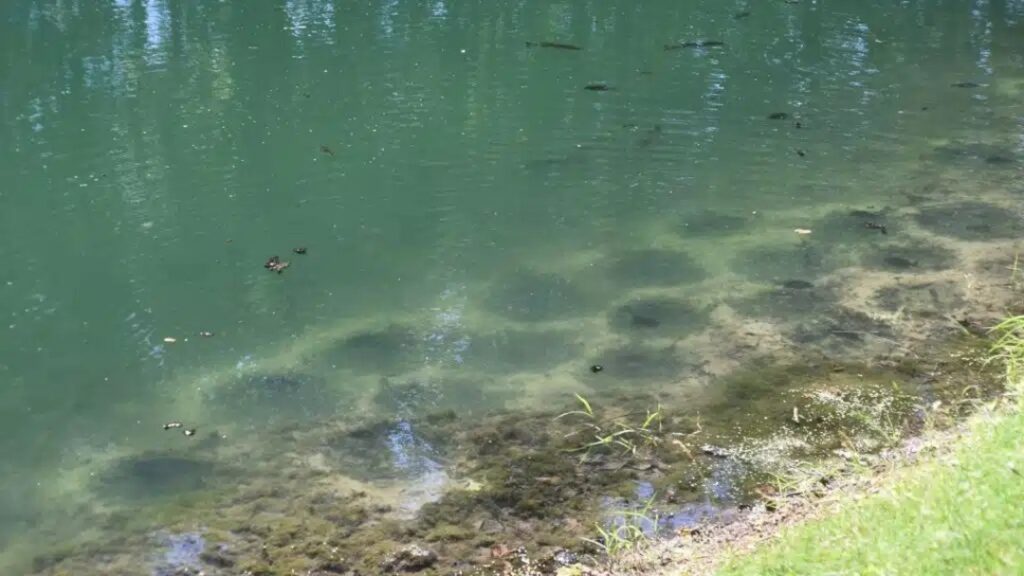
Postspawn Bass Near Bluegill Beds Hold Outside the Noise
Larger bass do not need to charge through the busiest part of a colony. They can hold where the flat breaks, vegetation ends, or one piece of cover creates a blind corner. Those positions allow shorter, more efficient attacks.
That fits edge-focused feeding behavior observed in largemouth bass and bluegill interactions around vegetation. Bass can search from cover and capitalize when prey enters a more exposed lane.
Start one cast outside the visible beds. Work parallel to grass, across the deep side, and past isolated cover before touching the center. If the first bite comes from a specific edge, repeat that angle. The structure, not the nest itself, may be creating the opportunity.
One isolated ambush point can outweigh fifty visible beds.
Bluegill Forage Demands a Different Lure Shape
Shad-oriented bass often respond to speed, flash, slim profiles, and open-water presentations. Bluegill-oriented bass are hunting deeper-bodied forage close to grass, wood, bottom, or shade. The lure should look and move like it belongs in that tighter space.
A swim jig is a strong starting choice because it follows grass edges, clears scattered cover, and resembles a bluegill leaving the colony. A compact swimbait works in clear water when bass will track. A popper or walking bait becomes useful when bluegill flick near the surface or low light pulls bass higher.
When the area has activity but no chase, slow down. A Texas-rigged creature bait, weightless stick bait, or compact jig can sit beside outside cover. Choosing a bluegill color is not enough; profile, speed, and path matter more than paint alone.
Avoid racing a lure straight through the beds. A frightened bluegill often moves toward cover or deeper water, so retrieve direction should reflect that escape route.
Read the Signals Before Changing Baits
The first ten minutes should be a diagnosis, not a random lure rotation. Let visible activity, cover, and strike location determine how aggressively to fish.
| Signal | Likely Bass Position | Best First Presentation | Key Adjustment |
|---|---|---|---|
| Bluegill flicking on the surface | Outside edge or nearby shade | Popper or walking bait | Pause beside cover |
| Active beds beside grass | Outer grass line or openings | Swim jig | Track parallel to the edge |
| Clear beds without surface activity | First drop or isolated wood | Compact jig or creature bait | Slow the fall |
| Wind blowing into the colony | Windward edge | Bluegill-profile swimbait | Cover water first |
| Heavy boat pressure | Deep side or dock shade | Weightless stick bait | Make longer casts |
This is not a rigid formula. It connects what you see with where a bass can hunt efficiently. Location should choose the lure, not the other way around.
Sun, Wind, and Pressure Decide When to Return
A bluegill-bed pattern can improve after you leave. Morning may produce a surface bite, while midday sun pushes bass toward dock shade, grass walls, or the deepest side of the colony. Light wind can reduce visibility and encourage fish to roam; boat traffic may move them to protected edges.
Mark the strongest colony, note where the first quality bite occurred, and return after the light angle or wind changes. A quiet pass does not always mean the pattern is dead.
Watch the bluegill. If they scatter and regroup, a predator may still be close. If the colony looks empty, silted, or inactive, move on rather than fishing memories. The best beds are living neighborhoods, not circles on the bottom.
Postspawn bass near bluegill beds reward anglers who stop staring at the center and start reading the surrounding geometry. Find the active colony, identify the safest ambush lane, and choose a lure that moves like a bluegill escaping cover. The overlooked opportunity is the narrow ring of water where a patient bass expects its next meal.