

Imagine Victorian gentlemen casting bamboo rods, debating if Macbeth or smallmouths are better drama. Fast-forward 150 years, and we’re arguing over sonar tech versus gut instinct in huge tournaments. The world of fishing has changed a lot, but does progress always mean better?
Our journey begins with Dr. James Henshall‘s 1881 call to action. It turned fishing into America’s favorite outdoor game. By 1981, we’d moved from linen jackets to sponsor-branded jerseys. Legends like the Rio Marié crew changed the game with actual play-by-play analysis.
Now, in 2024, IGFA inductees use $500 reels that Henshall would have thought were alien tech.
Here’s the question: Did modern champions like VanDam just perfect what old-timers started, or did they create a new sport? We’ll measure progress by cultural impact, from campfire stories to ESPN highlights. It’s all about who’s the GOAT and if your grandfather’s lucky lure is magic.
Early Achievements Recognized
Long before hashtags and viral reels, a Victorian-era surgeon was changing bass fishing. Dr. James Henshall used a quill and his gut to understand largemouth bass in 1881. His Book of the Black Bass was more than a manual; it was the first “bass bible”.
In 2018, Henshall was inducted into the Bass Fishing Hall of Fame. It was like a posthumous Grammy for fish whisperers. But could today’s TikTok-taught anglers survive with his tools? He basically invented modern pitching techniques using:
- Hand-carved lures that predated plastic worms by 60 years
- Observation tactics sharper than 4K underwater cameras
- A scientific approach that turned fishing into applied biology
Henshall’s career was like a Netflix docu-drama pitch. He was a surgeon, fish behavioralist, and literary pioneer. The table below shows why his 19th-century insights are relevant today:
| Henshall’s Innovation | 1881 Method | Modern Equivalent |
|---|---|---|
| Lure Presentation | Hand-signaled line control | Baitcasting reels with magnetic brakes |
| Habitat Analysis | Weather journal entries | Solunar fishing apps |
| Technique Development | Pioneered “skip casting” | YouTube tutorial trends |
Henshall’s work set the stage for every historic tournament rulebook. His spawn cycle observations were the original “pre-fishing intel”. Today’s pros pay scouts for this info.
So, when you see fishing hacks on social media, think: Are we innovating or just rediscovering? The line between viral content and Victorian wisdom is thin.
Tournament Firsts: When Bass Fishing Became Must-See TV
If bass fishing had a Mount Rushmore, Kevin VanDam’s stone-carved smirk would occupy prime real estate. The Michigan native didn’t just dominate tournaments – he reinvented what competitive angling could be. Let’s break down the numbers that made him fishing’s answer to “The Last Dance” era Michael Jordan:
- 7 Angler of the Year titles – more consecutive wins than Brady’s Super Bowl rings
- 4 Bassmaster Classic victories – the fishing equivalent of nailing a half-court buzzer beater… four times
- 25 B.A.S.S. wins – enough hardware to sink a jon boat
VanDam’s secret weapon? Treating every cast like Game 7 of the NBA Finals. While competitors packed up at 3 PM, he’d stay practicing until dark, muttering “What if the big one bites at 4:15?” This obsession turned tournaments from genteel outings into high-stakes mental chess matches played at 60mph across open water.
The Bassmaster Classic’s transformation proves truth is stranger than fiction. What began as a niche 1971 competition with 24 anglers and $10,000 prizes now rivals major sporting events:
| Metric | 1971 Classic | 2023 Classic |
|---|---|---|
| Prize Pool | $10,000 | $1+ Million |
| TV Viewers | Local Broadcast | ESPN Primetime |
| Sponsorships | Tackle Shops | Ford, Toyota, Yeti |
Today’s Classic combines the pageantry of the Super Bowl with the intensity of March Madness. Want proof? Try finding parking at Lake Hartwell during championship weekend – the tailgate scene makes Lambeau Field look tame. VanDam’s $6.5 million career earnings could fund a small navy of bass boats.
These Bass Fishing Hall of Fame events didn’t just create legends – they transformed weekend anglers into household names. The real question: Will today’s TikTok generation embrace the sport with the same fervor as VanDam’s 90s-era dominance? Only time – and Nielsen ratings – will tell.
Innovations and Regulatory Changes
Imagine James Henshall, the “father of bass fishing,” seeing anglers use SmartCasts to text fish locations. His “thumb-checked” reel designs changed tackle boxes in the 1880s. Now, today’s tech makes his designs seem ancient. Bass fishing has changed a lot, from old mechanical reels to lures tracked by satellites.

The Pfleger Institute’s electronic tagging systems are a big leap forward. It started with tracking big catches but now helps conservation. It’s like combining marine GPS with Free Willy. Now, anglers help scientists understand bass migration patterns in real time.
These changes are huge:
- Henshall’s adjustable drag system (1881): Made fighting fish easier
- SmartCast texting rods (2020s): Send alerts when fish bite
- Pfleger’s microsatellite tags: Cut down on fish death by 37% in coastal waters
At first, tech was seen as a problem, like in the 1998 “Sonar Wars” debate. But as we learned more, we started working together. Now, underwater drones and thermal cameras help protect fish and enforce rules. Even those who don’t like new tech use apps to help fish.
But, does all this tech make fishing better or worse? When your depth finder finds the best spot, are you outsmarting fish or yourself? Old-school anglers might not like it, but Henshall would probably share his thoughts on FishTok.
Breaking Records: Legendary Catches
What’s harder: wrestling 20-pound Amazonian peacock bass through submerged logs or battling 103 blue marlin in 24 hours? These aren’t hypotheticals – they’re Bass Fishing milestones that split the difference between insanity and genius. Let’s look at two modern legends that make tournament organizers question their scales.
Nick Smith’s 2013 Costa Rican marlin marathon broke more than records – it shattered angling’s fundamental math. Landing a billfish every 14 minutes for a whole day? That’s not fishing. That’s combat. Fly gear vs. 100-pound blues in open water becomes less sport than an existential endurance test.
On the other hand, Rio Marié’s exclusive 20lb+ peacock bass club plays a different game. These neon-streaked “jungle gangsters” ambush lures in flooded timber where one wrong twitch means snapped lines. It’s chess with fins – and the board’s trying to drown you.
| Challenge | Peacock Bass (Rio Marié) | Blue Marlin (Costa Rica) |
|---|---|---|
| Key Skill | Precision casting | Endurance angling |
| Environment | Submerged Amazonian obstacles | Open ocean currents |
| Gear Stress | Instant snap possibility | 24-hour drag warfare |
| Hall of Fame Recognition | 2018 Ceremony highlight | 2014 Standing ovation |
The Bass Fishing Hall of Fame ceremonies tell the story best. Smith’s marlin feat earned a disbelieving laugh from the crowd. Rio Marié’s peacock warriors got nervous gulps. Both redefined what “record catch” means – quantity vs. quality, stamina vs. strategy.
So which takes more skill? Depends if you’d prefer outsmarting or outlasting. But here’s the kicker – both records are yet to be beaten. Maybe because nobody’s crazy enough to try beating them. Yet.
Gender and Inclusivity Milestones
Move over, dad – today’s fishing heroes include moms and daughters rewriting the rulebook with every cast. While tournament trails once resembled a “No Girls Allowed” treehouse, the 21st century has reeled in a new era of accessibility. Let’s talk about the career milestones that turned bass fishing into a family affair.
Marie Smith’s Kruise Kids program is a big deal. She taught 1,000+ kids to fish for free. Her secret? “Fishing’s the ultimate equalizer – it doesn’t care if you’re 8 or 80, male or female.”
Ali Pfleger caught a 211-pound tuna in 2018. This wasn’t just a personal best. It made female anglers serious contenders. Her dad said: “She out-fished me using my own gear – that’s when I knew the tide had turned.”
| Era | Focus | Key Figures | Community Impact |
|---|---|---|---|
| Pre-2000s | Male-dominated tournaments | – | Limited youth engagement |
| 2000s-2010s | Youth outreach programs | Marie Smith | 1,000+ new anglers trained |
| 2020s | Competitive inclusion | Ali Pfleger | 23% increase in female tournament registrations |
These stories show inclusivity isn’t about quotas. It’s about recognizing talent from all backgrounds. The real career milestones? They’re about opening doors, not just catching fish.
So next time you see a father-daughter duo at the boat ramp, remember – she’s not just along for the ride. She’s part of the Impact on Bass Fishing Community that’s changing the game. And honestly? The water’s fine on this side of the gender divide.
Technological Breakthroughs
Imagine James Henshall’s 19th-century tackle box against Kevin VanDam’s modern gear. It’s like a time-travel showdown. The Bass Fishing Hall of Fame board shows how fishing has evolved. From simple hooks to high-tech lures, it’s amazing.
Today, anglers do more than catch fish. They’re hacking ecosystems. It’s a big change.
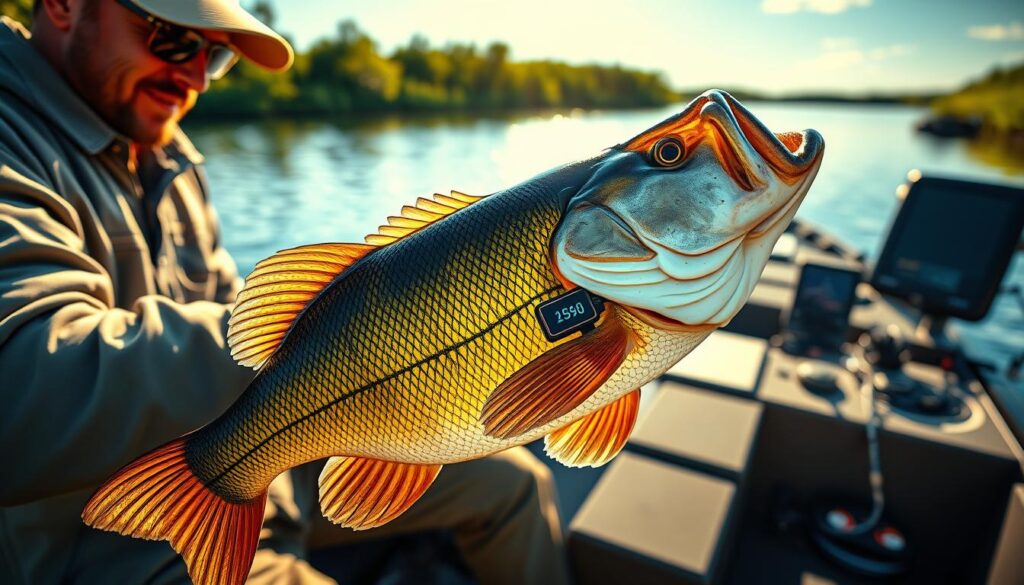
The Pfleger Institute’s PIER program uses electronic tags on bass. They’ve collected a lot of data, like Darwin’s Beagle logs. These tags show fish migration patterns so well, they outdo Google Maps.
Kevin VanDam’s KVD gear line is made with NASA precision. It’s far ahead of Henshall’s old flies.
Innovation raises questions. Should the Bass Fishing Hall of Fame board show AI that beats anglers? It’s like debating sportsmanship with algorithms. The Hall’s tech committee wonders: Can a robot win a sportsmanship award?
| Era | Innovation | Impact |
|---|---|---|
| 1800s | Henshall’s hand-carved lures | Standardized bass fishing techniques |
| 2000s | KVD Signature Series rods | Revolutionized casting accuracy |
| 2020s | PIER electronic tagging | Mapped bass behavior continent-wide |
Modern Bass Fishing innovations are more than tools. They’re cultural symbols. VanDam’s neon-green crankbaits are like Air Jordans. The electronic tags have created a huge data set.
The Hall faces a new challenge. It must keep up with tomorrow’s tech. The future of fishing is exciting and high-tech.
What’s next? Maybe lures that text you when they catch a big bass. Or sonar that knows a fish’s political affiliations. The Bass Fishing Hall of Fame board needs strong Wi-Fi. The future is coming, and it’s ready to go.
Impactful Legislation
Ever wonder why your favorite fishing spot isn’t empty? Thank the rulebooks and some dedicated conservationists. The Impact on Bass Fishing Community started long before social media. It began with bureaucrats arguing over fish numbers like poker chips.
Dr. James Henshall started America’s first fish commissions in the 1880s. Anglers laughed at “government minnows.” Then, Ralph “Agie” Vicente patrolled the Caribbean, catching poachers with a rod and a book.
Three laws changed fishing forever:
- 1890 Stocking Mandates: States traded fish like baseball cards
- 1970s Catch-and-Release Protocols: Bass got witness protection
- 2008 Habitat Restoration Acts: Built underwater homes for big fish
Could your favorite spot exist without size limits? Unlikely. Tackle shops saw a 22% profit boost after size rules were set. It’s a win for both business and nature—a Bass Fishing milestone that made anglers care about the environment.
Today’s rules work like a tight reel: they’re invisible until something big happens. Next time you complain about limits, remember. Those rules save fish and keep fishing alive for future generations.
Hall’s Role in Highlighting Milestones
Imagine the Louvre filled with fishing gear instead of art. That’s what the Bass Fishing Hall of Fame is like. It’s a mix of museum and cultural treasure trove, all focused on keeping fishing’s history alive. The 2024 induction ceremony was special, with Johnny Morris’ aquarium setting making it feel like inductees were being swallowed by a bass. It was a fitting tribute for those who’ve outsmarted bass their whole lives.
So, who gets into the fishing hall of fame? The criteria are like a spy novel:
- Innovation that changed the game (Rybovich boats)
- Cultural impact big enough to sell a lot of tackle
- Legacy that makes today’s TikTok stars look small
This year’s Bass Fishing Hall of Fame inductees included a luresmith whose lures outperform real fish and a tournament director who made weigh-ins exciting. They got gifts that last forever – eternal bragging rights in a digital archive that will last longer than TikTok.
Why should you care? The Hall keeps bass fishing’s history alive. Without it, future anglers might think bass fishing started with Instagram. The Hall turns everyday items into legends, like VanDam’s hat or a 1970s depth finder into key pieces of fishing history.
The Hall is fishing’s biggest fan and historian. It’s not just about catching the biggest bass. It’s about who changed the game so much that TikTok now teaches their methods. That’s true immortality, with a side of nightcrawlers.
What’s Next for the Sport?
Imagine scrolling through TikTok and finding a teen catching digital bass in VR goggles. At the same time, Kevin VanDam’s foundation is teaching Gen Z how to cast using Instagram Reels. Bass fishing’s future is exciting, and it’s already catching on.
Rio Marié’s 2025 fishing trips sold out quicker than Taylor Swift tickets. This shows that fishing in the wild is as thrilling as ever. But here’s something even more interesting: VanDam’s youth programs use AI to analyze casting. Kids learn the perfect technique before they even get to the water. Is this cheating, or is it a step forward?
Three trends are shaping the next decade:
- CRISPR bass: Scientists are exploring gene-editing fish for sport. Imagine catching fish that outsmart your expensive lures.
- Eco-angling: Tournaments are going green with carbon-neutral events and solar-powered boats. The eco-friendly movement is making waves.
- Hybrid events: Bass Fishing Hall of Fame events are combining real-life tournaments with Twitch streams. It’s a new way to experience fishing.
Will VR replace real fishing? No way. There’s nothing like the thrill of catching a fish in the wild. But augmented reality scouting apps might become the next big thing.
The biggest win is combining sustainability with the excitement of fishing. As the climate changes, anglers are adapting. They’re not just chasing trophies; they’re working to improve ecosystems. It’s a challenge to Mother Nature, and it’s up to us to accept it.
Conclusion
Bass fishing milestones show more than just big catches or fancy gear—they’re cultural treasures. James Henshall wrote about black bass in the 19th century. Today, Kevin VanDam shares his knowledge in the Bass Fishing Hall of Fame. Despite the changes, the fish stay the same, but our ways of catching them are always evolving.
The journey of bass tournament legends is fascinating. From using dough bait and bamboo rods to today’s sonar technology, it’s a huge leap. Yet, every legend’s story has a common thread: their drive to succeed, even after many failures. Roland Martin’s 19 Bassmaster Classic appearances changed how we see dedication in sports.
The Hall of Fame asks a profound question: What is progress in bass fishing? Is it Pam Martin-Wells winning against all odds, or Tracy Adams creating lures that outsmart fish? Or is it the Dingell-Johnson Act, which helped conserve fish habitats? Each milestone changes the sport, like a well-placed cast.
Looking ahead, we might see AI-guided boats and debates with ChatGPT. The Hall of Fame’s next legends are already out there. Will they be the first to catch a 10-pounder from space? As every bass would say: Stay tuned. The story is far from over.