

Let’s talk cartography for the modern angler. Reading a lake map is like understanding the secret language of fish.
I’ve spent enough time on what locals call Boom Lake to know its transformation story. What began as a lumber holding pond in 1882 has evolved into one of Northern Wisconsin’s premier destinations. The muskie here think they’re hiding in 40-pound luxury, but we’re about to serve them an eviction notice.
We’ll explore how to decode underwater structures using everything from the Fishing Spots app’s Navionics maps to LakeMaster’s premium charts. Finding fish isn’t about luck – it’s about understanding that fish are fundamentally real estate investors who prefer specific underwater properties.
The Rhinelander Flowage offers more than just muskie. Northern pike and various bass species patrol these waters, each following their own real estate preferences. Your success depends on reading the underwater landscape.
Deep vs. Shallow Areas
Depth is more than a number on your fish finder. It’s like an underwater real estate market. Here, predators fight for territory based on temperature and oxygen levels.
Crappie, largemouth bass, and northern pike rule different depth zones. Bluegill and perch are less common. This shows a clear power structure in the underwater world.

White suckers and young fish attract big predators to best spots bass lake. They create paths along depth lines. This turns certain areas into feeding hotspots.
Modern tools like Humminbird Apex 13 and Solix 15 change how we see depth. They turn guessing into a strategic advantage. They show where the best fishing spots are, based on oxygen, temperature, and food.
Finding the best spots bass lake isn’t about luck. It’s about knowing how depth creates different habitats. Deep areas are safe, while shallow ones are hunting grounds.
The smart angler reads depth patterns like a political analyst reads polls. Each contour line tells a story. It shows where the big fish are and where to cast your line.
Local Secrets
The real treasure map of Bass Lake isn’t on paper. It’s in the fishing rules that keep tourists out. The 40-inch muskie minimum? That’s the lake’s way of saying it grows monsters.
These rules tell you everything. The catch-and-release periods for bass? That’s the lake’s way of saying it’s special. The unique panfish limits? That’s the economic policy of an underwater universe.
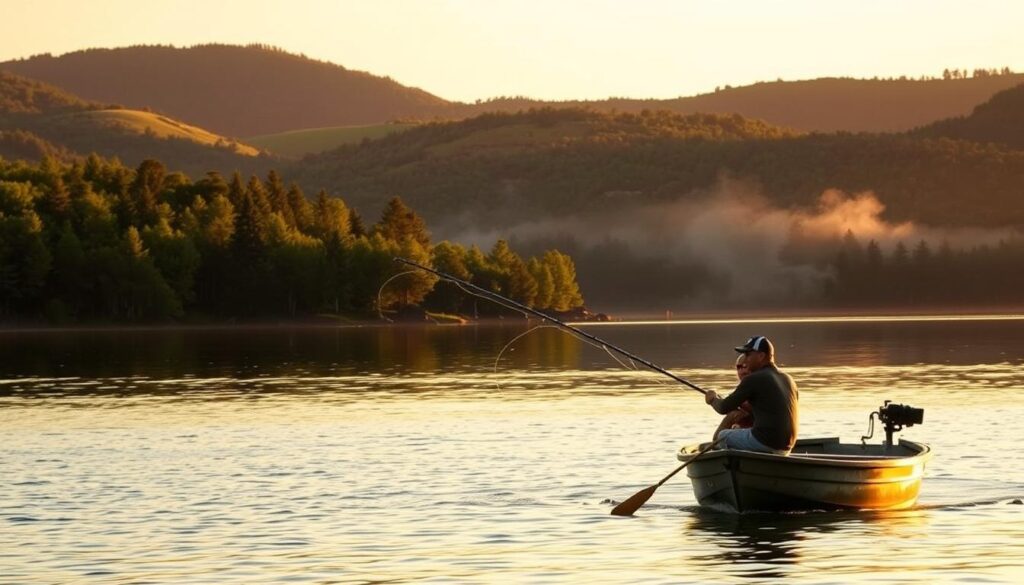
Summer weekends make Bass Lake busy. The secret is fishing when it’s quiet. Low-light hours are your VIP pass to the best bass lake fishing hotspots.
The Hodag Muskie Challenge is big. It’s the Kentucky Derby for anglers. This event shows who’s serious.
Modern tools have changed fishing. The Fishing Spots app lets you save waypoints. But the real value is in the community’s secrets.
TacticalBassin gets it right. Their custom lures are designed for Bass Lake’s fish. They’re made to surprise the fish.
The paper mill’s ghost haunts these waters. Its historical discharge created unique conditions. Fishing here is like aquatic archaeology.
| Fishing Approach | Tourist Method | Local Secret | Why It Works |
|---|---|---|---|
| Time of Day | Noon fishing | Dawn/Dusk hours | Less boat traffic, active feeding |
| Muskie Strategy | Any size keeper | 40″+ focus only | Protects breeding stock, bigger fish |
| Technology Use | Basic depth finder | Community waypoints | Collective local knowledge |
| Lure Selection | Standard tackle | Custom designs | Novelty triggers strikes |
The ultimate secret? The best bass lake fishing hotspots are often abandoned spots. Fish have short memories but follow patterns.
True mastery is reading the lake’s mood. Is it generous or hard to get today? The water tells stories if you listen.
Finding the best bass lake fishing hotspots isn’t about coordinates. It’s about understanding why fish are there today. It’s recognizing that sometimes the secret spot is where everyone is fishing – just fished differently.
Weather Impacts
Think weather talk is just filler conversation? Think again. A smallmouth might ignore your lure if the barometer drops. Weather patterns affect more than just your outfit – they can decide if you catch fish or take a nap.
The Fishing Spots app turns weather data into fishing gold. It’s like having a weatherman, astronomer, and fish expert all in one app. It gives you real-time info on wind, water temperature, and more, helping you find active fish.
Moon phases can really impact fishing. Muskies get hungry during full moons. Barometric changes trigger feeding frenzies. I’ve seen Bass Lake’s fishing conditions change in minutes with a storm approaching.
Knowing weather patterns is key to catching fish. Water temperature affects fish behavior. Wind direction and cloud cover also play big roles.
Here’s how different conditions affect best spots bass lake locations:
| Weather Condition | Bass Behavior | Optimal Locations | Presentation |
|---|---|---|---|
| High Pressure | Less active, deeper water | Main lake points, deep structure | Slow, vertical presentations |
| Low Pressure | Aggressive feeding, shallow | Shoreline cover, weed edges | Fast-moving reaction baits |
| Overcast/Rain | Increased shoreline activity | Docks, fallen timber, banks | Topwater, shallow cranks |
| Sunny/Clear | Suspended, shade-oriented | Deep shade, drop-offs | Finesse techniques, jigs |
Seasonal changes affect fish behavior and fishing rules. Spring brings fish to shallow bays. Summer pushes them deep. Fall brings aggressive feeding.
Environmental changes make fishing spots change too. A great spot last month might be empty today. Knowing how weather affects bass fishing helps you adapt.
Successful anglers know the best spots and when to fish them. It’s the difference between guessing and knowing. Between fishing and catching.
Your electronics show structure, but weather tells you if fish are there. Combine both for consistent success.
GPS Coordinates
Forget about treasure maps and X marks the spot. Today, fishing uses digital coordinates that impress even NASA. We’ve moved from vague directions to precise waypoints, shared or kept secret.
LakeMaster’s VX Premium charts paired with Garmin’s Navionics systems are amazing. They’re not just maps; they’re detailed underwater guides. Now, fishing becomes a high-tech operation.
But, there’s a catch. The best bass lake fishing hotspots aren’t just about numbers. They also depend on timing and knowing fish patterns. I’ve spent a lot of time fishing to learn this.
Think of fishing spots like real estate. Location is key, but timing is everything. That perfect spot might be empty at noon but full in the morning. Boat traffic changes everything by 10 AM, making some spots better than others.
My strategy for finding bass lake fishing hotspots includes three things:
- Migration patterns that change with water temperature
- Feeding times that sync with insect hatches
- Boat traffic patterns that create temporary safe zones
The Fishing Spots app has changed how we share waypoints. Now, I can send my brother exact spots while saying “meet me here when the mayflies hatch.” It’s like Uber for bass fishing, with a smallmouth bass as the driver.
Remember, coordinates are just addresses. The real secret is knowing when fish are home. This turns random bass lake fishing hotspots into reliable spots. It’s not simple; it’s complex, like three-dimensional chess with fins.
Navigation Safety Tips
Finding the best spots bass lake locations is important. But, you must navigate safely back to shore. Underwater obstacles love to hit boat props, making waters like flowage ones risky.
The Fishing Spots app’s hazard marking feature helps a lot. Yet, nothing beats using your common sense. These waters are like busy highways, where everyone thinks they’re right.
Don’t forget that proper boat modifications and safety gear are essential. They protect you from costly damage. A damaged lower unit is a permanent problem.
Even if you find great spots, safety comes first. Water levels and obstacles change. Always mark hazards and watch for alerts. No fish is worth risking a tow back to the dock.