

The Lake Murray herring bite has become the defining story of this Bassmaster Elite stop because it forces the field to fish fast, think faster, and accept that the best bass may only be catchable for a few minutes at a time. On Day 2 in Columbia, South Carolina, the event feels like a moving chess match built around blueback herring, points, schooling windows, and the pressure of being in the right place before the bite disappears. I see this as one of the clearest early-May examples of how modern tournament fishing rewards timing, mobility, and hard decisions over comfort.
Why The Lake Murray Herring Bite Matters
A blueback herring lake rarely lets anglers settle into an easy rhythm. Bass can look shallow at daylight, suspend off points by midmorning, chase bait over brush, then vanish from a place that looked alive twenty minutes earlier. That volatility makes the Lake Murray herring bite more than a local pattern; it is a high-speed test of judgment and awareness in front of a national audience.
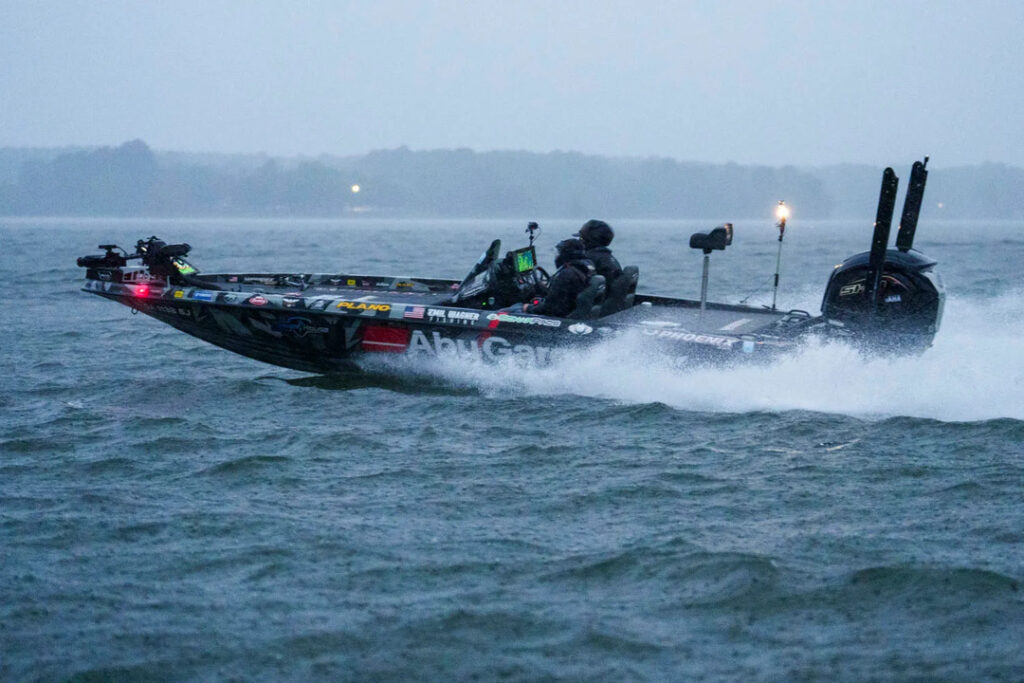
The Bassmaster Elite Series stop at Lake Murray runs May 7–10, and Day 2 matters because it begins to separate a hot start from a durable tournament plan. Day 1 produced the kind of leaderboard that keeps everyone nervous, with Emil Wagner opening with 25 pounds, 7 ounces, Jacob Foutz sitting only an ounce behind, and Taku Ito close enough to make the top of the board feel unstable. A one-ounce gap does not create safety. It creates pressure and urgency.
Blueback Herring Change The Rules
Blueback herring do not behave like a stationary piece of cover. They move, suspend, roam, and pull bass away from the obvious places many anglers prefer to fish. That is why herring lakes often create tournaments that feel restless. The fish may be catchable on topwater, flukes, swimbaits, jerkbaits, underspins, or finesse presentations, but the real pattern is not simply the bait. It is the relationship between forage, bass, structure, and time.
Lake Murray has the kind of open-water personality that makes herring behavior especially important. Points, cane piles, brush, offshore structure, and main-lake transitions can all become part of the same feeding system. A bass may use a point not because the point is beautiful, but because herring are moving across it. That difference matters because the angler is not merely fishing structure. He is fishing movement and forage.
The trade-off is obvious. Herring-related bass can produce explosive bags, but they can also punish hesitation. A school may fire, eat for five minutes, and shut down. A point may load up once and then become empty water. The opportunity is real, yet so is the risk.
Day 2 Is About Proof, Not Potential
Day 1 reveals what is possible. Day 2 reveals what is repeatable. That distinction is crucial because a strong first-day herring bite can tempt anglers into believing they have solved the lake when they have only intercepted one good rotation.
The second day asks harder questions. Can the same point produce again? Will the bait stay in the area? Can an angler abandon yesterday’s best place before it drains his day today? Those questions test discipline and confidence.
A tight leaderboard sharpens every decision. When the margin is measured in ounces, an angler cannot waste an hour waiting for yesterday’s magic, but he also cannot abandon a high-percentage place too early. That is the uncomfortable part of herring fishing: the wrong move and the right move may look identical until the next bass shows itself.
The Point Rotation Becomes The Tournament
The strongest Lake Murray storyline is not just that bass are chasing herring. It is that anglers have to rotate. A herring point is rarely a place to camp all day unless it keeps reloading. The better approach is a sequence: hit a point, read the activity, fire at visible fish, make a few key casts, then move before the dead water steals momentum.
That makes route planning a form of tournament strategy. Anglers must decide which points deserve the first morning window, which can be saved, which are too obvious, and which may improve later. In a field full of Elite-level decision-makers, the route can be as important as the lure.
There is also a mental cost to running. Every minute spent moving is a minute not casting. Yet staying too long can be worse. The angler who manages that balance gains leverage and control because he is managing time against the fish’s feeding rhythm.
The Tackle Conversation Is Really A Timing Conversation
It is tempting to reduce this event to a bait list. Topwater, flukes, swimbaits, jerkbaits, underspins, and soft plastics all belong in the discussion. But on a herring lake, tackle only matters when tied to timing and fish position.
A walking bait can be deadly when bass are pushing herring to the surface. A fluke can look right when fish are slashing but not fully committing. A small swimbait can track naturally through suspended lanes. A jerkbait can hold in front of fish feeding upward but unwilling to break the surface. The bait must match the fish’s mood, not the angler’s favorite technique.
That is why the event feels so useful for everyday anglers. The lesson is not to buy one more lure. The lesson is to ask why bass are positioned where they are and how long they are likely to remain catchable. That question creates clarity and purpose.
Lake Murray Tournament Variables To Watch
The table below captures the core variables shaping Day 2.
| Tournament Factor | Why It Matters | What It Could Reward |
|---|---|---|
| Blueback herring movement | Bass follow roaming forage instead of fixed cover | Fast rotations and precise timing |
| Morning points | Early feeding windows can create quick limits | Topwater, flukes, and aggressive casting |
| Offshore brush and cane | Fish can suspend or reload near structure | Swimbaits, jerkbaits, and sonar control |
| Tight leaderboard | Ounces can shift the cut and the lead | Upgrade discipline and clean execution |
| Weather and light | Schooling activity can shift quickly | Flexible routes and bait adjustments |
Weather, Light, And The Herring Clock
Herring bites often feel tied to a clock, but the better way to think about them is conditions. Light angle, cloud cover, wind, boat traffic, and bait movement can all affect whether bass push to the surface or stay suspended. A point that looks dead under one sky can become alive under another.
This is why Day 2 can change the entire event. If conditions lengthen the topwater window, aggressive anglers may build weight quickly. If the morning bite shortens, the field may have to lean harder on offshore structure and suspended fish. If wind positions bait on one side of a point, small casting angles may become the difference between a follower and a keeper.
Those details create the real texture of the tournament. Fans see the five-fish limit. Anglers feel every small change before that limit reaches the stage.
Forward-Facing Sonar Helps, But It Does Not Decide Everything
On a lake where bass suspend and chase herring, forward-facing sonar will naturally play a role. It can show fish moving around points, brush, cane, and bait. It can confirm whether an area still has life or whether the school has slid away. Used properly, it creates information that can save time.
But sonar is not a magic answer. Seeing fish does not mean catching fish. Herring-driven bass can follow, fade, rise, sink, or refuse in maddening ways. The best anglers use technology to support water reading, not replace it.
That distinction matters for how the event is interpreted. The winner will likely combine electronics, casting accuracy, lure choice, and old-fashioned instinct. Technology may reveal the signal, but execution still decides the weight.
Why This Event Feels Different From A Dock Bite
A dock tournament lets anglers settle into visible targets. Skip the shade, hit the posts, repeat the best angles, and refine. A herring-point tournament is less forgiving. The best cast may be into open water where the reason for the cast is invisible without experience, electronics, or surface activity.
That difference changes the emotional tone. There is less comfort in touching obvious cover. There is more reliance on timing and confidence. The angler has to believe in a place before the place always proves itself, and that requires conviction and patience.
It also creates more volatility for the leaderboard. A dock bite may build steadily. A herring bite can create sudden jumps. One school, one big bite, or one perfectly timed stop can move an angler from survival to contention. That makes the event entertaining, but also unforgiving.
The Cutline Pressure Is Part Of The Story
Day 2 is when the field begins to feel the cutline. That pressure affects decision-making because anglers are no longer fishing in a vacuum. A competitor near the top may protect productive water and fish for upgrades. A competitor near the line may gamble on new water. A competitor buried after Day 1 may have no choice but to swing.
The Lake Murray Bassmaster Elite stop is also the fifth event of the Elite season, which gives it midseason weight beyond the trophy. Points, momentum, confidence, and season trajectories all start to matter more as the schedule moves forward. A good finish can stabilize a year. A missed cut can create consequences.
That is why the herring bite is not only a technique story. It is a career-management story. The anglers who read Day 2 correctly may carry more than a limit to the scales. They may carry momentum and belief into the rest of the season.
What Weekend Anglers Can Learn From Lake Murray
Tournament coverage becomes more useful when it translates into normal fishing. The first lesson is simple: when bass are tied to roaming bait, stop thinking only in terms of fixed cover. Points, saddles, brush, and open lanes matter because they intercept moving forage.
The second lesson is to avoid camping too long. If the fish are herring-oriented, rotation matters. Make a handful of high-quality casts, read the surface, watch the electronics if available, and move with purpose. Fishing slowly can still work, but fishing slowly in the wrong empty water is costly.
The third lesson is to carry a compact lineup instead of a cluttered deck. A topwater, fluke, small swimbait, jerkbait, and one cleanup bait can cover many herring scenarios. The goal is not tackle overload. The goal is efficiency and simplicity.
How This Connects To The Broader May Tournament Pattern
Lake Murray is not happening in isolation. Across recent bass tournaments, May has shown the same broader theme: transition. Some events revolve around docks and postspawn fish. Others revolve around low water, offshore structure, or roaming bait. The best anglers are winning by seeing movement before everyone else does.
That is why a recent low-water tournament setup such as the Douglas Lake Pro Circuit preview belongs in the same conversation. Lake Murray may be a herring shootout and Douglas may be a low-water test, but both ask anglers to solve changing fish rather than cling to fixed assumptions.
This is the larger May pattern. Bass are not always where they were yesterday. Forage is not always still. Water levels, light, pressure, and spawning stages keep moving the target. The angler who accepts that reality gains perspective and adaptation.
The Risk Of Chasing The Surface
There is one danger in a herring event: visible activity can seduce anglers into poor decisions. Schooling fish are exciting, but they are not always the best fish. A few blowups can convince an angler to chase surface commotion while bigger bass hold deeper or use a different part of the point.
That is where restraint matters. A professional has to decide whether the surface activity is worth pursuing or merely distracting. Not every splash is a tournament fish. Not every school is catchable. Not every active-looking place deserves twenty minutes.
The best herring anglers understand that surface action is information, not instruction. It tells them something is happening, but it does not automatically dictate the whole plan. That separation between excitement and decision-making creates poise.
Why Lake Murray Could Keep Getting Better
Lake Murray has increasingly become a lake that fans circle because it can produce the kind of fishing that looks dynamic on live coverage. Schooling fish, topwater strikes, big limits, and quick leaderboard swings make it easy to watch. But the deeper reason is that the fishery forces elite-level decision-making in real time.
A great tournament lake should expose both talent and weakness. Lake Murray does that. It rewards anglers who can run a pattern, understand herring, manage pressure, and make clean casts when a school appears. It also punishes anglers who overstay, overthink, or misread the bait. That balance creates credibility and accountability.
The Day 2 Question That May Decide Everything
The central question is not whether anglers can catch bass on herring points. They can. The real question is who can make that bite repeat under Day 2 pressure. A pattern that looked obvious on Day 1 may become crowded, altered by weather, or simply mistimed.
This is where the tournament will start to define itself. The eventual winner may not be the angler with the flashiest morning. It may be the angler who understands when to leave, when to return, when to switch from topwater to subsurface, and when to trust a point that has not fired yet. That is execution and composure at its cleanest.
Lake Murray is giving the field a fast-moving test, and the herring are writing the rules. The anglers who chase blindly may burn fuel and hope. The anglers who rotate with purpose may turn brief windows into serious weight.
The Lake Murray herring bite matters now because it captures the direction of modern tournament bass fishing: more movement, more technology, more pressure, and less tolerance for slow decisions. The opportunity is a spectacular Elite Series shootout built on roaming bass and aggressive forage. The risk is that one bad rotation, one missed school, or one stubborn hour can erase a strong start. For fans and anglers alike, Day 2 should reveal who is merely fishing memories and who is reading the lake as it changes.