

The Douglas Lake Pro Circuit stop arrives at the kind of moment tournament anglers either welcome or fear: a low-water spring, a mountain reservoir full of options, and a field that cannot afford to misread the first morning. The Douglas Lake Pro Circuit matters right now because it is not merely another date on the Major League Fishing calendar; it is a test of judgment and timing in one of the most revealing windows of the bass season. When a lake can put fish on the bank and offshore at once, the winner is usually the angler who understands transition first.
Why The Douglas Lake Pro Circuit Matters Now
Douglas Lake has the right ingredients for a compelling tournament: East Tennessee terrain, a strong bass population, changing water conditions, and a May calendar slot that can scatter fish across multiple phases. The event begins May 8 in Jefferson County, Tennessee, and the official Douglas Lake Pro Circuit hub gives the stop the kind of visibility that turns a regional fishery into a national conversation.
I see this event as important because it sits between two conflicting assumptions. One says low water should make the fishing tougher. The other says May on Douglas can still produce numbers, variety, and enough quality to keep the leaderboard volatile. Low water does not remove the fish; it changes their positioning and access.
Douglas rarely rewards one lazy explanation. Some fish may stay shallow, some may stage, and others may start sliding toward summer structure. That diversity creates opportunity, but it also creates risk.
Low Water Changes The Map Without Ending The Game
Low water is one of those conditions anglers talk about constantly but interpret unevenly. Some see bare banks, stranded cover, and fewer visible targets. Others see a simplified playing field where the best remaining cover, rock, brush, points, and breaks become easier to identify. The difference is perspective and choice.
On Douglas, a low-water spring can compress the useful shoreline and make certain shallow targets less attractive. It can expose normally productive cover or leave it too thin to hold better fish. Yet it can also push bass toward predictable places: sharper breaks, steeper banks, isolated wood with enough depth, rock transitions, and offshore features tied to spawning movement. That shift creates clarity for anglers willing to stop fishing memories.
Low water also changes boat positioning. A cast that worked at full pool may no longer reach the right depth. A shallow pocket may still look right while the productive water sits closer to the mouth. Tournament fishing punishes stale confidence quickly.
The May Transition Is The Real Story
The most important factor is not simply the lake level. It is the combination of low water and May bass behavior. May can put anglers in contact with fish that are finishing the spawn, guarding fry, feeding around bait, recovering near cover, or beginning to move offshore. That creates strategic tension and real complexity.
The angler who commits entirely to the bank may find numbers early, then run out of quality. The angler who starts offshore may discover that enough fish are still shallow to make that plan premature. The winner may build a rotation that treats Douglas as a lake in motion.
This is where the event becomes editorially interesting. A tournament preview is not only about predicted baits. It is about what the lake asks of the field. Douglas asks for discipline without stubbornness. It asks anglers to recognize when a pattern is building and when it is only a temporary signal.
What “Fish On The Bank And Offshore” Really Means
When a preview suggests that fish could be both offshore and on the bank, it is easy to hear a broad statement. In practice, it defines the decision tree. Bank fish and offshore fish require different tools, timing, boat control, and stamina.
Bank fish may relate to remaining shallow cover, rock, shade, spawning pockets, fry-guarding areas, or quick feeding lanes. Offshore fish may hold on points, humps, roadbeds, drops, channel swings, brush, or bait-related structure. The angler has to decide which group offers the best combination of weight and efficiency.
In a multi-day event, a hot shoreline is valuable only if it can survive pressure or replenish. An offshore school matters only if it can be found again. A mixed approach works when it has repeatability.
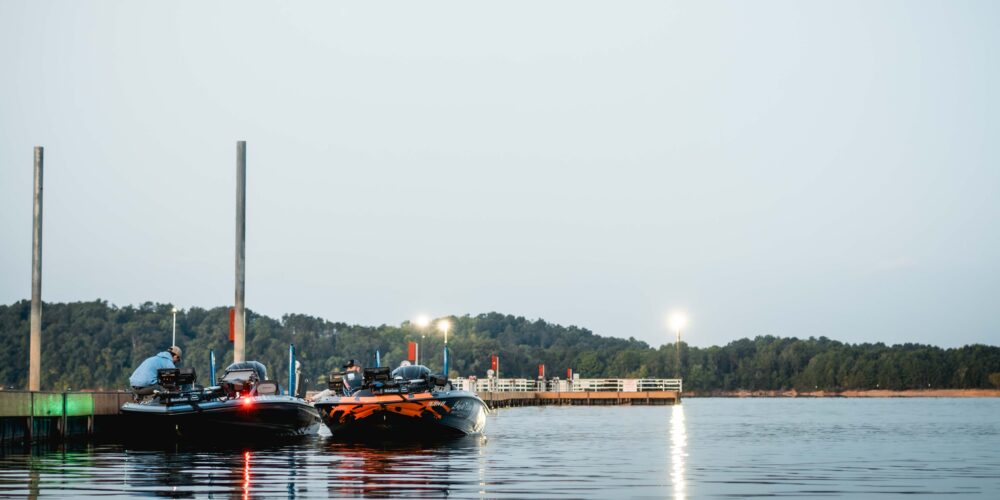
The Bait Mix Should Be Broad But Purposeful
This tournament sets up for a wide lure conversation because several patterns may matter. Shallow anglers could have moving baits, topwater, jigs, Texas rigs, shaky heads, and compact profile baits in play. Offshore anglers may lean into crankbaits, swimbaits, Carolina rigs, football jigs, finesse worms, drop shots, and sonar-driven presentations.
The mistake is turning that list into clutter. Tournament anglers do not need every bait to work. They need the right bait for the right fish at the right moment. That is selection, not accumulation, and it protects focus when the lake offers too many choices.
A strong Douglas setup should cover three jobs: find active fish quickly, slow down around high-percentage areas, and revisit the best water after pressure changes. The angler who manages those jobs has real strategy and better control.
Douglas Lake Tournament Factors To Watch
A table helps clarify the event because the variables are connected. Low water, May timing, and tournament pressure will overlap from the first takeoff.
| Factor | What It Could Mean | Strategic Implication |
|---|---|---|
| Low water | Less shallow cover and altered shoreline targets | Focus on depth-connected banks and remaining high-value cover |
| May timing | Fish spread across late-spawn, postspawn, and early offshore phases | Build a flexible bank-to-offshore rotation |
| Bass variety | Largemouth and smallmouth may both influence bags | Avoid locking into one species unless the weight supports it |
| Fishing pressure | Obvious targets may fade quickly | Save secondary water and adjust angles often |
| Quality threshold | Three-pounders could matter more than pure numbers | Prioritize better bites once a limit is secure |
Why Three-Pounders Could Become Gold
Douglas can produce plenty of bites, but in a professional event the question is never only how many fish can be caught. The question is how many move an angler forward. If three-pound bass become meaningful, the tournament turns into a search for slightly better-than-average decisions.
That creates a fascinating margin. A small keeper may settle nerves, but it may not build a winning total. A three-pounder may not sound spectacular on fisheries known for giant bags, yet on Douglas it can represent the difference between surviving and sliding. The anglers who understand that difference gain real leverage.
There is a psychological cost to leaving numbers. Anglers want action, especially early in the event. But the leaderboard rewards quality, not comfort. The toughest call may be abandoning a stretch that produces fish because it does not produce enough of the right fish.
Smallmouth And Largemouth Add Strategic Texture
Douglas can force anglers to consider both species, and that adds strategic texture. Largemouth and smallmouth do not always use the same water, feed the same way, or respond to the same pressure. A big largemouth can shift a day quickly. A reliable smallmouth bite can stabilize a bag. The best mix depends on conditions and ceiling.
This is another reason the event should not be reduced to shallow versus deep. A rocky point with smallmouth potential and a pocket with largemouth potential may both matter. Is an angler chasing upside, building a floor, or trying to balance both?
That question shapes everything from running time to tackle choice. A finesse-heavy smallmouth approach may produce steady bites but limit ceiling. A largemouth chase may offer better individual fish while introducing more dead time. The winner may find the correct balance before the rest of the field does.
Forward-Facing Sonar Will Matter, But Not Alone
Modern tournament coverage inevitably circles back to forward-facing sonar, especially when offshore fish are part of the equation. It would be naive to ignore its influence. Anglers who can identify suspended fish, isolated cover, bait groups, or small wolf packs gain a real advantage.
Yet sonar will not automatically solve Douglas. Low water and transitional fish can make the screen useful while still forcing hard choices. Seeing fish is not the same as catching them. Watching fish refuse a bait can drain time and confidence. The best anglers will use electronics as part of a system, not as a substitute for reading the lake.
That distinction matters. Sonar can reveal what is present. It cannot fully explain mood, timing, or tournament value. Technology provides information; judgment turns that information into leverage.
Local Knowledge Versus Fresh Eyes
East Tennessee reservoirs often reward history. Anglers who know how the lake behaves at certain levels and which areas reload can build confidence quickly. In a three-day event, that matters.
But history can become a trap when water conditions are different. A favorite pocket may not have enough water. A brushpile may sit wrong. A traditionally strong stretch may receive too much pressure too early. Fresh eyes sometimes win because they see the lake as it is, not as it used to be. That creates memory against observation.
The best professional anglers usually blend both. They respect history but verify it with current conditions. They do not abandon experience, but they do not worship it either. That kind of restraint is especially important when the lake looks familiar enough to invite shortcuts.
What This Means After Recent Tournament Patterns
The Douglas stop also arrives after a stretch of spring tournaments that have emphasized transition, low-water adjustments, docks, swimbaits, and timing windows. Anglers and readers have already seen how quickly May events can turn on one refined presentation or one overlooked lane. The broader Lake Norman swimbait analysis is useful context because it shows how postspawn fish can reward movement-oriented thinking rather than fixed-target fishing.
Douglas will not be Lake Norman, and it should not be treated as a copy. But the underlying lesson travels. Fish in May are often between places. They use corridors and react to water level, light, pressure, and forage movement.
That is the larger tournament theme right now: the winning pattern may not be a place. It may be a sequence. Find, rotate, adjust, return, and refine. That sequence requires patience as much as speed.
The Risk Of Overcommitting Too Early
The first day of a tournament can seduce anglers into overconfidence. A fast morning bite feels like the answer. A productive offshore stop feels like the foundation. Then the second day arrives, pressure changes, and the lake refuses to repeat itself.
Douglas could produce that kind of test. Low water can make fish easier to find and easier to pressure. Strong areas may receive multiple boats. Offshore groups may scatter. Shallow stretches may get burned quickly. The angler who manages pressure will protect his resilience across the event.
This is where tournament maturity matters. The goal is not only to catch them today. It is to understand why they were caught today and whether the pattern can survive tomorrow. That question separates a good start from a winning plan.
What Fans Should Watch On Day One
Day One should reveal whether the bank bite has enough size, whether offshore fish are grouped well enough to manage, and whether smallmouth contribute meaningfully to the leaderboard. It should also show how quickly anglers adjust to the low-water reality once the clock starts.
I would watch the balance between numbers and quality. If many anglers catch limits quickly but struggle to upgrade, the event may become a hunt for isolated better bites. If offshore groups produce repeatable three-pounders, the field could shift deeper. If shallow largemouth show up better than expected, the bank will stay crowded. Each scenario creates a different path.
The weigh-in will matter, but the pattern underneath the weights will matter more. Where did the better fish come from? Were they grouped or isolated? Did anglers describe the lake as changing by the hour? Those answers become evidence of whether Douglas is stable or moving.
Why The Douglas Lake Pro Circuit Could Reward Versatility
The best reason to watch this stop is simple: it appears built for versatility. A one-dimensional angler may catch fish, but winning may require more. The event could reward someone who can start shallow, slide offshore, mix species, change retrieve speeds, and recognize when a three-pound bite is more valuable than another limit fish.
That is why the Pro Circuit preview for Douglas Lake feels like a broader signpost for early May tournament fishing. The lake has enough bass to keep anglers engaged, but the conditions should still expose weak decisions. That combination often produces the most honest leaderboards.
The opportunities are real. So are the trade-offs. Run too much and lose fishing time. Camp too long and miss a developing bite. Chase offshore fish and risk stubborn followers. Stay shallow and risk running out of size. The winner will not eliminate those trade-offs; he will manage them with poise.
The Next Test Starts With Decision Quality
Douglas Lake sets up as more than the next Pro Circuit stop. It is a compact test of spring tournament fishing right now: lower water, mobile fish, mixed species, electronics pressure, and a field skilled enough to punish weak assumptions. The anglers who thrive will treat the lake as a living puzzle.
For fans, the event offers a clean storyline. Watch how quickly the field identifies the better class of fish. Watch whether the bank or offshore bite holds up. Watch whether local history helps or hurts. Most of all, watch how anglers respond when their first plan stops producing, because that moment often reveals the eventual winner.
The Douglas Lake Pro Circuit matters now because it should reward the kind of modern bass fishing that is both technical and instinctive. The risk is overcommitting to yesterday’s conditions. The opportunity is finding the transition before it becomes obvious. In a low-water spring with bass spread from the bank to offshore structure, the winning difference may be one cleaner rotation, one better adjustment, and one decision made before the rest of the field sees the same signal.