

The Lake Havasu Open became the kind of bass fishing story that rewards anyone who looks beyond the headline. Anthony Garcia’s Day 2 surge had the drama: a 38.87-pound total, an 8.57-pound largemouth, and the feel of a tournament being grabbed by the throat. Then the final standings reminded everyone why Western bass events can be so difficult to close.
What makes this recap useful is not simply who led, who chased, or who won. It is the way Lake Havasu exposed the thin line between control and chaos in tournament fishing, especially when sight-fishing, dropshot precision, changing fish movement, and final-day pressure all meet on the same desert lake.
Why The Lake Havasu Open Still Matters After The Weekend
The Lake Havasu Open ran May 7-9, which makes it a fresh weekend recap rather than a live-today tournament. That distinction matters. A live event is about anticipation. A recap is about interpretation. The best angle now is not “what will happen next?” but “what did this tournament reveal?”
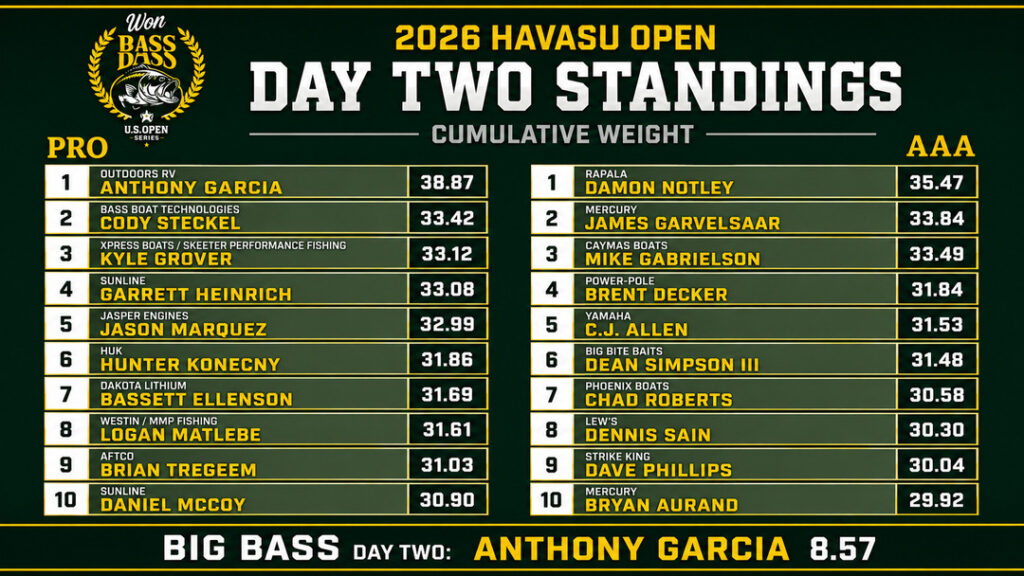
That is where the story gets stronger. Garcia moved into the Day 2 lead with 38.87 pounds after weighing 22.16 pounds on the second day, backed by the 8.57-pound largemouth that gave the event its biggest spotlight moment. At that point, the tournament had a clear signal: big fish were available, but the anglers who found them still had to manage timing, pressure, and execution.
The final results changed the shape of the narrative. Cody Steckel finished first with 50.24 pounds, Jason Marquez landed second with 49.68, and Garcia ended third with 49.65. That three-angler spread shows exactly why this tournament should not be written as a simple “big bass wins everything” story. Garcia’s big move mattered, but Steckel’s steadier three-day total became the final proof.
The latest Lake Havasu Open coverage gave the event a compelling Day 2 hook, but the deeper lesson came from how quickly the leaderboard tightened once the final day arrived.
The Tournament Was A Lesson In Volatility
Bass fishing can look stable from the outside because the format is simple: catch five, bring weight, repeat. Inside the event, though, the reality is more fragile. One kicker fish can rewrite a day. One dead stretch can erase a lead. One fish that will not commit on a bed can turn a confident plan into a painful second guess.
That is what made Havasu so compelling. Garcia did almost everything an angler wants to do on Day 2. He made a move. He found weight. He used more than one pattern. He gave himself room entering the final round. Yet a tournament lead is not a certificate. It is a temporary advantage that must survive the next launch.
Steckel’s final push showed the other side of tournament discipline. He did not need the loudest single-day storyline to become the most important angler in the final standings. He needed enough weight, enough consistency, and enough composure to turn opportunity into a win.
That is the kind of outcome serious fishing readers understand immediately. The best story is not always the biggest bass. Sometimes it is the angler who keeps catching quality fish when the obvious momentum has shifted somewhere else.
How The Top Finishers Framed The Event
| Finish | Angler | Hometown | Final Weight | Storyline |
|---|---|---|---|---|
| 1 | Cody Steckel | Las Vegas, Nevada | 50.24 pounds | Closed the event with the winning total |
| 2 | Jason Marquez | Lake Havasu City, Arizona | 49.68 pounds | Stayed within striking range and nearly stole it |
| 3 | Anthony Garcia | Los Angeles, California | 49.65 pounds | Turned Day 2 into the tournament’s major storyline |
| 4 | Kyle Grover | Rancho Santa Margarita, California | 48.51 pounds | Remained dangerous across all three days |
| 5 | Conrad Demecs | Surprise, Arizona | 48.30 pounds | Made a strong final-day climb |
The table matters because it shows how little separation existed near the top. Steckel’s winning margin over second was narrow. Garcia was even closer to second. Grover and Demecs were not far behind. That kind of leaderboard creates pressure because every cull, every decision to stay or move, and every lost opportunity becomes magnified.
For readers who want to track the official event structure and standings, the Lake Havasu tournament results page is useful because it shows the event as a full competitive record rather than a single dramatic moment.
Garcia’s Day 2 Surge Was Still The Defining Hook
Even though Garcia did not finish first, his Day 2 performance remains the natural editorial entry point. A 22.16-pound limit on Lake Havasu is not a casual number. Paired with his 16.71 from Day 1, it moved him into the lead and gave the tournament its most clickable moment.
That is not just headline bait. It is real tournament substance. Garcia reportedly worked midlake and above, mixing a very specific dropshot approach in 25 to 30 feet with sight-fishing later in the day. That combination tells readers a lot about what Havasu demanded. It was not purely shallow. It was not purely deep. It was a puzzle built around adaptation.
The 8.57-pound largemouth made the story even sharper. Big fish change tournament psychology. They give an angler a lead, but they can also create the illusion that another giant is required to finish the job. Competitors behind the leader start calculating what kind of bag they need. The leader starts deciding whether to protect weight or chase another hammer. That mental game is part of the tension.
Garcia’s move should be framed as a breakout moment inside the event, not as the whole event. That keeps the article accurate while still giving readers the strongest narrative hook.
Why Steckel’s Win Deserves More Attention
The easiest mistake in writing this recap would be making Garcia the only star. He earned major attention, but Steckel won the tournament. That has to be respected.
Steckel entered the final day within reach and ultimately finished with 50.24 pounds. His progression tells the story of competitive resilience. He had 18.52 on Day 1, 14.90 on Day 2, and 16.82 on Day 3. That is not a tournament built on one lucky swing. It is a three-day performance with enough quality to survive pressure from Garcia, Marquez, Grover, and the rest of a stacked field.
There is a different kind of authority in that. Big bass gets attention. Consistency wins trophies. Steckel’s performance belongs in the lead paragraphs because it completes the tournament’s arc: Garcia created the drama, Steckel delivered the finish.
That contrast is the article’s strongest editorial engine. It gives the piece movement. Day 2 produced the shock. Day 3 produced the answer. Readers get both the excitement of the big bite and the more mature lesson about tournament structure.
Lake Havasu Rewards More Than One Style
Lake Havasu has a way of punishing narrow thinking. Anglers who arrive with one locked-in plan can look brilliant for a few hours and lost by the next weigh-in. The lake can reward dropshot fishing, sight-fishing, offshore decisions, shallow targets, and timing-based adjustments depending on conditions and fish behavior.
That variety is part of its value as a tournament venue. It forces anglers to balance confidence with flexibility. The best competitors do not abandon a plan too early, but they also do not worship a dying pattern. That is a difficult line to walk when money, standings, and reputation are involved.
Garcia’s Day 2 details showed that duality. He had a deeper finesse program, then went looking for bed fish later. Steckel’s chase also pointed toward the importance of execution around bedded fish and timing. The final standings suggest that no single approach completely owned the tournament. The winning formula was more layered.
That makes Havasu a strong editorial topic because it lets the article teach readers without sounding like a basic fishing tip sheet. The lake becomes the character. The anglers become decision-makers under stress.
The Sight-Fishing Layer Changed The Stakes
Sight-fishing always adds drama because it is visible, personal, and psychologically exhausting. An angler can see the fish. The fish can refuse. Time disappears. The temptation to stay too long becomes dangerous.
That is why the sight-fishing element at Havasu deserves careful treatment. It adds emotional weight to the recap. When an angler knows a good fish is present, the decision is not simply whether the fish exists. The real question is whether that fish can be caught within the available window.
That creates a different kind of pressure from offshore fishing. Offshore, the angler may wonder if the school is still there. On a bed, the angler may know the fish is there and still lose the battle. That can be more frustrating because the opportunity feels tangible.
For readers, that is a useful explanation of why Garcia’s 8.57-pounder mattered so much. It was not just a big fish. It was the payoff for a specific decision at a specific time. Those moments are the difference between a standard recap and a tournament story with texture.
The Internal Comparison: Havasu And Murray
This Havasu recap also works well beside broader tournament coverage because it highlights how different lakes create different versions of pressure. Lake Murray’s herring-driven action has its own rhythm, where roaming fish, timing windows, and bait movement can dominate the conversation. For a useful contrast, the recent breakdown of Lake Murray’s dangerous herring bite shows how another bass fishing storyline can revolve around movement and timing rather than the same desert-lake variables that shaped Havasu.
That comparison helps readers understand that “bass fishing news” is not one-size-fits-all. A tournament recap should not simply list weights and names. It should explain why those weights happened. Havasu’s story is about precision, sight windows, final-day volatility, and the difficulty of defending a lead. Murray’s story can be about bait-driven danger and explosive schooling behavior.
The common thread is decision-making. Whether an angler is chasing herring fish in South Carolina or managing a desert bite in Arizona, the professional challenge remains the same: identify the highest-probability path before the clock runs out.
Why This Is A Strong SEO Topic
From an SEO perspective, the Lake Havasu Open has several advantages. It is timely, event-specific, and attached to recognizable names. It also gives readers clear search intent. Some people want results. Some want a recap. Some want to understand how Garcia’s Day 2 lead turned into Steckel’s final win. A strong article can satisfy all three.
The key is avoiding a thin results rewrite. Search engines and readers both reward context. A simple leaderboard summary is useful for a few minutes. A deeper interpretation can remain valuable longer because it explains the event’s meaning.
That is why the article should emphasize the tournament arc. Open with Garcia’s big Day 2 moment. Bring in Steckel’s win early. Use the standings table to clarify the result. Then analyze the tactics, the pressure, and the implications for Western bass fishing. That structure gives the piece clarity.
The headline should also avoid pretending the event is live today. Accuracy builds trust. The better framing is “weekend recap,” “final results,” or “what Havasu revealed.” That keeps the article honest while still making it attractive.
What This Result Says About Western Bass Fishing
Western bass fishing does not always get the same national attention as larger tour-level events, but tournaments like Havasu show why the region deserves serious coverage. The fields are competitive. The venues are demanding. The tactics are varied. The margins can be brutally small.
This event reinforced the depth of the field. Steckel won, Marquez nearly caught him, Garcia produced the biggest mid-event move, and several others stayed close enough to make the final standings meaningful. That is exactly what a strong tournament should produce: a winner with credibility, a chase with drama, and enough tactical variation to keep the story alive after weigh-in.
It also reminds readers that the West has its own tournament identity. Clear water, pressure, desert reservoirs, finesse demands, sight-fishing opportunities, and highly technical decision-making can all shape the outcome. That identity gives coverage a distinct editorial angle.
For anglers who follow the sport closely, Havasu is not just a location. It is a test of patience, accuracy, timing, and nerve. Those are the traits that made this event worth revisiting.
The Risk Of Overwriting The Big Bite
There is a temptation to make the 8.57-pound largemouth the whole story. It is understandable. Big bass travels well online. It gives social media a clean image, gives headlines a number, and gives casual readers a reason to care.
But a serious recap needs more judgment. The big bite mattered because it changed the tournament. It did not decide the tournament. That distinction is important because it protects the article from exaggeration and gives the reader a more accurate sense of what happened.
Garcia’s fish was the spark. Steckel’s full-event performance was the result. Marquez’s second-place finish made the margin feel even tighter. Grover and Demecs kept the top five from becoming a two-man story. The strongest article should let all of those pieces work together.
That is how the writing becomes editorial instead of promotional. It gives the reader excitement without sacrificing credibility.
What Anglers Can Take From The Event
For everyday bass anglers, the Havasu takeaway is not “go catch an 8-pounder.” That is not useful. The better lesson is that tournament success often comes from having more than one way to generate quality bites.
Garcia’s Day 2 success came from combining approaches. Steckel’s win came from staying close enough to capitalize. The final standings suggest that anglers who managed multiple decisions across all three days had the best chance to survive.
That lesson applies beyond Lake Havasu. During spring and postspawn transition windows, bass can be scattered across stages. Some fish may still be shallow. Others may be moving out. Some may relate to beds, while others respond better to finesse or timing-based presentations. The best anglers build a plan with flexibility.
The other lesson is emotional. Leading a tournament is hard. Chasing a leader is hard. Fishing around visible targets is hard. Each role creates a different type of pressure. The angler who handles that pressure best often has the cleanest final day.
What Readers Should Watch Next
The next useful question is whether Havasu becomes a reference point for the rest of the Western tournament season. Anglers who performed well here may carry confidence forward. Those who missed opportunities may adjust how they approach similar conditions. Fans should watch whether the same names continue to show up when events demand mixed tactics and careful decision-making.
There is also a broader content lesson. Bass fishing coverage is strongest when it gives readers more than names and weights. It should explain why the lead changed, why one pattern worked, why another faded, and why the final margin mattered. That is where editorial quality separates a useful recap from a forgettable post.
The Lake Havasu Open delivered the right ingredients: a major Day 2 surge, a giant largemouth, a tight final leaderboard, and a winner who closed when it mattered. That is why the story still has life after the weekend. It gives readers a clean result, but it also leaves them with a better understanding of how fast a tournament can turn.
For anyone following bass fishing right now, Lake Havasu Open is the kind of recap that should not be treated as old news just because the weigh-in is over. It shows the risk of trusting a lead too early, the importance of three-day consistency, and the opportunity for Western bass coverage to earn more attention when the story is told with enough depth. The next tournament will bring new names and new conditions, but Havasu offered a reminder that bass fishing’s best drama often happens between the obvious headlines.