

Illinois anglers gave the 2026 Tackle Warehouse Pro Circuit Championship in Florida its clearest competitive story after the event was held September 18-20, 2026, on the Kissimmee Chain of Lakes in Kissimmee, Florida. The tournament has already concluded, so the useful work now is a recap: what the weights showed, why the final day changed the standings, and how a strong showing from one state shaped the community conversation around a national championship.
Why Illinois anglers Controlled The Florida Championship
Illinois anglers Set The Top-End Standard
Drew Gill of Olney, Illinois, won the championship with 75 pounds, 3 ounces across three days. His final day was the decisive swing: a five-bass limit weighing 31 pounds, 13 ounces on September 20, 2026. Major League Fishing reported Gill’s winning total, his $100,000 winner’s check, and his qualification for REDCREST 2027 in its official championship release.
That final limit did not just protect a lead. It erased one. Gill had been sixth after Day 1, moved into second after Day 2 with 22 pounds, 12 ounces, and then took control on Championship Sunday. In tournament terms, that is the difference between surviving the cut and owning the final round.
Levi Kohl of Edinburg, Illinois, made the state story much stronger. He finished second with 64 pounds, 15 ounces and earned $25,000. The research notes identify Kohl as a 22-year-old rookie pro, which gives his runner-up finish a different kind of value for local clubs and younger anglers: it showed that a first-year pro could handle a Florida championship field well enough to lead after Day 2.
The Top 10 Was Not A One-Angler Story
The state depth was visible beyond Gill and Kohl. The Bass Cast reported three Illinois anglers in the Top 10: Gill in first, Kohl in second, and Connor Jacob of Peoria in seventh with 55 pounds, 10 ounces and $13,000 in earnings; it also reported that the final 10 pros all brought five-bass limits on September 20 and weighed 175 pounds, 10 ounces as a group in its Top 10 recap.
That is why the result carried more weight than a single trophy. One win can come from a perfectly timed decision. Three Top 10 finishes from the same state suggest a broader competitive presence at the event. We should be careful not to stretch that into a claim about national superiority, because the available facts cover this event only. Still, for Illinois fishing communities, the championship gave clubs, youth teams, and sponsor partners a concrete set of names and numbers to point to.
The Weight Swings That Decided Kissimmee
Kohl’s Day 2 Lead Set The Pressure Point
The key hinge came on September 19, 2026. Kohl caught a Day 2 limit of 27 pounds, 3 ounces and moved to 48 pounds, 8 ounces for two days. That left him 5 pounds, 2 ounces ahead of Gill going into Championship Sunday. A lead that size is meaningful, but on the Kissimmee Chain in a five-bass-limit event, it was not safe if another finalist found a true big-fish window.
Gill found exactly that on September 20. His 31-13 final round was 9 pounds, 1 ounce heavier than his Day 2 catch and turned the event from a close chase into a double-digit winning margin over Kohl. That shift is the central competitive fact of the championship.
| Angler | Hometown | Finish | Three-Day Total | Reported Payout |
|---|---|---|---|---|
| Drew Gill | Olney, Illinois | 1st | 75-3 | $100,000 |
| Levi Kohl | Edinburg, Illinois | 2nd | 64-15 | $25,000 |
| Connor Jacob | Peoria, Illinois | 7th | 55-10 | $13,000 |
The table is useful because it separates the headline from the structure beneath it. Gill had the winning week. Kohl had the Day 2 lead and a runner-up finish. Jacob added another Top 10 check. For event organizers, those details matter because local participation stories often need more than a champion to gain traction with sponsors and community groups.
Prize Money And Community Stakes
A No-Entry-Fee Championship Still Paid Deep
The reported prize pool was $453,000 for a no-entry-fee championship with 40 pros, narrowing to the Top 10 for Sunday’s final round. Within that format, Gill’s $100,000 first-place award was the obvious headline, but the second- and seventh-place checks also mattered for the local story back home.
Tournament fishing is not only built on boat ramps and weigh-ins. It is built on tackle shops, jersey sponsors, youth volunteers, family travel, local media, and the club circuits that give anglers their first serious competition. A result like this gives Illinois organizers something verified to use in sponsor conversations: a state group had the winner, runner-up, and another Top 10 finisher at a national championship in Florida.
That does not guarantee new support. It does make the pitch cleaner. A sponsor can see names, payouts, totals, and the event format. A high school or college fishing coach can point to the pathway from local water to a championship stage. For readers who track broader sports coverage across the same network, NBA Playbook covers a variety of sports, ensuring the focus on competitive fishing results remains clear and distinct on this platform.
Tactics That Separated Gill On Day 3
The Less Crowded Zone Carried The Event
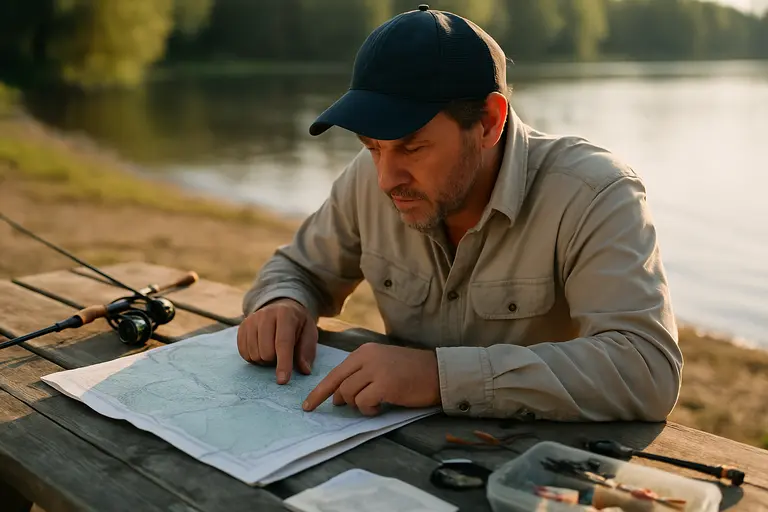
The available reporting gives a clear tactical contrast. Many front-runners worked heavily fished areas, including Lake Toho, with forward-facing sonar. Gill shifted to a less crowded structural zone with cleaner bottom and columns of peppergrass. The important part is not that one tool won or lost. The supported point is that Gill’s decision reduced crowd pressure and put him around a more productive structural setup on the final day.
That should interest weekend anglers without being copied blindly. Cleaner bottom and vegetation columns can be valuable, but they are not magic. The useful lesson is process: identify pressure, compare bottom quality, and stay willing to move away from community areas when the event clock makes every decision sharper.
The Florida setting also matters. The Kissimmee Chain rewards anglers who understand grass, open lanes, boat position, and how bass use edges. On September 20, Gill’s reported adjustment matched those event conditions better than the options being leaned on by several front-runners. That is a fair reading of the result without making claims beyond the published facts.
For a related Florida tournament format note, the Florida BASS Nation reset shows how verified weights and format changes can shape local planning beyond a single championship week.
Illinois anglers And The Florida Championship Takeaway
What Local Circuits Can Use From This Result
For Illinois anglers, the best takeaway from the September 18-20, 2026 championship is not a slogan. It is a set of usable facts. Gill won with 75-3 and a 31-13 final day. Kohl led after Day 2 and finished second with 64-15. Jacob finished seventh with 55-10. The final round was strong across the board, with all Top 10 anglers bringing five-fish limits.
Those facts can help local tournament directors frame clinics, youth events, sponsor packets, and club meetings. A practical session could compare Day 2 and Day 3 decision-making. A youth program could use Kohl’s runner-up finish as an example of a young pro performing under championship pressure. A club meeting could study Gill’s move away from crowded water and ask how that applies on smaller Illinois lakes where pressure can be just as real, even if the water is not Florida grass.
Gill’s broader 2026 line also deserves mention because it was reported with the championship result: six career victories, a third major win of 2026, and a second Florida victory during that span. Those are verified achievements from the published event coverage. The careful read is simple: this was not an isolated good day. It was a major Florida championship won by an angler who had already built a strong 2026 record, backed by two more Illinois Top 10 finishes that made the state presence impossible to miss.