

The Grand Lake Regionals ended on Saturday, October 24, 2026, and the standings tell a tight, useful story for tournament anglers, sponsors, and local organizers around Grove, Oklahoma. Roger Fitzpatrick of Eldon, Missouri, won the Phoenix Bass Fishing League Regional on Grand Lake with 15 bass totaling 50 pounds, 5 ounces, according to Major League Fishing’s event report MLF recap. The narrow spread behind him matters as much as the win itself: the top seven boaters and top seven co-anglers earned advancement to the 2027 Phoenix BFL All-American, making every pound in the standings a career-step issue, not just a payout line.
Understanding The Grand Lake Regionals Standings
Grand Lake Regionals At A Glance
The event was held October 22-24, 2026, as one of six Regional Championships on the 2026 Phoenix BFL schedule. It served as the Regional for the Arkie, Cowboy, Great Lakes, and Ozark divisions. That division mix helps explain why the leaderboard pulled competitors from several states rather than reading like a purely local derby.
Fitzpatrick’s winning total was 50-5 across three days. The next six qualifying boaters were close enough that one missed cull or one late fish could have shifted All-American qualification. TJ Martin of Claremore, Oklahoma, placed second with 15 bass for 49-0. Dale Andrews of Jay, Oklahoma, was third with 15 bass for 48-8. Chase Fitzpatrick of St. Louis, Missouri, placed fourth with 15 bass for 48-0. Adam Boehle of Warrenton, Missouri, was fifth with 15 bass for 47-15. Justin Luetkemeyer of Lake Ozark, Missouri, was sixth with 15 bass for 46-0. Chris Darby of Hot Springs, Arkansas, placed seventh with 15 bass for 45-5.
Why The Top Seven Cut Line Mattered
The 2026 BFL Regional rule structure made the top seven positions the main competitive boundary. The verified report states that the top seven boaters and co-anglers from each Regional, plus a Wild Card, earned entry into the 2027 Phoenix BFL All-American. That changed the meaning of the final standings. First place carried the prize package and headline. Seventh place carried major advancement value.
From an organizer’s view, that cut line is healthy for weigh-in tension. It gives spectators and families more than a winner to follow. It also gives sponsors more competitor stories to support. A local tackle shop, marine dealer, or community partner can point to multiple anglers who left Grand Lake with a next-stage berth. The verified record does not provide attendance, hotel, or direct spending figures, so any claim about exact economic impact would go beyond the available sources. What can be said is narrower and more useful: a Regional with All-American berths attached creates stakes that extend beyond one lake and one weekend.
| Boater Place | Angler | Home | Bass | Weight |
|---|---|---|---|---|
| 1 | Roger Fitzpatrick | Eldon, Missouri | 15 | 50-5 |
| 2 | TJ Martin | Claremore, Oklahoma | 15 | 49-0 |
| 3 | Dale Andrews | Jay, Oklahoma | 15 | 48-8 |
| 4 | Chase Fitzpatrick | St. Louis, Missouri | 15 | 48-0 |
| 5 | Adam Boehle | Warrenton, Missouri | 15 | 47-15 |
| 6 | Justin Luetkemeyer | Lake Ozark, Missouri | 15 | 46-0 |
| 7 | Chris Darby | Hot Springs, Arkansas | 15 | 45-5 |
What The Winning Pattern Said About Grand Lake
Dock Selection Was The Core Pattern
The winning pattern was not reported as random bank running. Fitzpatrick credited LiveScope sonar for helping identify docks that had fish on them. His productive water included docks from the backs of creeks toward the main channel, and his reported baits included an Omega Pro Mega Structure Jig with a Bojangles Baits Z-Daddy trailer. A glide bait also helped secure key fish during the later days, according to The Bass Cast’s standings and pattern report tournament recap.
That detail matters for anglers trying to learn from the event. The technology helped find fish, but the repeated target was a type of cover: docks. The best lesson is not simply “use forward-facing sonar.” It is that the winning angler tied his electronics work to a repeatable cover category and kept refining it across three days.
Day Two Pressure Made The Result More Useful
Fitzpatrick’s day-by-day path added weight to the pattern. He started with 18-13 on Day 1. Day 2 was harder, and he did not complete a full limit until around 2 p.m. On Day 3, he returned to docks he had not fished since practice and caught enough to win. That sequence is valuable because it shows a plan that bent without breaking.
For local tournament directors and club anglers, this is the type of recap that helps build better post-event education. It gives younger anglers a realistic picture: a winning event can include a slow limit day, a delayed adjustment, and a final-day return to practice water. Not every lesson needs to be a new bait. Sometimes the teachable point is confidence in a mapped-out decision.
Co-Angler Standings Carried Their Own Pressure
Dylan Mickle Led A Compact Co-Angler Field
The co-angler standings also had clear All-American stakes. Dylan Mickle of Claremore, Oklahoma, won the co-angler division with nine bass for 25-4. Darrin Wood of Rochester, Minnesota, placed second with nine bass for 23-9. Ron Knight of Hot Springs Village, Arkansas, was third with eight bass for 23-2. Alan Bernicky of Dardanelle, Arkansas, placed fourth with nine bass for 22-9. Blake Miller of Cedar Falls, Iowa, was fifth with eight bass for 21-13. Connor Richmond of Cleveland, Oklahoma, was sixth with nine bass for 21-3. James Edmonds of Hot Springs Village, Arkansas, finished seventh with nine bass for 20-5.
The co-angler side often gets treated as a secondary storyline, but these standings deserve a full read. Co-anglers fish behind boaters, adapt to shared water, and still have to manage limited opportunity. A nine-fish total winning at 25-4 shows that consistent execution mattered. It does not prove any single technique without more detail, but it does show that the top co-anglers turned limited bites into advancement.
Big Bass Added A Separate Competitive Marker
Travis Mosley of Benton, Arkansas, earned the Big Bass Boater award with a 6-1 bass and received $350. Big fish awards can feel like a side note beside championship standings, but they carry real community value. They give fans at weigh-in one clear fish to remember, and they give sponsors a simple promotional moment. As an event organizer, I like those markers because they let more than one competitor leave with recognition, while keeping the main standings intact.
| Co-Angler Place | Angler | Home | Bass | Weight |
|---|---|---|---|---|
| 1 | Dylan Mickle | Claremore, Oklahoma | 9 | 25-4 |
| 2 | Darrin Wood | Rochester, Minnesota | 9 | 23-9 |
| 3 | Ron Knight | Hot Springs Village, Arkansas | 8 | 23-2 |
| 4 | Alan Bernicky | Dardanelle, Arkansas | 9 | 22-9 |
| 5 | Blake Miller | Cedar Falls, Iowa | 8 | 21-13 |
| 6 | Connor Richmond | Cleveland, Oklahoma | 9 | 21-3 |
| 7 | James Edmonds | Hot Springs Village, Arkansas | 9 | 20-5 |
Community And Sponsor Read On The Event
Grove Hosted More Than A Weigh-In
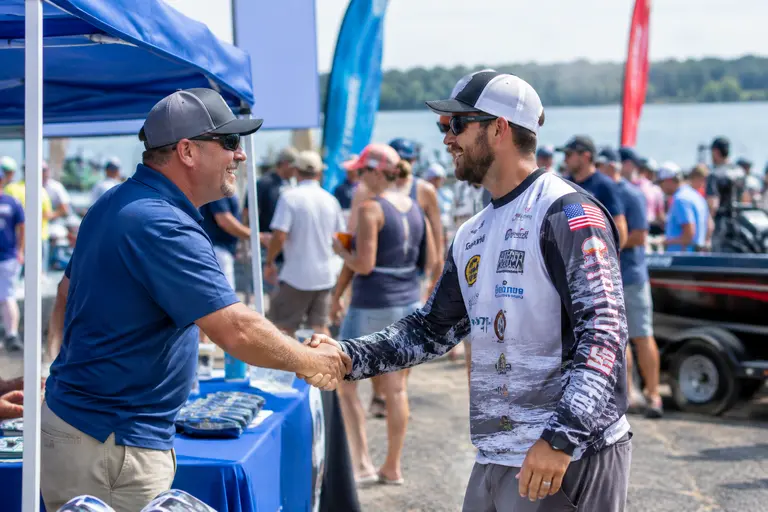
The event was hosted by Grove, Oklahoma, and Grand Lake again served as a competitive filter for regional bass anglers. The verified reports do not list local revenue, volunteer counts, conservation staffing, or sponsor activation totals. That limits what can be responsibly claimed. Still, the structure of the event is clear: it brought together competitors from multiple states, tied standings to national advancement, and put Grand Lake’s dock bite under a tournament spotlight.
For communities, that kind of event creates practical planning questions. Where do boats stage? How are fish handled at weigh-in? Are youth clubs and local high school anglers able to see the process? Which local partners benefit from being attached to a credible tournament rather than a one-day promotion? Those questions are not answered by the standings, but the standings are the reason the questions matter.
Conservation Context Belongs Beside Competition
Grand Lake tournament coverage is stronger when it keeps fishery care in the same conversation as winning weight. A related local analysis of Grand Lake conservation and regionals framed that point around watershed and habitat concerns tied to tournament fisheries. That is where community organizers can do meaningful work: connect the excitement of advancement with reminders that the lake itself is the asset everyone is using.
There is also a broader sports-network lesson here. Fishing coverage benefits when it stays close to event records, official standings, and local outcomes rather than trying to borrow hype from other sports. Readers who are interested in broader outdoor and recreational content can explore more through FS Golf, which provides a related site within the same network, but this Grand Lake recap stands on its own because the tournament data is specific and verifiable.
Grand Lake Regionals Takeaways For Local Anglers
The Standings Rewarded Limits And Late Decisions
The biggest competitive takeaway from the Grand Lake Regionals is that the leaderboard rewarded three-day steadiness. Every boater in the top seven brought 15 bass to the scale. That does not mean each day was easy. Fitzpatrick’s reported Day 2 struggle shows the opposite. It means the anglers who advanced protected their tournament by finishing limits and finding enough quality to stay above the cut.
The second takeaway is that the winning pattern had both technology and judgment in it. LiveScope helped identify productive docks, but Fitzpatrick still had to choose which stretches to trust, which baits to throw, and when to revisit practice water. For a weekend angler, that is a useful balance. Electronics can shorten the search. They do not replace a plan.
The third takeaway belongs to sponsors and local clubs. The Grand Lake Regionals produced a winner, two full sets of All-American qualifiers, and a Big Bass award. Those are several entry points for storytelling after the scales close. A cautious, evidence-based recap should not pretend to know spending numbers or crowd size without records. It can still recognize that a concluded Regional with clear advancement stakes gives the fishing community real names, weights, and outcomes to build around.