

Florida red snapper trips on the Atlantic coast will operate under a short, rule-heavy October window that rewards preparation as much as fishing skill. The Florida Fish and Wildlife Conservation Commission said Florida’s 2026 Atlantic recreational red snapper season will run continuously from October 9 through October 22, 2026, in state and federal waters under an Exempted Fishing Permit, or EFP FWC season notice. That 14-day opening gives private anglers and for-hire customers more room than the separate federal recreational season, but it also adds reporting duties that need to be handled before the boat leaves the dock.
Florida red snapper Dates And The Choice Anglers Face
The 14-Day EFP Window
The central planning point is simple: the Florida EFP season is set for October 9 through October 22, 2026. During that period, declared recreational trips may retain red snapper under the EFP structure, subject to the requirements described by FWC. For anglers who work around weather, ramps, crew schedules, and fuel costs, the continuous 14-day window matters because it spreads effort beyond a single weekend.
That does not make the season casual. A longer calendar does not reduce the need to know which season a trip is using, who has the required designations, what gear is allowed, and how declarations are handled. The most avoidable mistakes are administrative, not fishing-related: failing to declare a trip, misunderstanding the federal-versus-EFP choice, or assuming a normal reef trip can turn into a red snapper trip after the boat is already offshore.
The Federal Three-Day Period
NOAA announced that the 2026 federal recreational red snapper season in the South Atlantic exclusive economic zone is limited to October 9 through October 11, 2026, and that anglers may choose the federal season or the Florida EFP season, but not both NOAA season announcement. That split is the key compliance issue for mixed groups, especially if some anglers are used to federal openings and others are focused on Florida’s EFP process.
From a practical standpoint, the choice should be made before gear is rigged. A crew planning to fish under the EFP should treat the declaration system, license checks, and reef fish angler designation as part of the launch routine. A crew choosing the federal period should not assume the longer Florida dates automatically apply to them. The rules are close enough to confuse people and different enough to create problems.
Permits, Declarations, And Dockside Discipline
Florida red snapper Trip Declarations
Every trip targeting or likely to retain red snapper under the Florida process must be declared before leaving the dock through the FWC reporting system. Anglers age 16 and older are required to use the app, based on the research provided, and post-trip catch and discard reporting is encouraged. That reporting piece is not just paperwork. It is part of why the EFP season exists, because managers are collecting trip-level information while allowing limited harvest.
Private anglers need a valid Florida saltwater recreational fishing license unless exempt, and they must obtain the free State Reef Fish Angler designation. That designation is easy to overlook because it does not carry a cost, but it still belongs on the pre-trip checklist. For captains taking family, friends, or club members, the cleanest approach is to confirm those details while still in cell range and before ice, bait, and fuel have already been bought.
For-hire operators face a separate set of steps. They must sign up for the Atlantic For-Hire Reef Fish Registry, carry a copy of the EFP, and run declared red snapper trips through the FWC Atlantic Red Snapper Reporting app. Captains and crew cannot retain red snapper during declared EFP trips. That zero-retention point is one of the clearest differences between customers and working crew, and it should be explained before lines go down.
Why The App Changes The Fishing Day
The reporting requirement changes the tempo of the morning. A normal reef day can start with a loose plan and a decision offshore. An EFP red snapper day should not. The declaration comes first, and the target decision must be made before departure. That may feel restrictive to anglers who prefer to react to conditions, but it is the rule structure tied to this October opportunity.
Local tackle shops, marinas, and for-hire docks will feel that pressure too. Customers will ask about dates, license steps, and app use, and small misunderstandings can slow down ramps or create dockside arguments. Clubs and captains can help by circulating checklists that separate private-boat requirements from for-hire requirements. For broader rule background, our related breakdown of red snapper permits covers how permits affect trip planning for recreational anglers and captains.
Bag Limits, Gear, And On-Water Choices
What The Harvest Rule Allows
Under the EFP rules described in the research, the bag limit is one red snapper per person per day, with no minimum size limit for red snapper during the October EFP season. The snapper-grouper aggregate bag limit of 10 fish per harvester per day also applies on declared red snapper trips. Those three points should be read together rather than separately.
The one-fish red snapper limit means the first legal decision can happen quickly if the bite is good. With no minimum size limit, anglers may face a judgment call on whether to keep the first fish or release it and risk not landing another. That is not a rule prediction or a stock claim; it is a practical fishing decision created by the stated harvest structure. Crews that discuss that choice before the first drop will make calmer decisions when a fish hits the deck.
Gear Rules Shape The Spread
Gear is not wide open. The research states that hook-and-line gear with a single hook is allowed, and spearfishing is permitted under the EFP rules. That affects how anglers should rig. Multi-hook rigs do not fit the stated EFP gear rule, so crews should simplify terminal tackle before leaving. Fewer legal questions on deck mean more time paying attention to fish handling, drift angle, and safe boat positioning.
- Confirm the trip type before leaving the dock: federal season or Florida EFP season.
- Check license status and the free State Reef Fish Angler designation for private anglers.
- Declare the trip through the FWC reporting system before departure.
- Use only gear that fits the single-hook hook-and-line rule, unless spearfishing under the EFP.
- Remember that for-hire captains and crew have zero red snapper retention on declared EFP trips.
Those steps may sound basic, but they are where the season will be won or lost for many local anglers. A legal snapper trip is built at the dock. The offshore part still requires skill, but the regulatory part has to be settled before the first spot is reached.
Local Impact For Atlantic Coast Fishing Communities
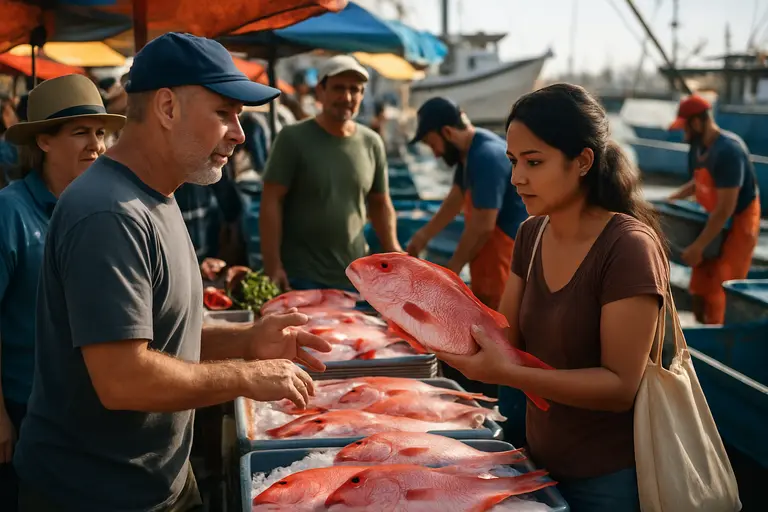
Marinas And For-Hire Boats Need Clear Messaging
A 14-day continuous opening can help spread demand across more weekdays than a three-day federal window, but the research does not provide participation estimates, economic forecasts, or port-by-port activity numbers. Any claim about exact revenue impact would go beyond the verified information. What can be said is narrower and more useful: the longer window gives local businesses more calendar space to schedule trips, answer rule questions, and prepare customers for app-based reporting.
For-hire captains have a different challenge than private anglers. They must manage customer expectations while also protecting their own compliance. The captain and crew zero-retention rule should be stated clearly in booking communication and again at the dock. If a customer sees crew releasing fish, that should not be treated as a surprise; it is part of the EFP terms described in the research.
Trip Planning Should Stay Conservative
Weather, sea state, ramp traffic, and app access can all affect an October trip, but the verified research does not provide forecasts or enforcement staffing details. So the best advice is cautious rather than dramatic: leave extra time, keep documentation accessible, and do not rely on last-minute interpretation. If the trip is declared incorrectly, the rest of the fishing day can become harder than it needs to be.
Fishing communities have seen this pattern before with short reef-fish openings: excitement builds quickly, and small rule differences travel poorly in dock talk. The fix is plain language. Date, season choice, declaration, bag limit, gear, and crew retention rules should be repeated until every angler on board can explain them. Readers who follow how schedule clarity affects other sports across our network can compare the same planning mindset at network schedule analysis, but October reef fishing has its own stakes at the ramp.
Florida red snapper October Takeaways
The October 2026 Atlantic opening is not just a longer chance to keep a prized reef fish. It is a structured EFP season with a defined reporting system and a clear choice between the short federal season and the longer Florida option. Anglers who treat those details as part of the fishing plan will be better prepared than those who focus only on spots and bait.
For the average private crew, the working checklist is direct: pick the season, verify licenses and designations, declare before departure, rig legal gear, and understand the one-fish daily bag limit. For the for-hire fleet, the checklist adds registry participation, carrying the EFP, app declarations, and zero retention for captain and crew.
The opportunity is real, but it is bounded by dates and reporting duties. Florida red snapper anglers who want the smoothest October trip should make the rule work boring before they make the fishing exciting.