

ESA Fish Management entered a tighter legal period in 2026, and anglers should treat that as more than a Washington policy fight. For people who fish rivers, reservoirs, estuaries, and tailwaters, the Endangered Species Act is often where habitat, water operations, permits, recovery plans, and local access meet. I care about that as an angler because a fishery is never just a line on a map. It is a boat ramp at daylight, a youth club learning fish care, a guide trying to keep clients on legal water, and a community deciding whether recovery and recreation can share the same bank.
The most direct change came from the 2026 rescission of the regulatory definition of “harm” under the Endangered Species Act. The rule was published on July 14, 2026, and is set to take effect on September 14, 2026, according to the U.S. Fish and Wildlife Service notice on rescinding the harm definition. Based on the research record, the rule removes habitat destruction from the regulatory definition of harm when the action does not directly kill or injure a protected species. That is a narrow sentence with wide practical meaning for fish, because fish survival often depends on flow, shade, spawning gravel, floodplain connection, and water quality before a dead fish is ever counted.
How ESA Fish Management Changed In 2026
ESA Fish Management And The Harm Definition
The harm definition matters because fish habitat is not a side issue. For threatened salmon, suckers, and other aquatic species, habitat condition can decide whether a population can spawn, recruit young fish, avoid lethal temperature stress, or move between feeding and spawning areas. The July 2026 rule does not erase the ESA. It does change how one major term is applied, and that can affect how agencies, permit applicants, and conservation groups frame future disputes over habitat-altering actions.
For ESA Fish Management, the immediate effect is analytical rather than visual. Anglers may not see a sign at the ramp that says a federal definition changed. What they may see over time is a different review path for projects that affect riparian cover, stream structure, impoundment operations, diversion timing, or shoreline alteration. The evidence supplied in the research notes supports a cautious reading: direct killing or injury remains legally relevant, while habitat impairment without direct death or injury is treated differently under the new interpretation.
The Blanket Rule Shift For Threatened Species
A separate 2026 rule, effective August 20, 2026, removed the so-called blanket rule for threatened species under ESA Section 4(d). Under that change, newly listed threatened species no longer automatically receive the full set of Section 9 prohibitions by default. Instead, the Fish and Wildlife Service must adopt protections tailored to each species through species-specific rules.
That approach can be more precise, but precision depends on the quality and timing of each species rule. In a fishery context, a threatened species may need protection from take, altered flows, blocked migration, harvest pressure, or habitat degradation. If the species-specific rule is narrow, delayed, or contested, local managers and anglers could face uncertainty about what is prohibited, what is allowed, and what voluntary conservation actions still make sense. That uncertainty matters at the club level, because local tournament directors, marina owners, and fishing guides usually need clear rules, not legal fog.
What The Rule Shift Means For Threatened Fish
Habitat Is Where Anglers Feel Policy First
Fish management is often discussed through seasons, bag limits, slot limits, and stocking. Those tools matter, but they are rarely enough when a threatened fish is struggling because habitat no longer supports reproduction. The research notes point to the razorback sucker as one example of a native Colorado River fish reclassified from endangered to threatened on July 16, 2026, while concerns remained about limited natural recruitment, predation by non-native fish, and habitat loss. That example shows why anglers should separate a classification change from a recovery guarantee.
A lower-risk label can sound like good news. Sometimes it is. But the management question is sharper: are enough young fish entering the population without constant intervention? If natural recruitment remains limited, then habitat, predation pressure, and water management still deserve close public attention. For sport fishing communities, that does not mean every angler becomes a lawyer. It means we should ask better questions at public meetings and in comment periods: what habitat function is being protected, how is success measured, and what happens if recruitment does not improve?
Court Decisions Still Shape Water Management
The research also identifies a June 17, 2026 Ninth Circuit decision involving the Klamath Project in Oregon and California. That decision required Bureau of Reclamation operations to comply with ESA protections for threatened salmon and sucker fish, including minimum stream flows and Upper Klamath Lake water levels. That is a strong reminder that rule changes do not end the role of courts, water operations, tribes, irrigators, anglers, and agencies in the same watershed.
From the dock, water can look like one shared resource. In law and management, it is often divided among many obligations. Anglers should resist easy slogans here. Minimum flows can matter to fish survival. Irrigation needs affect farming communities. Tribal fisheries carry legal and cultural significance. Recreational fishing is part of local identity and local spending. The hard work is not pretending those interests are the same; it is keeping them at the same table with facts that can be checked.
- Threatened fish rules may become more species-specific after August 20, 2026.
- Habitat effects may be treated differently under the harm definition after September 14, 2026.
- Water-operation disputes can still be shaped by ESA compliance rulings.
- Anglers should expect local effects to vary by watershed, species, and agency action.
Local Fishing Stakes In ESA Fish Management
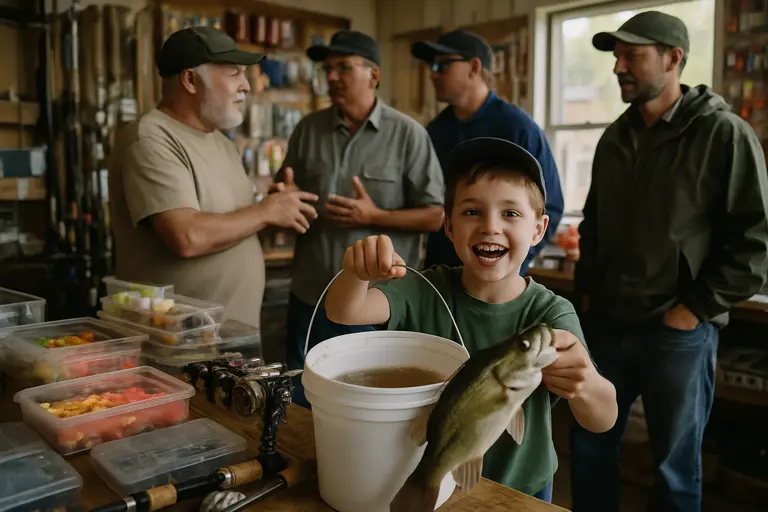
Local fishing communities tend to feel federal rule changes through practical channels: access planning, ramp closures during restoration work, tournament permit conditions, seasonal advisories, fish handling rules, or changes in harvest opportunity. Not every ESA decision produces one of those changes. That is why caution is needed. The 2026 rules do not automatically rewrite every state fishing regulation, and they do not by themselves prove that a given local population will decline.
Still, the management direction is significant enough for anglers to follow. The Government Accountability Office reported on August 4, 2026, that rescinding the regulatory definition of harm was expected to generate annualized cost savings of about $361.3 million at a 3 percent discount rate or $521.0 million at 7 percent because of reduced compliance and permitting burdens, as described in the GAO review of the harm rescission rule. Cost savings are a policy outcome. Fish response is a biological outcome. Those are not the same thing, and responsible fishing communities should keep both in view.
That is where ESA Fish Management becomes a community issue. If compliance burdens fall for some industries, local anglers still need transparent monitoring of fish populations and habitat indicators. If agencies use species-specific 4(d) rules, anglers need those rules written clearly enough for tournament organizers and everyday fishermen to understand. If habitat work continues through state agencies, tribes, watershed groups, and volunteer clubs, the public should be able to see which actions are tied to measurable fish recovery.
Sport anglers already live with tighter rule awareness in many places. For anglers seeking complementary information across various subjects, WikiApp is a related site in the same network, but fishers should still rely on official agency notices and current state rules before making fishing decisions.
The 2026 ESA Fish Management Test
The test for the 2026 rule changes will not be decided by rhetoric alone. It will be seen in how agencies write species-specific protections, how courts apply the revised harm framework, how water projects document effects, and how threatened fish populations respond over time. As of August 28, 2026, the harm rule had been published but had not yet taken effect. The blanket-rule change had already become effective on August 20, 2026. Those dates matter because anglers deserve clear timing, not vague talk about policy shifts.
ESA Fish Management now requires sharper local attention. If a threatened fish depends on habitat function, anglers should ask whether the new legal approach still protects that function through another tool. If a species receives a custom 4(d) rule, we should ask whether it is specific enough to work and clear enough to follow. If a watershed has competing demands, we should keep fish data, water data, and community voices in the same conversation.
I have seen fishing bring people together who disagree about almost everything else. A shared river can do that. So can a weigh-in, a habitat workday, or a youth fishing clinic. The 2026 ESA changes make that local trust more necessary, not less. Threatened fish management is strongest when anglers are not treated as outsiders and when conservation is not treated as an obstacle to community life. The water connects us. The rules should help us protect what swims there.