

The Kentucky Lake Bassmaster Open did not end as a clean wire-to-wire story. It turned into the kind of final-day reversal that makes tournament bass fishing compelling: one angler had the momentum, another had the better answer when the lake changed its terms.
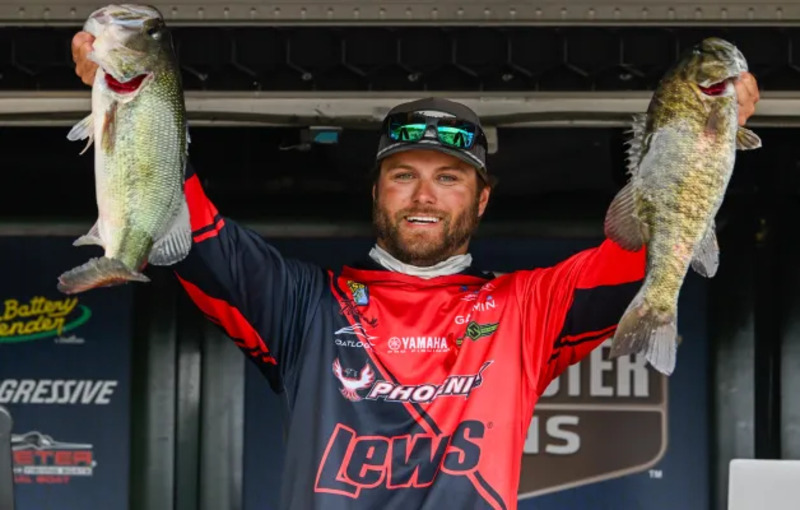
Clint Knight’s win on May 22, 2026, with 62 pounds, 2 ounces, gave the Kentucky Lake/Lake Barkley event a sharper meaning than a simple trophy photo. Tristan McCormick had built the Day 2 lead with local knowledge and a heavy second-round bag, but Knight’s Championship Friday surge showed why adjustment, not comfort, often decides a three-day tournament.
Clint Knight’s Kentucky Lake Bassmaster Open Win Was an Adjustment Story
The most useful way to read Knight’s victory is not as a surprise finish. It was a final-day judgment story.
McCormick had the visible advantage entering Friday. He had the biggest Day 2 bag of the event, a two-day total of 46-13, and the local-water narrative that naturally follows an angler who understands Kentucky Lake’s seasonal moods. Fans following the official result can use Bassmaster’s Kentucky Lake winner page for the final stamp, but the richer story sits in how Knight stayed within striking distance until the lake created an opening.
That is where this event becomes more interesting. Knight did not need the tournament to collapse around him. He needed the final day to reward a different read and that is exactly what Championship Friday did.
McCormick Had Control, But Not Separation
McCormick’s Day 2 performance gave the tournament its early shape. His 25-4 bag pushed him to 46-13 and put him 4 pounds, 6 ounces ahead of Knight, a meaningful cushion but not a locked door on a lake capable of producing big swings.
The day before the finish, McCormick’s Day 2 lead at Kentucky/Barkley made the event look like it might become a local-knowledge clinic. He had found the right quality around a mix of offshore current breaks, wood, spawning fish, fry guarders, and postspawn bass. That combination matters because it shows he was not locked into one shallow pattern or one offshore school. He had options.
But options can shrink fast when current drops, pressure builds, and fish stop setting up in predictable positions. McCormick’s lead gave him the story, but Knight still had enough weight to keep the pressure honest.
The Final-Day Comeback Changed the Meaning of the Event
A four-pound gap in tournament bass fishing is both significant and fragile. It can protect a leader if the lake fishes consistently. It can disappear quickly if the chasing angler finds a better group of fish, makes one cleaner decision, or converts a key bite that another angler misses.
Knight’s comeback matters because it points to a tournament truth that casual readers often underestimate: leaderboard position is not the same thing as control. Control belongs to the angler who can keep finding catchable bass as conditions shift.
That mattered because Kentucky Lake had already been framed as a fishery trying to reassert itself after Day 1 made things interesting. The final day added a better ending than a routine lead defense. It gave the event a tactical arc: McCormick proved the lake had quality, then Knight proved the tournament was still open to an angler willing to chase the better setup.
The Comparison That Explains the Tournament Turn
The cleanest way to understand the finish is to compare what each storyline represented going into Championship Friday.
| Factor | Tristan McCormick | Clint Knight |
|---|---|---|
| Position entering final day | Leader with 46-13 | Second, trailing by 4-6 |
| Core storyline | Local knowledge and Day 2 momentum | Close enough to pressure the lead |
| Key tactical theme | Finding quality through multiple fish phases | Adjusting to difficult current conditions |
| Risk entering Friday | Lead could shrink if fish repositioned | Needed a strong final push |
| Final outcome | Could not hold the lead | Won with 62-2 |
The table shows why the result landed with more force than a normal standings update. McCormick did almost everything needed to create a winning path. Knight simply found the better final-day answer.
That distinction is important. This was not a story of one angler fading and another lucking into the trophy. It was a story of tournament pressure forcing both anglers to prove whether their patterns could survive one more day.
Low Current Made Decision-Making More Valuable Than Momentum
The tactical hinge of the event was current. Knight had noted that low current made the fish less active, which pushed him toward upriver water where the narrower section created more movement. That is the kind of adjustment that can sound simple after the weigh-in but feels risky in real time.
A leader can often protect a pattern. A chaser usually has to attack. Knight’s situation may have worked in his favor because he had less incentive to defend yesterday’s water and more reason to search for today’s best conditions. When bass are not positioning cleanly, the angler who finds movement can find feeding windows others miss.
That is why this win should be understood as a current-management victory as much as a catching victory. On a Tennessee River reservoir system, small changes in water movement can alter how fish relate to cover, breaks, bait, and depth. Knight read that equation well enough to turn a deficit into the winning weight.
The larger lesson is clear: current mattered more than the comfort of a strong Day 2 pattern.
Kentucky Lake Sent a Message Beyond the Trophy
The event also gave Kentucky Lake and Lake Barkley a useful spotlight. Tournament coverage often reduces fisheries to whether they are “back,” “tough,” or “hot,” but this finish showed something more nuanced. The system produced enough quality for a dramatic final day, while still making anglers work through changing conditions.
That is a healthy kind of difficulty. A lake that gives up weight too easily can flatten the story. A lake that shuts down completely can make the event feel random. Kentucky Lake landed somewhere more compelling: good enough to reward the right decisions, unstable enough to punish assumptions.
For tournament fans, that creates a better product. For anglers, it reinforces a harder truth. A strong practice or a big Day 2 bag does not guarantee that the same water will reload, especially when current, weather, and seasonal timing are all moving pieces.
The signal to monitor after this event is whether Kentucky Lake continues to produce competitive, decision-heavy tournaments. If it does, the lake’s comeback narrative gets stronger. If not, this event may still stand as a reminder that the system has enough quality to create drama when conditions line up.
Kentucky Lake Bassmaster Open Leaves a Sharper Message
Knight’s win gave the Kentucky Lake Bassmaster Open the finish it needed: a comeback, a tactical explanation, and a final weight strong enough to make the result feel earned. McCormick made the tournament interesting by taking control after Day 2. Knight made it memorable by taking control when there was no day left to recover.
The difference was not just who caught more bass. It was who solved the final version of the lake. On May 22, that answer belonged to Knight, and the takeaway is bigger than one trophy: momentum was fragile, adjustment was decisive, and Kentucky Lake still has enough bite to turn a lead into a chase before the final bag hits the scales.