

Catch And Release practices are getting harder to treat as a courtesy item at the boat ramp or weigh-in table. As of September 17, 2026, the best-supported public record shows a clear pressure point for freshwater anglers: heat and low flows have made river restrictions a recurring management response across parts of the U.S. West. AP reported that fishing closures have become routine from late June through early September as record heat warms western rivers. For community clubs, youth events, guide days, and small sponsor-backed derbies, that changes the duty of care before the first cast is made.
Why Catch And Release Matters During Closures
River closures are not only access decisions. They are signals that managers see enough environmental stress to limit or stop angling pressure. In warm, low water, fish have fewer cool-water refuges, less dissolved oxygen, and less recovery margin after being hooked, fought, handled, photographed, and released. That does not mean every open water should be avoided. It does mean that an angler’s release routine becomes part of the conservation outcome.
Catch And Release Starts Before The Hookset
The release process begins with choices made before a fish eats: whether to fish during cooler hours, whether to leave stressed trout alone, whether to use tackle strong enough to shorten the fight, and whether to stop fishing if the water feels warmer than expected. Those choices are not dramatic, but they are where many losses can be reduced. A fish that is played too long in hot water starts the handling stage at a disadvantage.
For tournament directors, the same principle applies at event scale. If a club is planning a river event during a heat period, the conservation question should be asked before entries are taken, sponsor banners are printed, or volunteers are assigned. Can the event shift to a cooler venue? Can start and end times avoid the hottest part of the day? Can the format use immediate release rather than a livewell-based weigh-in? Those are practical event questions, not public-relations extras.
Community anglers already understand that access depends on trust. Local shops, guides, parents, high school teams, and weekend clubs all lose when a river gets stressed enough for broad restrictions. Careful release habits will not reverse drought or heat, but they can reduce avoidable pressure on fish that are already dealing with poor conditions.
What The Mortality Evidence Shows
The strongest argument for better release habits is that released fish do not all face the same odds. A Department of the Interior dataset reviewing delayed hooking mortality in riverine fishes reported estimates from 0% to 73%, with an average near 11%, depending on factors such as water temperature, hooking location, and handling time federal mortality review. That range is wide, and it should keep anglers cautious. A low mortality estimate in one setting does not erase higher risk under warmer water or poor handling.
What The Numbers Do And Do Not Prove
The evidence does not say that all release fishing is harmful. It also does not say that release fishing is harmless. The useful lesson for a community organizer is more specific: outcomes depend on the conditions and the process. A bass released quickly from a shallow, warm pond is not the same case as a trout fought hard in a low, hot river. A fish hooked in the jaw and kept in the water is not the same case as a deeply hooked fish held in the air for photos.
That distinction matters because many local events use simple rules that sound conservation-minded but miss the details. “Release all fish” is better than harvest in many stressed fisheries, but it is incomplete unless the event also addresses fight time, hook type, measuring systems, photo time, livewell use, and water temperature. Rules need to match the stress level of the water.
There is also a communication lesson. Anglers are more likely to follow restrictions and careful release standards when the reason is clear. Saying “the river is closed” may be legally enough. Explaining that high temperature and low flow reduce fish recovery gives the community a reason to buy in. In my experience organizing local events, that explanation works better than scolding. People protect what they understand.
Catch And Release And Local Event Decisions
Local fishing events depend on permission: permission from agencies, landowners, host sites, sponsors, parents, and the wider public. River restrictions put that permission under a brighter light. If an event goes forward on marginal water, the organizer should be prepared to explain why the format protects fish and respects agency direction. If that explanation cannot be made with facts, the event should be moved, shortened, or canceled.
For sponsor strategy, conservation credibility has become part of event value. A bait shop, marine dealer, restaurant, or nonprofit partner does not benefit from being tied to avoidable fish stress. Sponsors want community connection, but they also need confidence that the event is being run with care. That is why a clear release plan should sit beside the payout sheet, volunteer sheet, and launch schedule.
For clubs trying to keep young anglers involved, this is also a teaching moment. A youth derby that shows kids how to wet hands, keep fish low over the water, skip long photo sessions, and release fish facing into current does more than run a fun morning. It builds habits that follow those anglers into adult tournaments and guide trips. Community fishing resources, including related outdoor networks such as Back2Tap, can help keep that message visible beyond one event day.
- Use agency closures and voluntary restrictions as the first planning filter.
- Choose cooler launch windows when fishing remains open and legal.
- Favor immediate measurement and release during heat-stressed periods.
- Require tackle that reduces long fights and poor fish control.
- Brief volunteers and anglers on handling standards before lines-in.
Those steps do not guarantee survival for every fish. They do reduce preventable stress, and that is the practical target. For anglers dealing with low-water decisions in Colorado and similar western fisheries, local guidance on low-water fishing practices fits the same community-first approach.
Fish Care Standards For Community Anglers
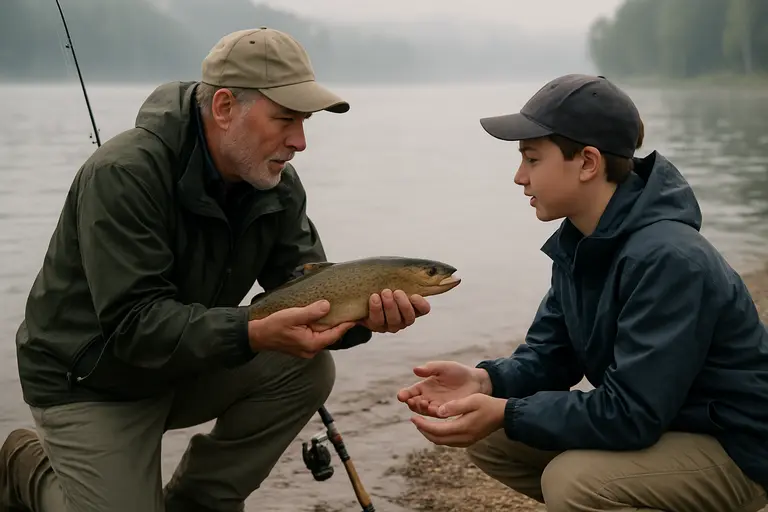
Fish care has to be simple enough to repeat under pressure. A tournament angler in a tight points race, a guide helping a first-time client, and a parent at a kids’ pond day all need rules that hold up when someone is excited. Keep the fish in the water as much as possible. Wet hands before touching it. Avoid the gills and eyes. Use tools that are ready before the fish is landed. Skip the second and third photo when conditions are poor.
Event Rules Should Match River Stress
A good event rule is easy to enforce and easy to explain. During a cool spring bass event on stable water, a livewell weigh-in may be manageable under local rules. During a heat-stressed river period, an immediate-release photo format may be the better option if fishing is still allowed. If an agency has closed the reach, there is no format adjustment that makes it acceptable to fish there.
The same caution applies to voluntary closures. A voluntary restriction is not a weak warning. It is often an agency’s way of asking anglers to protect fish before a mandatory closure becomes necessary. Tournament organizers who ignore that signal risk more than a poor public image. They risk teaching anglers that conservation rules are obstacles rather than shared standards.
There is a sponsor angle here, too. I would rather tell a local partner that we postponed an event because the river needed a break than ask that partner to defend a bad decision after stressed fish turn up dead. Conservation choices can cost a weekend. Poor choices can cost community trust for much longer.
Catch And Release Practices Amid Closures
The practical standard for 2026 is not complicated: obey closures first, reduce handling when fishing is allowed, and treat every heat-stressed river as a limited resource. Catch And Release is still valuable, but it is not a shield against poor timing, poor handling, or fishing through conditions that managers have already flagged as dangerous for fish.
Community fishing has always been built on more than catches. It includes access, stewardship, local business support, youth participation, and respect for the resource. Rising river restrictions make that connection easier to see. If clubs and anglers want healthy events on healthy water, release practices have to be planned, taught, and enforced before the river reaches a breaking point.