

If Captain Ahab had today’s fishing electronics, Moby Dick would’ve been sushi by chapter three. We’re in a marine tech revolution. AI isn’t just beating you at chess but keeps you safe at sea.
The latest systems from Humminbird, Furuno, and others show more than fish. They invite you to dinner from the deep. These systems have grown from simple depth finders to underwater spies.
The 2025 lineup might make your fishing guide outdated. Furuno’s TZtouchXL has 3-inch contour resolution. Garmin’s tech is seamless, making even James Bond’s Q Division jealous.
The real question isn’t if you need this tech. It’s whether you can fish without it.
Setup Tips
Setting up marine electronics is like brain surgery on your boat. Many anglers struggle with the manuals more than the fishing itself. Treat it like setting up your command center.
Power management is key. These systems use a lot of power, like college students at spring break. You’ll need special batteries to keep your $5,000 sonar system running during important moments on the bass lake.
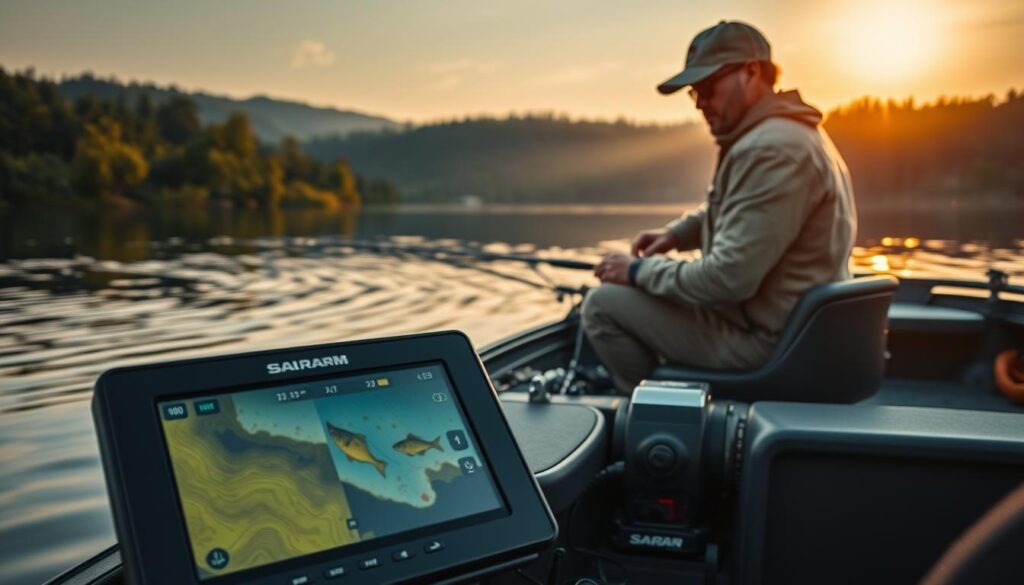
Where you mount things is very important. Too high or too low can be bad. Finding the right spot helps you see underwater better and find bass in any lake environment.
Modern systems talk to each other, like Holmes and Watson solving mysteries. This makes finding fish easier. When your Humminbird and Minn Kota motor work together, it’s amazing.
Pro tip: Test everything on land first. It saves you from trouble on the water. For more help, check our guide on tournament fishing boat setup.
Proper setup makes technology your best friend on the water. When everything works together, you’re not just fishing. You’re leading an orchestra of electronics to catch more fish.
Live-Sonar Use
Welcome to the underwater surveillance state where fish have fewer privacy rights than your average social media user. These systems have turned fishing into a high-tech military operation. The real question isn’t whether you can see the fish – it’s whether you can resist becoming completely screen-addicted.
The Big Players in Aquatic Espionage
Humminbird’s MEGA Live 2 isn’t just showing you fish – it’s practically giving you their dental records. With 150-foot clarity and 15 color palettes, this system turns the underwater world into a high-definition reality show. The resolution is so crisp you can practically count the scales on a bass’s back.
Garmin’s LiveScope remains the industry gold standard, though rumors about upcoming upgrades have the fishing community buzzing. The current system delivers breathtaking real-time imagery that makes traditional sonar look like cave paintings. Many anglers consider it the essential tool for modern forward-facing sonar techniques.
Lowrance’s ActiveTarget 2 brings serious competition with impressive target separation and clarity. Their advanced mapping systems integrate seamlessly with the live sonar, creating a complete underwater intelligence network. It’s like having Google Maps for fish.
Eagle Eye systems offer impressive performance at a more accessible price point. While they might not have all the bells and whistles of the premium options, they deliver solid real-time imaging that would have been considered science fiction just a decade ago.
The dirty secret nobody tells you? These systems can actually make you a worse angler if you don’t develop the skill to interpret what you’re seeing. I’ve watched competent fishermen become so screen-hypnotized they forget to actually cast their lines. The real art isn’t spotting fish – it’s understanding which ones are catchable and which are just aquatic window shoppers.
Each system brings unique strengths to your mapping systems arsenal. Humminbird excels in clarity, Garmin in reliability, Lowrance in integration, and Eagle Eye in value. The best choice depends on whether you’re looking for a Ferrari or a perfectly capable Toyota.
Remember: technology should enhance your fishing, not replace your instincts. The most advanced mapping systems in the world won’t help if you can’t tell the difference between a hungry bass and one that’s just curious about the fancy new camera in its neighborhood.
GPS Marking
If waypoints were cryptocurrency, tournament anglers would be Bitcoin billionaires. Modern fishing electronics have turned underwater topography into an open book. It’s like having detailed cliff notes for the sea.
Today’s mapping systems are incredibly sharp. Furuno’s TZ MAPS with BathyVision shows 3-inch contour clarity. That’s not just mapping; it’s underwater topography porn. Humminbird’s LakeMaster and CoastMaster maps offer coastal and inland coverage that would make Magellan jealous.
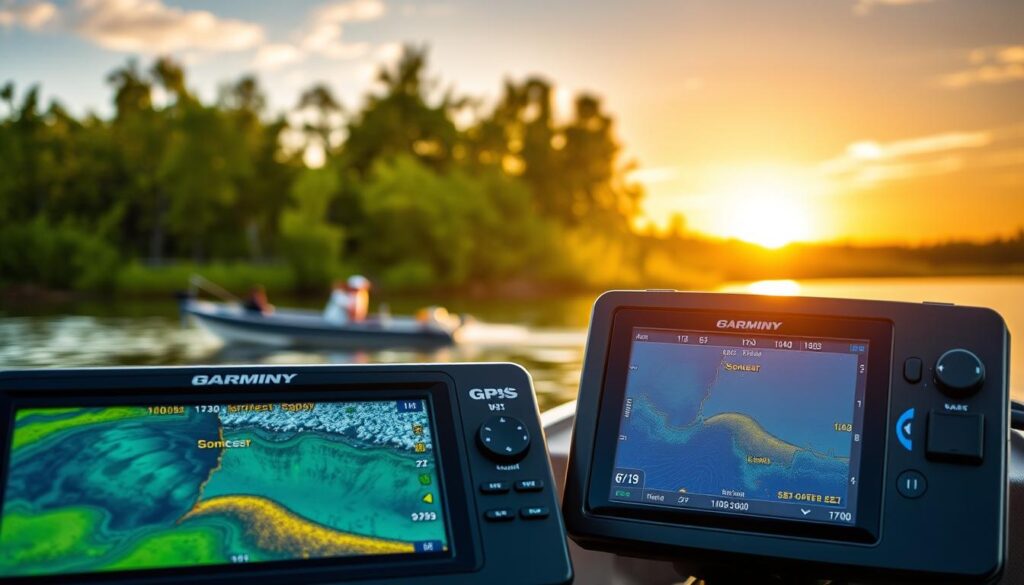
The magic of waypoint management is real. Humminbird’s new system lets you organize 10,000 marks like a naval archivist on Adderall. Garmin’s Navionics+ and Lowrance’s C-MAP systems make GPS marking an art form with easy organization and recall.
But, are we mapping the water or our own fishing neuroses? I’ve seen anglers with more waypoints than actual fishing time. They create digital graveyards of spots that haven’t produced in years.
The real art of GPS marking isn’t just recording every bump. It’s about understanding why fish use certain structures and applying that knowledge. If not, you’re just creating a digital scrapbook of your failures.
Effective waypoint strategy involves three key principles:
- Quality over quantity – mark productive areas, not just interesting contours
- Seasonal organization – group waypoints by time of year and conditions
- Pattern recognition – use waypoints to identify fish movement patterns
The best fishing electronics won’t catch fish for you. They’ll show you where you should have been casting yesterday. Smart waypoint management turns data into actionable intelligence, not digital clutter.
Data Interpretation
Using modern fish finders is like trying to understand abstract art while riding a mechanical bull. It’s not about how much you spend on gear. It’s about knowing the difference between a walleye and a weed bed at high speeds.
Tournament pros can tell species by sonar better than birdwatchers can tell hawks by flight. They know fish don’t follow manuals. Fish act differently in clear versus stained water and in currents versus calm.
New color palettes and target separation technologies help, but they’re just tools. The real magic is when you mix technology with fishing knowledge. Without it, you’re just someone with a fancy system who can’t find fish.
Here’s what makes pros better at sonar bass lake interpretation:
- Recognizing that bass suspend differently than other species
- Identifying baitfish clouds versus actual gamefish
- Understanding how water temperature affects fish positioning
- Differentiating between hard bottom and vegetation
Current changes everything. Fish hug bottom structure in moving water. Stained water makes fish aggressive but hard to spot on sonar. Clear water means they’re visible but picky.
The most overlooked aspect? How fish behavior changes throughout the day. Morning patterns differ from afternoon, which is like a different planet from night fishing. Your bass fishing electronics show you the pieces – you need to understand how they fit together.
| Sonar Return | Bass Behavior | Recommended Approach |
|---|---|---|
| Strong arches near bottom | Active feeding | Fast-moving baits |
| Faint marks suspended | Neutral mood | Finesse techniques |
| Dense clusters | Schooling activity | Search baits |
| Scattered returns | Transition phase | Multiple presentations |
Remember: technology shows you where fish are, but experience tells you what they’ll do next. The best anglers don’t just read the screen – they read the entire aquatic story happening beneath their boat.
Legal/Sponsor Considerations
Welcome to the fishing tech arms race. BASS pros spend an average of $19,443 on electronics. It’s not just for fun; it’s a high-tech battle.
Governing bodies like BASS and MLF try to keep up with the rules. But new mapping systems come out before they can update the rules.
Sponsorship deals make things even more complicated. Imagine being stuck with Brand A when Brand B’s tech is better. It’s like using an old flip phone in today’s world.
The big question is: Is it about skill or technology? Will the top angler soon be an AI with great sponsors? The biggest challenge might not be catching fish. It could be finding a balance in the rules.