

The timing could hardly be more consequential. As the Bassmaster Elite at the Arkansas River opens in Muskogee, the field is stepping into one of the most volatile competitive setups of the season, where weather, water color, and on-the-water judgment may matter as much as raw fishing skill.
I see this event as a sharp test of modern tournament bass fishing. It is not simply about who can find the biggest fish. It is about who can manage risk, read unstable conditions faster than the rest of the field, and make the kind of decisions that can either win a tournament or quietly ruin it by midday.
A Tournament Shaped By Instability
There are weeks on the Elite Series schedule when patterns feel settled, productive areas are obvious, and anglers can spend most of their time refining presentations. This is not one of those weeks. The Arkansas River arrives on the calendar under heavy pressure from recent rain, stained and muddy water, and a fishery that appears to be changing by the hour rather than by the day.
That kind of instability tends to compress the margin for error. An angler may have found something useful in practice, only to discover that overnight rain or shifting current has changed the character of an area entirely. On a river system, those changes can be especially unforgiving. Water color is not just a cosmetic detail; it influences visibility, fish positioning, lure selection, and how aggressively bass are willing to feed.
In Muskogee, the dominant question entering the event is whether anyone can establish a dependable pattern at all. The obvious temptation is to fish for “survival” early and hope the tournament opens up later. But Elite events rarely reward caution for very long. The anglers who separate themselves usually do so by identifying a specific advantage before the rest of the field recognizes it.
Why Muskogee Matters Right Now
The Arkansas River has long been the sort of fishery that rewards adaptability over comfort. It can produce quality bags, but it often asks competitors to make difficult trade-offs. In that sense, it is one of the purest examinations of tournament instincts on the schedule.
This week, those trade-offs are amplified. The event begins with muddy water and lingering effects from heavy rain, which means an angler’s map, history, and prior confidence may not carry the same weight they would under stable spring conditions. Every move feels more consequential because every adjustment may need to happen in real time.
That is why the Bassmaster Elite at the Arkansas River deserves close attention beyond the normal tournament audience. It captures a central truth about contemporary bass fishing: winning now often depends on interpreting uncertainty faster than everyone else.
The Strategic Decision That Could Define The Week
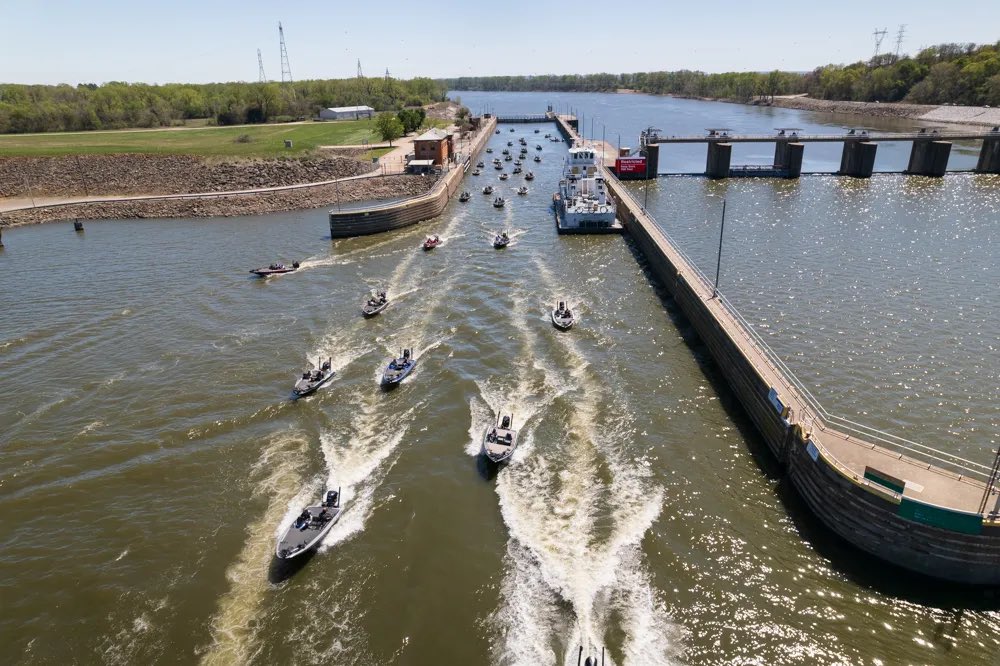
No storyline looms larger than the choice between staying close and making a run. In practical terms, that means deciding whether to remain local in Pool 16 or to gamble on locking into other areas, including Kerr Reservoir, in search of a bigger payoff.
I have always viewed this kind of decision as the heart of tournament fishing drama because it forces competitors to weigh two incompatible paths. One path offers efficiency and more uninterrupted fishing time. The other offers potential access to stronger fish, cleaner water, or less-pressured water but only if everything goes right. Locks introduce delay, uncertainty, and the possibility that a good day can collapse under the weight of logistics alone.
That tension is what makes this event so compelling. It is not enough to ask where the best fish live. The better question is whether those fish are reachable in a way that still leaves enough time to build a winning bag. In a four-day event, one overly ambitious gamble can bury an angler before the weekend cut becomes realistic.
Event Snapshot
| Category | Details |
|---|---|
| Event | Gamakatsu Bassmaster Elite at the Arkansas River |
| Dates | April 16–19, 2026 |
| Location | Muskogee, Oklahoma |
| Primary Condition | Muddy water following recent heavy rain |
| Major Strategic Question | Stay in Pool 16 or lock to other water for bigger potential |
| Technology Factor | Forward-facing sonar is allowed |
| Competitive Variable | Spawn and postspawn fish appear to be mixed across the system |
Forward-Facing Sonar Remains Part Of The Story
It would be impossible to assess this tournament honestly without acknowledging the role of forward-facing sonar. The technology remains one of the defining issues in professional bass fishing, not just as a tactical tool but as a broader philosophical divide within the sport.
Here, it is allowed, which means it becomes another variable in an already complicated equation. On one hand, sonar can help anglers identify fish positioned away from visible cover or track how bass respond in stained current breaks and main-river scenarios. On the other hand, muddy water can reduce the clarity of information and force competitors to rely on instinct, repetition, and shallow-water decision-making anyway.
That is why I do not see this event as a simple referendum on electronics. Instead, it feels like a more nuanced case study. Technology may offer an edge, but only to the extent that conditions still allow anglers to convert information into bites. If the river pushes the field into close-quarters, low-visibility fishing, old-school judgment could matter just as much as screen time.
A Fishery In Multiple Seasonal Phases
Another reason this tournament has so much intrigue is that the fish do not appear to be neatly organized around one seasonal phase. Some bass are still behaving like spring fish pushing through a spawning cycle, while others are already sliding toward postspawn tendencies. That kind of overlap can make a tournament wildly dynamic and deeply frustrating at the same time.
An angler can spend valuable hours targeting one stage of fish movement only to realize the better quality is coming from a completely different setup. Shallow fish may replenish. Offshore or main-river fish may offer more weight. Protected water may hold more numbers, while dirtier current may produce fewer bites but better ones.
The challenge is not simply locating fish; it is identifying which group can hold up across four days. In many spring events, an opening-round leader can explode early and then struggle once the system shifts. What often wins in these mixed-phase tournaments is not the flashiest day but the most repeatable program.
What Anglers Must Solve Early
By the first afternoon, the field should have a clearer answer on what truly matters most. For now, the central problems appear to be these:
- Water clarity is likely to dictate where anglers can effectively fish and how aggressive bass will be.
- Locking decisions could determine whether competitors maximize opportunity or waste crucial hours.
- Mixed spawn and postspawn behavior may reward anglers who can pivot rather than commit too narrowly.
- Sonar may help in select scenarios, but river instincts and efficiency could outweigh electronics in muddy water.
Those are not minor adjustments. They are the architecture of the tournament itself.
Why This Event Feels Larger Than One Stop On The Schedule
I think this tournament resonates because it mirrors the broader state of elite bass fishing in 2026. The sport is increasingly shaped by a collision of technologies, changing fisheries, compressed margins, and strategic risk. Anglers are no longer just patterning fish. They are managing time, information, environmental volatility, and public scrutiny over how the game should be played.
The Arkansas River is a fitting stage for all of that because it strips the sport down to hard choices. It forces competitors to reveal what they trust most: history, electronics, instinct, patience, or boldness. Every decision carries consequence, and no one gets the luxury of pretending conditions are simple.
That is why the opening day matters so much. It sets the tournament’s emotional and tactical tone. If someone unlocks a strong, repeatable pattern immediately, the event could become a chase. If the field scatters and weights stay compressed, then this tournament may turn into a survival contest in which a single smart decision on Saturday changes everything.
Conclusion
The Bassmaster Elite at the Arkansas River matters right now because it arrives at the intersection of uncertainty and consequence. Muddy water, recent rain, strategic lock decisions, mixed seasonal fish behavior, and the ongoing role of sonar have combined to create a tournament that feels volatile from the first cast.
For me, that is exactly why this event stands out. It is not just another stop on a prestigious schedule. It is an unusually clear measure of who can think, adapt, and execute under pressure when almost nothing about the playing field feels stable. In a season where margins are thin and narratives shift quickly, this week in Muskogee has all the ingredients to become one of the defining bass fishing stories of the spring.