

Randy Moss bass fishing matters now because it lands where outdoor culture, celebrity media, tournament money, and sports entertainment are all fighting for the same public attention. When a Pro Football Hall of Famer attaches his name to a major bass fishing event built around elite anglers and a multi-million-dollar purse, the story stops being just another tournament announcement. It becomes a serious test of whether bass fishing can turn casual curiosity into lasting momentum.
For years, bass fishing has had the ingredients of a mainstream sports product: pressure, personality, strategy, heartbreak, money, rivalry, and a fan base that understands the difference between luck and execution. What it has not always had is an easy bridge to the wider audience that follows football stars, watches YouTube personalities, and responds to events that feel bigger than the weigh-in stage. Moss gives the sport that bridge, but the bridge only works if the fishing itself remains the priority.
Why Randy Moss Bass Fishing Matters Right Now
The headline is straightforward. Randy Moss has partnered with World Bass Enterprises as an ambassador for The Champions, a 2026 bass fishing event scheduled for Oct. 28-Nov. 1 at Old Hickory Lake. The event is designed around 50 elite anglers and a purse promoted above $3 million, giving the tournament immediate scale.
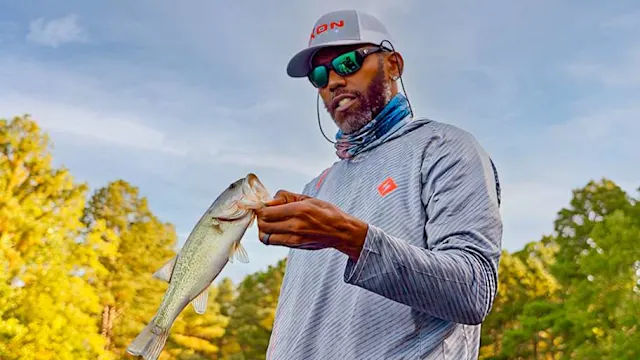
The more interesting part is what Moss represents. He is not arriving as a celebrity who discovered fishing five minutes ago. His public image has always carried a mix of competitive fire, rural roots, direct personality, and real outdoor credibility. That matters because fishing fans can usually spot a forced campaign before the first cast. They may accept hype, but they rarely accept a lack of respect.
That is why Randy Moss bass fishing is a stronger editorial angle than a standard celebrity endorsement. Moss gives the tournament recognition, but he also gives it cultural texture. He is not just standing near a boat for a polished image. He is stepping into a world where patience, obsession, timing, and competitive judgment are part of the appeal.
The Real Story Is Distribution, Not Celebrity
Celebrity involvement creates the first wave of clicks. Distribution determines whether those clicks become a real business. Bass fishing already has expert commentary, tournament drama, and technically sophisticated competition, but visibility beyond the existing fan base has always been the harder problem.
A football star with Moss’s name recognition changes the top of the funnel. Suddenly, someone who would never search for an Old Hickory Lake event may pause because Moss is connected to it. That pause has value, especially if the tournament can convert curiosity into understanding.
Still, attention alone is not enough. The sport needs to give newcomers an entry point without flattening the complexity longtime fans love. Too much beginner packaging can irritate serious anglers. Too much insider language can lose casual viewers before they understand why one adjustment, one missed fish, or one late decision can decide the tournament. The challenge is balance.
Moss can help because football fans already understand competitive stakes. They understand scouting, adjustments, field position, risk tolerance, and pressure. Bass fishing has all of that, only the field changes by the minute. Wind, water clarity, current, bait movement, boat pressure, and seasonal transition can turn a promising pattern into dead water. A smart presentation should make the strategy visible, not pretend the sport is simple.
How The Champions Changes The Commercial Conversation
The Champions is not just another tournament with a larger trophy. Its commercial importance comes from the way it frames bass fishing as a premium sports property.
A purse above $3 million changes perception because prize money sends a clear signal. It tells anglers, sponsors, media partners, and fans that the event wants to be treated as serious sports entertainment. Money does not automatically create prestige, but it creates urgency. Anglers know the stakes. Sponsors understand the optics. Viewers recognize that the outcome carries weight.
| Event Element | Why It Matters |
|---|---|
| Celebrity ambassador | Expands awareness beyond core fishing media |
| Multi-million-dollar purse | Signals premium competitive stakes |
| Elite 50-angler field | Makes the event easier to follow |
| Nashville-area location | Adds tourism, sponsor, and entertainment appeal |
| Digital content potential | Gives the story life before and after competition |
The most important line may be digital content potential. Modern sports properties are judged by clips, personalities, behind-the-scenes access, social conversation, and repeatable formats. If The Champions can create watchable stories before the first cast and after the final weigh-in, it has a better chance to build lasting authority.
The Nashville Factor Gives The Event A Wider Stage
Old Hickory Lake is not just a body of water on a schedule. Its location near Nashville gives The Champions an advantage most fishing events do not have.
Nashville already understands live entertainment, hospitality, tourism, music, and event packaging. That does not mean a fishing tournament near the city automatically becomes a spectacle. It means the infrastructure around the event can support a larger experience. Fans can build a trip around it. Sponsors can host around it. Media can frame it as more than a calendar stop.
That is where many crossover sports projects fail. They either overplay the celebrity angle until the sport feels secondary, or they underuse the celebrity angle and miss the chance to grow. The smarter path is to let Moss open the door, then let the anglers and the lake carry the substance.
Old Hickory also offers useful competitive tension because it can reward decision-making. Anglers may need to manage pressure, changing conditions, seasonal movement, and the trade-off between safe limits and winning bites. The more the event explains those choices, the more viewers will understand why professional bass fishing requires judgment.
For readers following other competitive fishing storylines, another recent pro-level bass fishing storyline showed how water level, conditions, and angler adjustments can define a tournament before the first fish reaches the scale. That kind of context helps casual fans see that tournament fishing is not random. It is informed risk under pressure.
What Football Fans May Understand Faster Than Expected
The crossover between football and bass fishing is stronger than it first appears. Football fans understand scouting. Bass anglers scout water. Football fans understand halftime adjustments. Anglers adjust after every missed bite, every wind shift, and every dead stretch. Football fans understand the difference between a designed play and improvisation. Anglers live inside that difference all day, and that shared language gives Moss unusual credibility.
A viewer does not need to understand every lure category immediately. The first job is to understand pressure, confidence, timing, and consequence. Those concepts travel. A late bite can feel like a fourth-quarter touchdown. A lost fish can feel like a dropped pass. A wrong area can feel like a busted game plan.
The risk is leaning too hard into football comparisons and turning the fishing into a gimmick. The better move is to use football as the doorway, not the destination. Moss can explain why chasing a 10-pound bass has psychological pull and why elite performance is built on repetition no audience sees. That approach protects the sport’s identity.
The Risk Of Turning Authenticity Into Promotion
Celebrity-led outdoor content can become too polished if the people behind it are not careful.
Bass fishing does not need glamour to be compelling. Its appeal is often the opposite. It is early mornings, quiet tension, poor decisions, missed opportunities, weather changes, and the stubborn belief that the next cast can change everything. The more a crossover project sanitizes that reality, the weaker its impact becomes.
Moss gives the event a powerful marketing hook, but the hook cannot be the whole product. The tournament still needs to respect the anglers. It needs to show the difficulty. It needs to let viewers feel empty stretches, sudden jolts, and the pressure of managing a limited clock.
Authenticity is not decoration here. It is the central asset. Fishing audiences know when excitement is staged. They know when a routine catch is being inflated into something it is not. They also know when a real competitor is trying to hold a pattern together with money, pride, and reputation on the line.
The strongest version of The Champions would let the tournament breathe. Let the anglers talk. Let the lake dictate part of the story. Let Moss be Moss without forcing every moment into a promotional beat. The most valuable content may be the moment when a great angler explains why a good plan failed, because failure gives the sport truth.
What This Could Mean For Pro Anglers
For professional anglers, an event like The Champions creates opportunity and pressure at the same time.
The opportunity is obvious. Bigger purses and broader exposure can raise the financial ceiling of the sport. More mainstream attention can make anglers more valuable to sponsors. A well-produced event can introduce competitors to viewers who may not follow traditional tournament circuits closely. That creates growth.
The pressure is more subtle. As fishing becomes more visible, anglers are asked to be more than competitors. They become media personalities, educators, brand representatives, and storytellers. Some will thrive in that environment. Others may prefer to let their performance speak without constantly translating it for cameras. That is a new professional choice.
Anglers who can explain their decisions clearly may gain market value even when they do not win. Anglers with distinctive personalities may build followings that outlast one result. The sport’s commercial future may reward communication alongside catching ability, but performance still remains the proof.
Why Timing Matters For Bass Fishing Media
The Champions arrives while fishing media is already changing.
Traditional tournament coverage still matters, but the audience now expects short-form clips, personality-driven content, YouTube series, live updates, and behind-the-scenes access. That shift creates opportunity because bass fishing has a natural content engine. Every practice day, boat decision, bait change, and weigh-in carries narrative potential.
A property like The Champions tournament has to think like both a fishing event and a sports entertainment brand. It needs competitive integrity first. Then it needs narrative clarity. Then it needs distribution. Without all three, a mainstream moment can fade quickly.
The best outcome would be a model where serious anglers feel respected and casual viewers feel invited. That requires clarity in storytelling. It also requires restraint. Not every fishing moment needs to be inflated. Sometimes the smartest editorial choice is to explain the small adjustment that changed the day.
Key Storylines To Watch Before The Event
Several storylines will determine whether this crossover has staying power.
The first is the field. A 50-angler format works best when fans understand why those anglers belong there. Selection criteria, competitive résumés, and rivalries should be easy to follow. New viewers need orientation, while longtime fans need enough detail to trust the event’s competitive standard.
The second is the purse structure. Big money attracts attention, but the distribution of that money affects how anglers fish. A huge first-place prize can encourage aggressive decisions. Strong payouts deeper in the field can change risk tolerance. Prize structure is not just accounting. It shapes behavior.
The third is Moss’s role. If he is used only as a promotional face, the project may feel thin. If he becomes a genuine guide into the sport’s competitive psychology, he can add real value. His best role may be part ambassador, part fan, part competitor, and part translator.
The fourth is the content strategy around Chasing 10, Moss’s fishing media concept built around the pursuit of a 10-pound bass. The premise is smart because it is simple. Even a non-angler understands the chase for a rare benchmark. The key will be keeping the show grounded enough that fishing fans trust it while making it accessible enough that new viewers keep watching. The fifth is local character, because Old Hickory should feel like part of the story, not just a backdrop.
The Larger Opportunity For Bass Fishing
The larger opportunity is not merely getting more people to watch one tournament. It is changing how people perceive professional bass fishing.
Too often, outsiders see fishing as leisure rather than competition. That view misses the technical depth and mental strain of tournament fishing. Elite anglers are not simply hoping fish cooperate. They are processing conditions, managing time, reading water, controlling emotion, and making financial decisions under competitive pressure.
A crossover event can correct that misunderstanding. It can show that bass fishing is both accessible and complex. Anyone can understand the basic goal. Not everyone can execute at the highest level. That combination gives new viewers an easy entry point and serious fans endless depth.
The business opportunity follows from that. Better storytelling can improve sponsor value. Larger audiences can increase media leverage. Stronger personalities can create year-round engagement. A premium event can raise expectations for production, access, and prize money across the sport.
Growth still carries risk. If the sport chases mainstream attention too aggressively, it can alienate the core fans who built the foundation. If it resists change completely, it may miss a rare chance to expand. The right path is not selling out or staying small. It is scaling with confidence.
What Readers Should Think About Next
The Moss partnership should be viewed less as a novelty and more as a market signal. Bass fishing is entering a phase where attention, authenticity, and production quality are becoming inseparable. The anglers still matter most. The fish still decide the event. The lake still has the final vote. Yet the way those elements are packaged will shape how far the sport can travel beyond its traditional audience.
The next step is to watch how the project treats the fishing itself. Does it give serious anglers enough respect? Does it teach new viewers without talking down to them? Does it build drama around real decisions instead of manufactured noise? Those answers will determine whether the event becomes a one-time spectacle or part of a larger shift.
Randy Moss bass fishing is compelling because it gives the sport a mainstream opening without requiring it to abandon what makes it special. The opportunity is real, but so is the responsibility. If The Champions can combine elite competition, authentic storytelling, and the wider reach Moss brings, bass fishing may not just enjoy a bigger moment in 2026. It may earn a stronger position in the future of American sports media.