

Bass fishing is changing fast because the margin between finding fish and actually catching them has never been thinner. The anglers winning right now are not simply choosing between aggressive power fishing and patient finesse tactics; they are combining both into one disciplined, fast-moving system. That system is the reaction finesse bass fishing strategy, and it is reshaping how serious competitors approach pressured water, changing weather, and tournament decision-making.
Why The Reaction Finesse Bass Fishing Strategy Works Now
For years, bass anglers tended to separate techniques into two broad camps. Power fishing was for covering water, triggering instinctive strikes, and locating active fish. Finesse fishing was for slowing down, picking apart areas, and coaxing reluctant bass into biting. Both approaches still matter, but the modern tournament environment has made the old either-or mindset less effective.
Today’s best anglers understand that a bass may reveal itself to a reaction bait without fully committing. A fish might follow a lipless crankbait, swipe at a chatterbait, bump a lure in grass, or flash behind a moving bait without eating it cleanly. In the past, many anglers interpreted that as a missed opportunity and moved on. The more advanced interpretation is different: that fish just gave away its position, mood, and strike window.
That is where the reaction finesse bass fishing strategy becomes powerful. The reaction bait acts like a search tool and mood detector. The finesse bait becomes the conversion tool. One finds the fish; the other closes the deal.
This approach fits the current state of bass fishing because lakes are more pressured, electronics are better, anglers are more technically proficient, and bass are seeing the same popular presentations repeatedly. A single lure category rarely solves the entire day anymore. The advantage belongs to anglers who can shift gears instantly without losing rhythm.
Power First: Using Reaction Baits To Locate Bass
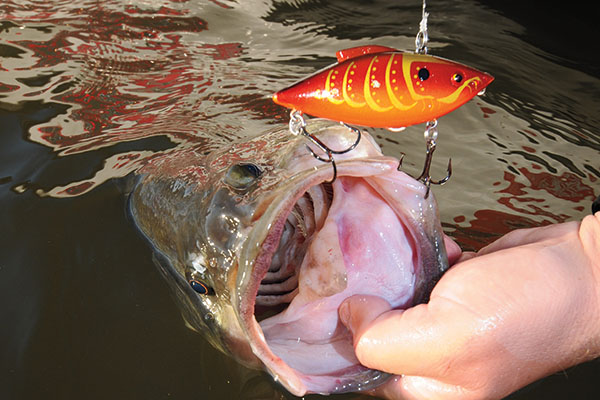
The first phase is aggressive by design. Lipless crankbaits, vibrating jigs, bladed jigs, swim jigs, and other moving baits let an angler cover water quickly and identify productive zones. A lipless crankbait is especially valuable because it can be fished over grass, along flats, near points, across shallow feeding areas, and through transitional depth zones.
The reason these baits work is not subtle. They create vibration, flash, sound, and displacement. They force bass to react before the fish has time to inspect every detail. When bass are feeding, that can produce violent strikes. When they are neutral, it can still expose them. A fish that rolls, follows, bumps, or misses tells the angler that the area is alive.
The yo-yo retrieve has become one of the most important variations in this system. Instead of simply winding a lipless crankbait straight back, I rip it upward and let it fall on semi-slack line. That rip-and-fall cadence imitates a fleeing or dying baitfish, but it also creates a sharp change in direction. Bass often strike during the fall, when the lure appears briefly vulnerable.
The real value of the yo-yo retrieve is diagnostic. If bass hit on the rip, they may be aggressive enough to stay with moving baits. If they follow or short-strike on the fall, they may need a slower secondary presentation. The retrieve does more than catch fish; it tells me how far I can push the power side of the pattern before switching.
For anglers looking to understand broader tournament-level bass fishing trends, reaction finesse bass fishing strategy has become part of the larger conversation around efficiency, adaptability, and high-percentage decision-making.
Finesse Second: Converting Fish That Reveal Themselves
The finesse follow-up is where this strategy separates casual anglers from methodical ones. The mistake is waiting too long. If a bass exposes itself and does not commit, the next cast should often be a Ned rig, Neko rig, drop shot, wacky rig, or small soft-plastic presentation placed directly into the same strike zone.
The Ned rig is effective because it looks nonthreatening and stays in the zone. It is compact, subtle, and difficult for a bass to reject when placed near a fish that has already shown interest. It excels around rock, sparse grass edges, hard bottom, and pressured banks where bass have seen too many larger moving baits.
The Neko rig adds a different dimension. Its weighted nose creates a distinct bottom posture, while the rest of the worm quivers with minimal movement. That makes it excellent around docks, deeper grass edges, brush, and areas where a bass may be positioned close to cover but unwilling to chase.
The drop shot remains the precision instrument of the group. It is ideal when fish are suspended slightly off bottom, positioned vertically, or holding near isolated structure. After a bass follows a moving bait but refuses to eat, a drop shot can stay in that fish’s face long enough to trigger a slower, more deliberate bite.
The key is not merely carrying finesse tackle. It is having it ready. A spinning rod on the deck, a bait already rigged, and a clear follow-up plan eliminate wasted seconds. In competitive bass fishing, hesitation is expensive. The fish that revealed itself may not remain catchable for long.
The Mental Shift Behind The Double Approach
The reaction finesse bass fishing strategy is not just a lure rotation. It is a way of reading fish behavior in real time. Every cast with a reaction bait becomes information. Every follow-up finesse cast becomes a test of that information.
I think of it as layered fishing. The first layer asks: Are bass present? The second asks: Are they willing to chase? The third asks: What presentation will make them commit? That sequence prevents an angler from becoming emotionally attached to one technique.
This matters because bass often exist in mixed moods across the same body of water. Some fish may be actively feeding along windblown grass. Others may be positioned nearby but reluctant. A straight power-fishing approach may catch only the most aggressive bass. A pure finesse approach may catch fish, but it can be too slow to efficiently locate them. The hybrid approach solves both problems.
The strategy also helps manage confidence. Anglers often abandon good water too quickly because a moving bait did not produce a hookup. But if the bait generated follows, bumps, or visual activity, the area may still be productive. The correct adjustment is not necessarily to leave. It may be to slow down immediately and present a smaller, more precise bait.
Where This Strategy Excels
This method is especially effective in grass fisheries, prespawn staging areas, pressured reservoirs, clear-water lakes, and tournament situations where timing is critical. Grass is a natural fit because lipless crankbaits and chatterbaits can be ripped through vegetation to trigger reaction strikes. When a fish misses or swirls, a Ned rig or Neko rig can be dropped into nearby openings or edges.
Prespawn bass are also prime candidates. They are often grouped, mobile, and responsive to moving baits, but cold fronts and fishing pressure can make them reluctant to fully commit. A lipless crankbait can reveal the zone; a finesse bait can clean up what the moving bait misses.
On pressured lakes, the double approach becomes even more important. Bass may have been conditioned by repeated exposure to loud, aggressive lures. Yet those lures still have value because they draw attention and expose fish. Once a bass reacts but hesitates, a subtle follow-up can look like an easy meal rather than another intrusive presentation.
Clear water adds another layer. Fish may track a bait from a distance, making follows more visible. In those situations, I treat every follow as useful intelligence. If a bass follows a chatterbait to the boat but turns away, I assume the fish is catchable under the right presentation. The finesse follow-up may need to be cast not where the fish ended, but where it began tracking the bait.
Common Mistakes That Weaken The Strategy
The most common mistake is treating the finesse bait as a backup rather than an integrated part of the system. If the follow-up rod is buried in the locker or rigged incorrectly, the opportunity is already fading. The transition must be immediate.
Another mistake is using finesse gear that is too heavy or too intrusive. The point is contrast. After a loud, fast, high-vibration bait, the follow-up should usually be quieter, smaller, and more natural. A bulky soft plastic or overly aggressive jig may not deliver the necessary change in profile.
Anglers also fail when they move too far after a missed strike. A bass that short-strikes a lipless crankbait may still be within a small radius of the original contact point. The follow-up cast should be precise, not general. I want that finesse bait landing near the exact lane, edge, clump, rock, dock post, or depth break where the fish reacted.
Finally, some anglers overstay. The strategy is efficient because it balances speed and precision. If a fish reveals itself, slow down. If the area offers no signs of life after a reasonable pass, keep moving. The goal is not to turn the entire day into finesse fishing. The goal is to use finesse only when the power bait creates a reason.
Gear Considerations For A Clean Transition
A practical setup matters. For the reaction side, a lipless crankbait rod should allow long casts, clean rips through grass, and enough forgiveness to keep treble-hooked fish pinned. For vibrating jigs, a rod with moderate give helps prevent pulling the bait away too quickly while still driving the hook.
The finesse side should be simple and ready. A medium-light or medium spinning setup with light fluorocarbon leader handles most Ned rigs, Neko rigs, and drop shots. The bait selection does not need to be overwhelming. In fact, too many choices slow down execution. I prefer having a compact set of proven follow-ups that cover bottom contact, vertical presentation, and subtle horizontal movement.
Line choice also matters. Reaction baits often benefit from stronger line because they are worked around grass, wood, and cover. Finesse presentations require enough sensitivity and stealth to detect light pressure bites. The contrast in tackle mirrors the contrast in strategy: bold first, precise second.
Why Tournament Anglers Are Leaning Into It
Tournament fishing rewards efficiency under pressure. Anglers need to build patterns quickly, adjust to changing fish behavior, and maximize every clue. The reaction finesse bass fishing strategy fits that environment because it turns non-committal behavior into opportunity.
A missed strike is not merely bad luck. A follow is not failure. A swirl is not meaningless. Each one narrows the search. When an angler can immediately shift from a search bait to a conversion bait, the number of wasted encounters drops.
This is also why the strategy has become more relevant in the age of advanced electronics and highly educated bass. Fish are easier to find than they once were, but not always easier to catch. The winning edge increasingly comes from presentation sequencing, timing, and behavioral interpretation. The best anglers are not just asking where the bass are. They are asking what each fish’s reaction reveals.
The Future Belongs To Anglers Who Can Shift Faster
The rise of the reaction finesse bass fishing strategy reflects a broader truth about modern bass fishing: adaptability is no longer optional. The days of forcing one technique all day and expecting it to dominate are becoming less reliable, especially on pressured fisheries and tournament waters.
What makes this strategy so valuable is its balance. It preserves the speed and aggression of power fishing while adding the discipline and precision of finesse fishing. It lets anglers cover water without ignoring reluctant fish. It turns missed opportunities into second chances. Most importantly, it builds a more complete picture of what bass are doing in real time.
Right now, the anglers gaining an edge are not simply the ones with the newest lure or the most expensive equipment. They are the ones making better decisions from each cast. The clear takeaway is this: find bass with movement, convert them with subtlety, and never treat a reaction as wasted information