

A tournament rarely reveals its full story on the first day, but it can expose the pressure points that will define everything that follows. That is why the early development at Toledo Bend matters right now: a strong opening bag has already shifted the psychological balance of the event and forced the field to fish from behind.
I see first-round leads in major bass events as more than a snapshot. They are a signal of timing, execution, and decision-making under tournament conditions, and this week at the Mercury B.A.S.S. Nation at Toledo Bend Reservoir that signal is impossible to ignore. Trace Antunes III moved to the top after Day 1 with 36 pounds, 3 ounces, creating immediate separation in an event where momentum can be as valuable as any single fish.
An Early Lead That Changes The Entire Tournament
When an angler opens a multi-day event with a bag that commands attention, the leaderboard instantly becomes more than a ranking. It becomes a strategic map. That is what Antunes accomplished with 36 pounds, 3 ounces on Day 1. The number itself matters, but the context matters even more. In a reservoir tournament, the first day is often when the field is still testing patterns, calibrating risk, and deciding whether to commit to areas that looked promising in practice.
A leader who comes out fast forces everyone else into a different conversation. The rest of the field no longer has the luxury of patient adjustment. They now have to decide whether to stay disciplined and trust that weights will tighten, or become more aggressive in an attempt to erase the gap before the event gets away from them. That tension is where tournaments are often won and lost.
From my perspective, the most significant part of Antunes’ start is not simply that he is leading. It is that he has set the tone early in a high-stakes event where confidence can compound as quickly as mistakes. A Day 1 lead gives an angler more than scoreboard advantage. It offers emotional control, and in bass fishing, emotional control is often the hidden edge.
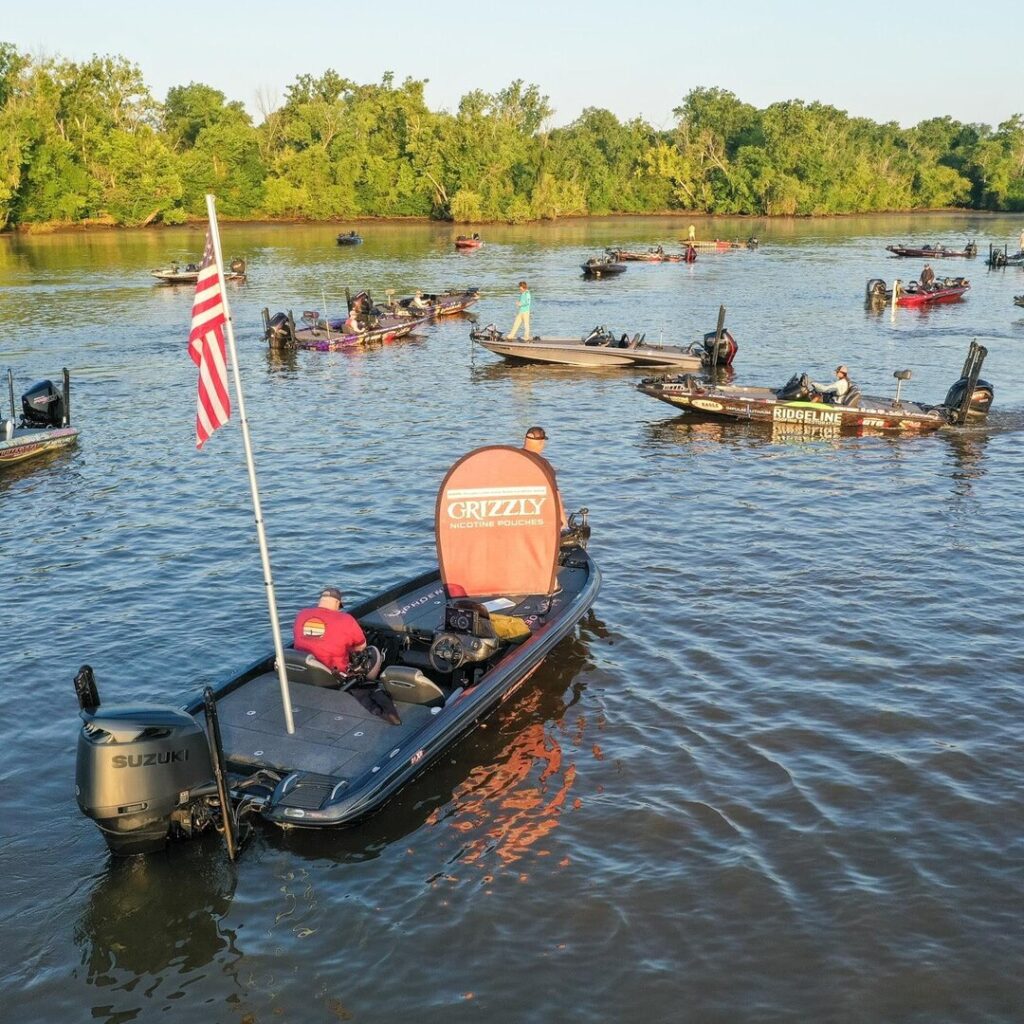
Why Toledo Bend Is Such A Demanding Stage
Toledo Bend Reservoir has long carried the reputation of a fishery capable of producing both excitement and frustration in the same day. It rewards precision, but it also exposes overconfidence. Big-water decision-making, fish positioning, changing conditions, and the sheer pressure of competition can all turn a promising pattern into a short-lived one.
That is why a strong opener here deserves closer attention. Leading at Toledo Bend does not mean an angler has solved the lake. It means he has interpreted it better than everyone else, at least for one day. That distinction is important. Tournament fishing is not about finding a permanent answer. It is about staying closest to the right answer for the longest period of time.
Antunes’ opening performance suggests he found both quality and consistency, a difficult combination on any reservoir when a field of competitors is simultaneously trying to unlock the same body of water. In events like this, anglers can catch fish and still lose ground if they do not locate the right class of fish. A leading weight of 36 pounds, 3 ounces signals not just activity, but meaningful productivity.
The Weight That Set The Standard
A Day 1 leaderboard always benefits from a simple breakdown, especially when the opening round creates an immediate benchmark for the field.
| Tournament | Venue | Status | Day 1 Leader | Leading Weight |
|---|---|---|---|---|
| Mercury B.A.S.S. Nation | Toledo Bend Reservoir | Underway | Trace Antunes III | 36 pounds, 3 ounces |
That line on its own may appear straightforward, but it carries several implications. First, the pace has already been established. Second, anyone hoping to contend now has a clear idea of the quality required to stay in range. Third, the second day becomes far more consequential because leaders must prove the first bag was sustainable, while chasers must decide how much risk they are willing to absorb.
In my experience covering competitive patterns in fishing, the second day is often where the truth emerges. Was the opener built on a repeatable setup? Was it fueled by a narrow window that may not return? Did the leading angler leave enough fish in an area to defend the position? Those are the questions now hanging over Toledo Bend.
What A Day 1 Lead Usually Tells Me
There is a tendency among casual followers of tournament fishing to treat an early lead as either decisive or meaningless. The reality lives in the middle. A strong first day matters because it reveals a level of readiness that the rest of the field has not yet matched, but it does not guarantee anything beyond the next launch.
What I take from an opening performance like this is a short list of competitive truths:
- Execution was sharper than the field on Day 1.
- The pattern, area, or decision tree produced quality fish, not just numbers.
- The leader now controls the emotional tempo of the tournament.
- The field must either adapt successfully or watch the gap widen.
Those points are not abstractions. They are the practical realities of tournament fishing after the first weigh-in. Once an angler reaches the top with a bag of consequence, the rest of the field begins chasing both weight and composure.
The Pressure Of Fishing From The Front
There is a common misconception that leading makes the next day easier. It does not. It changes the nature of the burden. Anglers behind the leader can swing freely because they have less to protect. The leader, by contrast, has to manage expectation, avoid forcing decisions, and stay disciplined enough not to fish defensively too soon.
That is the challenge facing Antunes now. A Day 1 lead of 36 pounds, 3 ounces creates a platform, but it also invites scrutiny. Every missed adjustment becomes more visible. Every lost fish feels larger. Every move away from a productive zone carries added risk because it is measured against the knowledge that something was already working.
The best tournament leaders understand that a fast start should not alter their identity on the water. They do not suddenly become conservative simply because they are on top. Nor do they chase hero moments to widen a margin that may not need widening. They keep making the highest-quality decisions available in real time. If Antunes can do that, the opening lead becomes more than a headline. It becomes the foundation of a winning week.
What The Field Must Do Next
The anglers behind him still have a path, but it has narrowed. At this point in a tournament, the field generally breaks into three distinct categories. There are those who are already on enough fish to mount a legitimate challenge. There are those who need a major adjustment but still have time to make one. And there are those who now require both a breakthrough and help from the leaderboard.
That dynamic is why Day 2 often produces the most revealing fishing of the event. Contenders cannot fish as though time is unlimited. Yet if they become too reckless, they can destroy what remains of their tournament. The balancing act is delicate. Chase too little, and the lead hardens. Chase too much, and the event unravels.
From a competitive standpoint, the most dangerous anglers for a leader are usually not the ones making dramatic moves out of desperation. They are the ones quietly sitting within range, fishing cleanly, and waiting for the leader to blink. That is why early control matters, but only if it can be maintained.
Why This Story Matters Beyond One Leaderboard
Bass tournaments often look simple from a distance: anglers go out, catch fish, and weigh them in. But anyone who spends time around the sport understands that the deeper story is about pattern recognition, timing, and mental discipline under pressure. That is what makes an update like this worth more than a line item on a results page.
A lead of 36 pounds, 3 ounces at this stage of the Mercury B.A.S.S. Nation event does not just identify the angler in first place. It tells us the tournament has already reached a meaningful inflection point. Someone has landed the first major punch, and the rest of the field now has to decide how to answer it.
For readers, fans, and serious followers of competitive fishing, that is the moment when an event becomes truly compelling. The first day offers possibility. The second day tests legitimacy. The final rounds reveal nerve.
The Tournament’s Most Important Question Now
The central question at Toledo Bend is no longer who started well. We know that answer. The real question is whether the opening lead represents a durable pattern or a perfect first-day intersection of timing and opportunity.
I believe that is what makes this tournament worth watching right now. Antunes has not merely taken the top spot; he has created the first real pressure line of the event. Every angler behind him is now fishing against a standard, and every decision he makes from here forward will be measured against the weight that put him there.
That is why this matters today, not just at the final weigh-in. In tournament bass fishing, the first day is where belief begins to take shape. At Toledo Bend, one angler has already turned belief into control, and the rest of the field must now prove it can take that control back.