

I’ve spent enough time on the water to recognize when something shifts not gradually, but decisively. In 2026, that shift is impossible to ignore. Across lakes that were once predictable, anglers are quietly abandoning traditional confidence baits and reaching instead for something far less familiar: strange, unconventional lures that look more like aquatic anomalies than fishing tools.
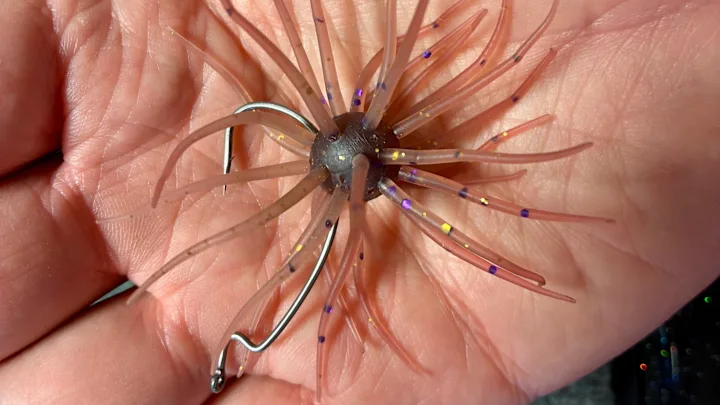
At the center of this movement is the spiny, almost alien-looking Coike bait. It’s not just a novelty it’s a signal that weird bass fishing lures are no longer fringe experiments. They are becoming a serious, results-driven strategy in modern bass fishing.
The Evolution of Bass Fishing Pressure
To understand why unusual lures are gaining traction, you have to first look at the environment bass are living in today. Many of the most popular fisheries are under constant pressure. Every weekend and increasingly, every weekday bass are exposed to a rotation of the same presentations: Texas rigs, crankbaits, spinnerbaits.
Over time, bass adapt. Not in a conscious, human sense, but through conditioning. They begin to associate certain shapes, vibrations, and movements with danger. This behavioral shift has been widely discussed in fisheries science, including research published by organizations like the U.S. Fish and Wildlife Service, which highlights how fish respond to repeated environmental stimuli and angling pressure.
The result is a new kind of fish more selective, more cautious, and far less likely to strike traditional offerings without hesitation.
Why “Weird” Lures Are Working Now
What makes the Coike and similar baits so effective isn’t just their appearance it’s their unfamiliarity. These lures disrupt the pattern that bass have learned to recognize. The key advantage is novelty. When a bass encounters something it hasn’t seen repeatedly, its response shifts from cautious to curious. That moment of hesitation or confusion often leads to a strike.
Unlike conventional lures that mimic known prey profiles, weird bass fishing lures operate in a different psychological space. They don’t always imitate; instead, they provoke. The erratic profile, unusual appendages, and subtle movement patterns create a stimulus that bass struggle to categorize.
From my own observation and conversations with experienced anglers, the takeaway is clear: unpredictability is now a tactical advantage.
Breaking Down the Coike Phenomenon
The Coike bait is perhaps the most visible example of this trend. At first glance, it resembles a soft, spiny cluster rather than a traditional lure. It lacks the streamlined profile of a worm or the defined silhouette of a creature bait. Yet, that’s precisely why it works.
When rigged correctly often on a finesse setup or lightly weighted presentation the Coike produces subtle, pulsating movements in the water. The fine appendages react to even minimal current or rod movement, creating a lifelike but undefined motion.
This ambiguity is critical. Bass can’t easily classify it as prey they’ve learned to avoid. Instead, they react instinctively.
Traditional Vs. Unconventional Lures
To fully appreciate the impact of this shift, it helps to compare how traditional and unconventional lures perform under pressure:
| Factor | Traditional Lures | Weird Bass Fishing Lures |
|---|---|---|
| Familiarity to Bass | High | Low |
| Strike Trigger | Recognition-based | Curiosity/reaction-based |
| Effectiveness in Pressure | Decreases over time | Often increases |
| Learning Curve | Moderate | Higher |
| Visual Profile | Predictable | Unpredictable |
This isn’t to suggest that traditional lures are obsolete. Far from it. But in heavily pressured waters, their effectiveness can plateau, while unconventional options continue to produce.
The Psychology Behind Reaction Bites
One of the most important concepts in this trend is the reaction bite. Unlike feeding behavior, which is driven by hunger, reaction strikes are triggered by instinct. Weird bass fishing lures excel in this area because they disrupt the bass’s decision-making process. Instead of analyzing whether something is safe or edible, the fish reacts impulsively.
In clear, pressured lakes where bass have ample time to inspect a lure this distinction becomes critical. A familiar bait gives the fish time to reject it. An unfamiliar one often short-circuits that hesitation.
When and Where to Use Unconventional Baits
From what I’ve seen, these lures are not just situational they’re strategic.
They perform best in environments where:
- Fishing pressure is high
- Water clarity allows bass to visually inspect lures
- Fish have been conditioned to standard presentations
In these conditions, switching to something unconventional isn’t just a creative choice it’s a calculated one. I’ve found that introducing a strange lure after cycling through traditional options can completely change the outcome of a session. It’s less about replacing your entire tackle box and more about knowing when to break the pattern.
The Future of Bass Fishing Innovation
What’s happening with the Coike bait is likely just the beginning. As more anglers adopt forward-facing sonar and refine their techniques, the pressure on bass will continue to increase. In response, lure design will evolve further into unconventional territory.
We’re already seeing early signs of this shift:
- Hybrid lure designs that blur categories
- Increased focus on micro-movements rather than aggressive action
- Materials that enhance subtle, lifelike behavior
The industry is adapting to a new reality where standing out matters more than blending in.
Why This Trend Matters Right Now
The rise of weird bass fishing lures isn’t just a passing trend it reflects a deeper transformation in the sport. Anglers are no longer just matching the hatch; they’re challenging the expectations of the fish themselves.
In 2026, success on the water increasingly depends on your ability to think differently. The Coike bait represents more than an unusual design it symbolizes a shift toward innovation, adaptability, and strategic unpredictability.
As I see it, the anglers who embrace this mindset will have a distinct edge. Because in today’s fisheries, it’s not always the most realistic lure that wins it’s the one the fish haven’t learned to ignore.