

Imagine Evel Knievel switching from motorcycles to baitcasters. That’s what Ray Scott did in 1967, starting bass tournaments with a $100 fee. It was more than fishing—it was a show with trash talk and big sponsorship deals.
Jimmy Houston and Roland Martin didn’t just win tournaments. They made plastic worms into art. These bass tournament legends turned fishing into TV drama, with new inductees following in their footsteps.
Scott’s smart move was making money from passion. The Wallop-Breaux Amendment helped fund fishing with federal taxes. Suddenly, every dad with a tackle box was a money maker. Bobby Murray’s 1972 win wasn’t just a victory—it launched a whole industry selling expensive rods.
This isn’t just looking back. It’s how outcasts turned a quiet hobby into a big TV event. The magic? They made us think we’re just one great cast away from success.
Hall of Fame Profiles
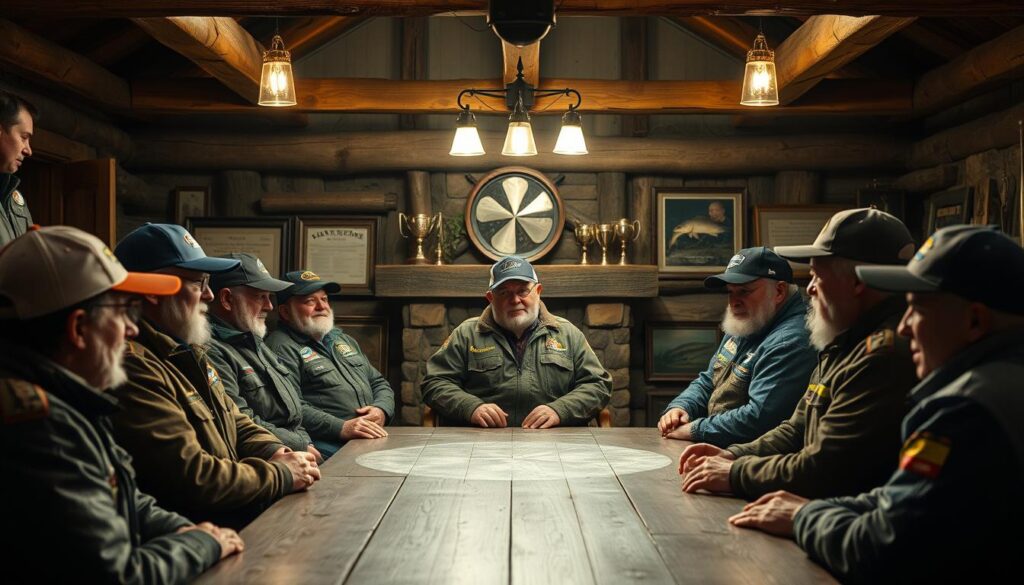
The Bass Fishing Hall of Fame is more than a trophy case. It’s a place where egos, innovations, and big catches meet. These hall of fame anglers are not just winners. They’ve turned simple fishing into a cultural phenomenon.
Johnny Morris didn’t just sell tackle; he built a giant in the fishing world. Hibdon used his knowledge of the Ozarks to win five B.A.S.S. titles. Let’s take a closer look at the legends.
Early Trailblazers (Scott, Morris, Dance)
The 1970s were a time of change in bass fishing. The Bass Fishing Hall of Fame inductees set the stage for today’s sport. Bill Dance used TV to share his fishing wisdom. Johnny Morris’ Bass Pro Shops became a giant in tackle sales.
Innovators and Champions
Denny Brauer’s flipping techniques changed the game. His methods didn’t just catch fish; they changed how predators behave. Gerald Crawford’s long tournament career shows his dedication and skill.
These anglers turned fishing into a strategic game. They used sonar to outsmart nature at every turn.
Female & Minority Trailblazers
Helen Sevier grew the Women’s Bass Fishing Association to 600k members. She used pink gear to make a statement. Hank Parker broke barriers in the ’80s, showing that race doesn’t affect fishing skills.
They’ve turned negative stereotypes into something positive. Their legacy is inspiring.
Recent Inductees
The new generation of anglers is using advanced techniques. Jay Yelas’ CAST Foundation is a talent pipeline. Kevin VanDam’s influence is so strong, the industry listens intently.
These modern legends are not just winning. They’re shaping the future of fishing.
Career Highlights and Contributions
If bass fishing careers were comic book arcs, these legends would need their own multiverse. Rick Clunn’s 28 consecutive Bassmaster Classics appearances aren’t just a record – they’re the fishing equivalent of the Rolling Stones’ “No Filter” tour. Instead of groupies, Mick Jagger had to outsmart 5-pound largemouths.
This wasn’t mere participation; it was a masterclass in adapting through three seismic shifts in Bass Fishing innovations:
The Balsa Wood Revolution started with lures like Bagley’s KB-1, turning hand-carved art into tournament gold. Then, the Sonar Age came, with Lowrance’s green-box fish finders giving anglers X-ray vision. Aaron Martens’ “Silicon Valley” era brought finesse fishing to new heights, with $3M+ earnings.
Tom Mann’s Jelly Worm empire didn’t just sell plastic baits – it turned kitchen-table tinkering into an industry. His garlic-scented creations caught fish and buyers, sparking the “Soft Plastic Gold Rush” of the 70s. Ken Cook’s 1983 $100,000 win showed corporate sponsors that anglers were more than just guys in flannel shirts.
What sets the best bass anglers apart? It’s not just technique – it’s tectonic shifts in strategy. Clunn’s streak survived the switch from live bait to artificial lures. Martens thrived as electronics turned lakes into video games.
The real Bass Fishing milestones aren’t in record books – they’re in the tackle boxes of everyday anglers. That weedless worm you’re tossing? Thank Mann’s kitchen experiments. The depth finder on your console? Send a mental nod to Lowrance’s blinking screens. Every modern cast carries decades of competitive evolution.
Impact on Tournaments and Culture
Imagine a sport where pickup trucks and fish scales sparked a multi-million-dollar industry—welcome to the unexpected legacy of tournament legends. Bill Dance’s camera-friendly antics and Homer Circle’s wisdom started it all. Now, outdoor entertainment is a mix of Southern charm and Vegas-style shows.
The real game-changer? It wasn’t just about the gear. It was business acumen. Johnny Morris sold $30,000 boats as a sport, and Ray Scott made anglers pay to measure their bass. This turned fishing into a big business.
Classic fishing events used to draw just 47 people. Now, they attract crowds as big as Taylor Swift concerts. And instead of glitter, they wear more camo.
Consider the cultural ripple effects:
- Shakespeare’s first aluminum boats evolved into rigs wrapped like NASCAR vehicles (but with better mileage)
- Roland Martin turned “pattern fishing” into cocktail party jargon
- TV bloopers of Dance snagging trees birthed an entire genre of fishing-as-comedy
| Era | Crowd Size | Prize Money | Cultural Impact |
|---|---|---|---|
| 1970s | 50-100 | $5,000 | Regional folktales |
| 2020s | 15,000+ | $300,000 | ESPN coverage, fantasy leagues |
Today’s Bass Fishing Hall of Fame events are more than just tournaments. They’re cultural events. The weigh-in stage is like a red carpet for waders. Sponsorship deals are as complex as a Texas rig.
Fans aren’t just watching. They’re invested in a lifestyle. Every cast is like a stock tip, and every largemouth is a dividend.
Lessons for Competitive Anglers
The Bass Fishing Hall of Fame board isn’t impressed by your gear. They care about how many rental cars you’ve slept in. Davy Hite practiced with a broken trolling motor, and Ish Monroe mastered frog fishing before Google Maps existed. It’s not about the gear; it’s about how obsessed you are.
Brauer’s flipping technique from the 1980s can outsmart today’s $10,000 rigs. Nixon’s 176 paychecks show that consistency is key, not just big catches. These legends didn’t just catch fish; they studied lakes like chess players.
Clunn believed in “mental fishing,” which means outsmarting the competition. Cochran’s shallow-water strategies are winning in the Livescope era. Why? Because instinct beats technology after 10,000 casts.
Omori’s strategy of sleeping in rental cars was not poverty. It was a way to study moon phases while others ordered Uber Eats.
- The Kerchal Principle: Practice like you’re broke, even if you’re sponsored
- The Hibdon Hack: Start guiding at 13, retire with 4 Classic wins
- The Nixon Ratio: 1 check = 37 hours of grid-pattern casting
Today’s pros use forward-facing sonar, but hall-of-famers used their brains to outsmart fish. Your $800 reel can’t replace Hibdon’s 40 years of experience. That “lucky” jig color? It’s Cochran’s 1996 notebook secrets.
Pro tip: If your pre-fish routine doesn’t include existential crises and gas station coffee, you’re not chasing greatness. You’re funding someone else’s fishing dreams.
Interviews/Quotes
Let me tell you what $1,500 buys in bass fishing lore. Roland Martin doesn’t just promise to beat your personal best – he guarantees it. He’s as confident as a pro who’s made more money from lakes than Wall Street.
This isn’t just a sport; it’s a high-stakes show. Imagine a red carpet on lily pads.
The real treasure isn’t in winning tournaments. It’s in the honest words from legends. Denny Brauer once said, “90% relief, 10% glory”. This ratio would make any top athlete nod in agreement.
| Inductee | Legendary Quote | Cultural Impact |
|---|---|---|
| Roland Martin | “We’re gonna beat your PB today” | Redefined guide economics |
| Bobby Murray | “I could’ve fit all our fans in my truck bed” | Benchmark for sport’s growth |
| Denny Brauer | “TV made us stars, but water keeps us honest” | Bridged sport & pop culture |
| George Cochran | “Today’s anglers? More screens than a cineplex” | Tech evolution commentary |
Murray’s truck-bed story is as powerful as a big bass. He’s not being modest; he’s etched the sport’s journey in graphite. Brauer’s ’96 Letterman appearance made bass fishing mainstream. Suddenly, even grandparents knew what a flipping stick was.
Modern anglers, take heed: Cochran’s words about “TV screens everywhere” are more than grumpy old-man talk. They’re a warning about tech’s impact. To join the legends, find the right balance. Innovate without losing focus, and keep traditions alive.
How to Nominate a Legend
Nominating someone for the Bass Fishing Hall of Fame is like casting a line with precision. It’s not about listing achievements; it’s about showing how your candidate changed the sport. Think about how many minds they influenced, not just how many trophies they won.

The 2023 nomination process starts during Celebrate Bass Fishing Week (October 9-15). You need to answer three key questions:
- Did they invent techniques that made the rest of us look like we’re fishing with spaghetti rods?
- Did their influence grow the industry or help the environment?
- Would retirement communities and TikTok anglers say they made a difference?
| Hall of Fame Priorities | Not Required |
|---|---|
| Game-changing techniques (e.g., flipping jigs into heavy cover) | Tournament win counts |
| Economic/cultural impact (sponsorship deals, media reach) | Personal brand endorsements |
| Conservation work (habitat restoration, youth programs) | Social media follower stats |
Insider tip: The board values community impact more than tournament wins. Jay Yelas is a great example. He traded tournament prizes for working with the CAST Foundation, teaching special needs kids to fish. That’s what they’re looking for.
Nominations close on January 31. But here’s a tip: Submit during Celebrate Bass Fishing Week. You’ll get featured in their “Legends in the Making” social series. Getting 50,000 retweets for your candidate’s environmental work is a big plus.
Conclusion
The Bass Fishing Hall of Fame inductees have achieved incredible feats. They’ve won 137 major tournaments and spent over 9,000 hours on TV. Their success has also led to many sponsorship deals, making them legends in the sport.
These anglers didn’t just catch fish; they changed the game. They turned small competitions into a $1.2 billion industry. Their impact is huge.
Roland Martin made fishing shows popular before YouTube. Denny Brauer and Jimmy Houston also left their mark. They introduced new techniques and products, like the Senko and signature hats, that changed the sport.
Thanks to them, fishing is now a real career. Kids dream of becoming professional anglers. Kevin VanDam’s $7 million earnings showed that fishing can be a lucrative profession.
Today’s anglers have a lot to live up to. Every cast has the chance to win or make history. The next big achievements will come from creativity and innovation, not just fishing skills.
Remember, Bedell turned $2 lures into a fortune. Your creativity could be the next big thing in bass fishing.