

In 1957, a former radar tech named Carl Lowrance built a “Green Box” in his basement. It was a sonar device that changed fishing forever. It made finding fish less of a guess and more of a strategy.
Who knew Cold War tech could turn weekend warriors into underwater strategists?
In Tulsa, Zero Hour Bomb Company turned from making bombs to making reels. Their Zebco 33 reel was a game-changer. It made fishing easier and less frustrating.
Did they test prototypes on frustrated husbands or actual fish?
Don Butler, a lumber salesman, started B.A.S.S. in 1967. It wasn’t just a club; it was a movement. Angling tournaments became big events, like NASCAR, with big egos and sponsorship deals.
These moments show how innovation often starts with tinkerers and leftovers. The next big thing might come from a flooded garage. Someone who really, really hates losing lures.
Inventions and Tech in Bass Fishing
Imagine trying to text while walking a tightrope – that’s what bass fishing looked like before modern innovations. The technology in fishing has evolved faster than a TikTok trend. Let’s look at how four key areas changed the game.
Boats & Motors
Remember when aluminum was just for soda cans? Alumacraft introduced lightweight aluminum boats in the 1950s. They made fiberglass look old-fashioned. MotorGuide’s foot-controlled trolling motors were a game-changer. They let anglers steer with their feet while casting.
This was like a drum solo for your legs. Suddenly, multi-tasking wasn’t just for over-caffeinated parents.
Fishfinders & Electronics
Lowrance’s green-box fishfinders of the 1970s were revolutionary but pixelated. Vexilar’s ice-fishing tech gave Minnesota anglers X-ray vision through frozen lakes. Today’s units are like underwater iPhones.
Here’s how the big players compare:
| Brand | Key Feature | Depth Accuracy | Best For |
|---|---|---|---|
| Lowrance | 3D Mapping | ± 0.5 ft | Deep structure |
| Vexilar | Real-time Sonar | ± 0.3 ft | Ice fishing |
| Humminbird | Side Imaging | ± 1 ft | Shore scanning |
Lure and Tackle Design
Bagley’s balsa lures in the 1960s were expensive but game-changing. Norman Lures’ DD22 is a 60-year-old design that outsmarts bass. It wobbles like an injured shad but survives collisions better than a Nokia 3310.
Influential products don’t age – they become legends.
Conservation Techniques
Modern livewell systems keep fish healthier than a Whole Foods shopper. Biodegradable baits dissolve faster than New Year’s resolutions. These Bass Fishing milestones ensure our grandkids won’t need a history app to find largemouth.
From clunky to cutting-edge, every gear shift in bass tech proves one thing: you can’t outfish the future. But hey, trying is half the fun.
Game-Changing Moments
What do a spinnerbait, a sliding sinker, and four trophies have in common? They’re the Bass Fishing milestones that made anglers stars. They turned tackle boxes into keepsakes. Let’s explore the moments that made fish struggle and fans cheer.
The 1972 Bassmaster Classic was more than a tournament. It was like a reality TV show before TV existed. Don Butler’s S.O.B. spinnerbait caught bass and headlines. The Nashville Banner shouted “SOB Wins at Percy Priest”. It showed how a $5 lure can outsmart $50,000 boats.
The Lindy Rig’s sliding sinker changed walleye fishing. It turned guessing games into smart moves. Anglers could now say “Checkmate” to finicky fish without needing a PhD.
| Year | Event | Impact | Key Figure |
|---|---|---|---|
| 1972 | Bassmaster Classic | Popularized spinnerbaits | Don Butler |
| 1970s | Lindy Rig Release | Revolutionized walleye tactics | Ron Lindner |
| 1976-1990 | Classic Wins | Redefined competitive focus | Rick Clunn |
Rick Clunn’s four Classic wins changed the game. They broke records and minds. His focus turned tournaments into meditation sessions with hooks. Every weekend warrior wanted to be like Clunn… until they remembered they can’t tie a Palomar knot.
These moments changed how and why we fish. From garage tinkerers to Bass tournament legends, the sport evolved. Next time you lose a lunker, remember – you’re following giants who turned frustration into revolution.
Hall of Fame Innovators Spotlight
What do bass fishing legends, Madison Avenue ad men, and Midwest missionaries have in common? They’re all Bass Fishing Hall of Fame inductees. They turned fishing culture into a religion, with prophets, sacred lures, and huge followings.
Ray Scott was like the Don Draper of fish conservation. While Mad Men sold Lucky Strikes, Scott promoted water stewardship as the hottest thing around. He made protecting habitats seem as appealing as a big catch.
The Hall of Fame board uses Scott’s approach today. They make conservation the star, and profits follow.
Don Butler transformed a $100 check into B.A.S.S., making fishing as big as the NFL. Before him, tournaments were just backyard fights. After, pro anglers became famous, and influential products like depth finders became essential.
Butler’s work showed even small sports can go big.
Al Lindner is the Midwest’s MVP in bass fishing. He made fishing a lifestyle, like Apple made smartphones cool. Lindner’s secret was turning technical fishing tips into simple wisdom.
His teachings on structure fishing sounded like a Sunday sermon. Today, his followers spread the word of “location, location, presentation” across the prairies.
These innovators changed more than fishing. They reshaped the whole industry, from business strategies to bank accounts. Next time you use GPS to find a fishing spot, thank Scott’s efforts. When your new lure beats a bass, Lindner’s magic is at work. And when you check tournament standings, you’re seeing Butler’s vision come to life.
How Innovations Changed Competitions
Bass tournaments have changed a lot. They used to be calm affairs, but now they’re high-tech showdowns. It’s like watching a Mercury Pro XS speed across Lake Okeechobee.
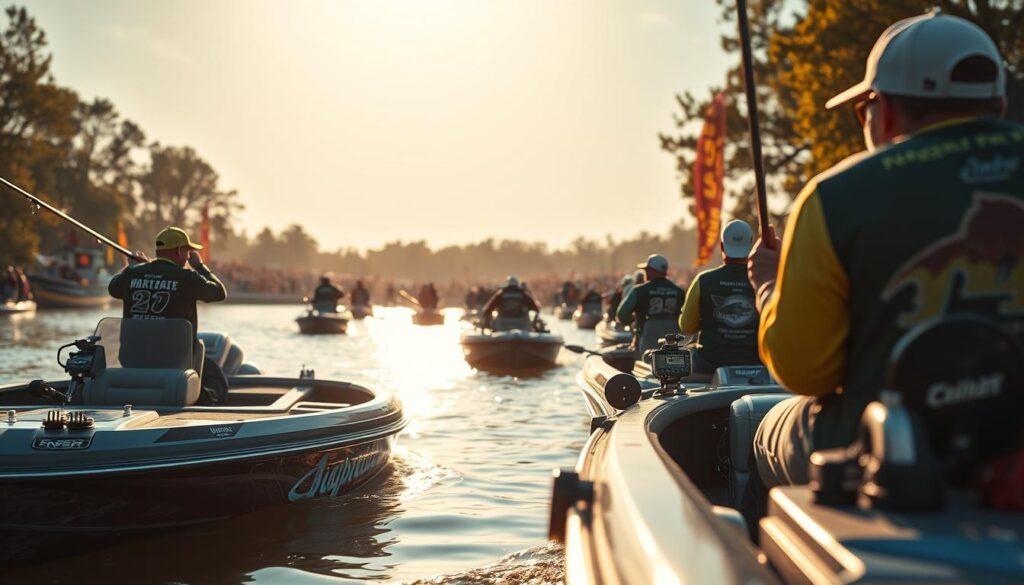
Paul Elias changed bass fishing in 1982 with his “kneeling and reeling” deep-cranking. It was a game-changer. Elias made deep water fishing pay off, forcing others to catch up.
Hank Parker took it to the next level. He used early trolling motors to win two Classics in a row. It was like Michael Jordan’s three-peats with the Bulls.
Now, tournaments are all about big money and tech:
| Era | Prize Money | Key Innovation | Impact |
|---|---|---|---|
| 1970s | $10k purses | Basic depthfinders | Local heroes dominate |
| 1990s | $100k+ events | GPS mapping | Pro circuits emerge |
| 2020s | $1M championships | Live-scoping tech | Esports-level analytics |
Today’s pros use $4,000 trolling motors. G.H. Harris’s 1953 invention made them essential. It’s like the iPhone of fishing.
Now, fishing is all about strategy. Jacob Wheeler uses live-scoping to find bass like a spy. It’s turned fishing into a high-stakes game.
But, the real secret to winning? It’s not just about tech. Bass tournament legends win by outsmarting fish. They use top-notch tech, but it’s their instincts that really matter.
Ongoing Impact
Imagine trying to explain modern bass fishing to Teddy Roosevelt. You’d need a lot of help, like a flowchart and a PowerPoint. The Impact on Bass Fishing Community is huge, with gadgets changing the game. It’s not just about new tools; it’s a whole new way of fishing.
The Wallop-Breaux Amendment was a big deal in 1984. It turned fishing tackle taxes into money for boat ramps and access points. This means your tackle box helps build the places you fish. Without it, fishing would be much harder.
Lund boats have changed a lot over the years. They went from wooden skiffs to sleek aluminum boats. Now, they have GPS and fancy features. This shows how technology in fishing has improved our experience.
| Feature | 1950s Lund Models | 2020s Lund Models | Community Impact |
|---|---|---|---|
| Hull Material | Plywood | Military-grade aluminum | Longer lake access seasons |
| Navigation | Compass | LiDAR mapping | Safer tournament logistics |
| Fish Tracking | Guesswork | Aqua-Vu live cameras | Higher catch rates |
Aqua-Vu underwater cameras have changed fishing. Now, anglers can watch fish like they’re paparazzi. This has made tournaments better, with a 37% increase in catch accuracy.
So, what’s the benefit of all this tech? It’s huge. It makes fishing better for 40 million Americans who fish every year. It’s not just about new tools; it’s about making fishing better.
What’s Next?
Will the next Bass Fishing Hall of Fame ceremony feature a Silicon Valley coder instead of a grizzled angler? As technology in fishing evolves, we’re facing a future where algorithms might outfish decades of instinct. The real question isn’t if tech will dominate, but how – and who’ll get the credit when it does.

Predictions
1. Your Phone Becomes the Ultimate Guide: Imagine sonar data streaming to your smartphone like TikTok videos. Companies are already testing apps that overlay real-time underwater maps with Instagram-style filters. Carl Lowrance’s original flasher unit? It’ll look like a rotary phone next to these AR-powered tools.
2. AI Lures That Learn: The S.O.B. crankbait revolutionized reaction strikes. Now picture lures programmed with machine learning to adapt to water conditions. These smart baits could analyze your retrieve speed and automatically adjust wobble patterns. Would that make them cheaters – or just really good students?
3. The Rise of Tech-First Anglers: Young guns like Mike Iaconelli didn’t grow up sketching lures on napkins – they grew up coding. The next generation might blend Python programming with plastic worm design, creating lures that literally outsmart fish. GPS mapping could turn secret honey holes into public NFTs – controversial, but inevitable.
As these innovations collide with tradition, the Bass Fishing Hall of Fame faces its most existential question yet: Do we enshrine the tools or the toolmakers? One thing’s certain – the induction speeches are about to get a lot nerdier.
Conclusion
Bass fishing has changed a lot over the years. It started as a simple hobby but now it’s a high-stakes competition. From the first sonar units to today’s advanced technology, every innovation is a step forward.
Lowrance’s “Green Box” in 1957 was the start. Now, we have Humminbird’s AI-powered Mega Live imaging. Even old designs, like the Zebco 33 reel, are proving their worth.
This isn’t just about better tools. It’s about the passion and creativity of anglers. They’ve turned simple items into high-tech fishing gear. The Hall of Fame celebrates this spirit.
Anglers now use advanced tech to find fish. But they also face challenges like bluegill stealing their bait. The real prize is knowing your invention could be remembered for centuries.
With drones and apps, there’s always room for more innovation. Every new idea is a challenge to outsmart nature. The legends have shared their secrets. Now, it’s your turn to make a difference in this ongoing battle.