

Bass Regulation Changes in Louisiana and Kansas have already shifted the practical decisions facing bass anglers, tournament directors, and small businesses tied to local fishing. As of October 18, 2026, the key dates in the research have passed, so this is a look back at what changed, where the conservation logic is strongest, and what still needs time on the water before anyone can claim measurable population results.
Bass Regulation Changes In Two States
Why Bass Regulation Changes Matter Locally
Fishing rules can look simple on paper: a minimum length, a daily limit, a possession limit, or a legal-method clarification. On tournament water, those same lines affect weigh-in strategy, livewell management, sponsor messaging, and the way visiting anglers interact with a host community. I see this most clearly at the local level, where a small rule change can alter how many fish are brought to a ramp, how many are released quickly, and how much education an event staff needs to provide before takeoff.
The conservation case is direct but should be stated with care. Minimum length limits are intended to reduce harvest of smaller bass before they reach larger sizes. Lower daily bag limits are intended to reduce take. Those tools can support better size structure over time, but the research supplied here does not include post-change survey data. That means the correct read is not “success already proven.” It is “management action now in place, results still to be measured.”
Louisiana Basin Rules Already Took Effect
Louisiana’s updated recreational fishing regulations, issued on July 16, 2026, established new black bass rules for the Lower Atchafalaya Basin, Grassy Lake, Lake Palourde, Lake Verrett, and associated waterbodies. Those rules took effect on August 1, 2026, after Senate Bill 111 became Act 460. In those waters, black bass moved to a 12-inch minimum length limit and a daily bag limit of 5 fish. The research notes compare that with a previous statewide limit of 10 bass with no size minimum in many waters.
For a community event, that is a meaningful operational shift. A five-fish daily limit lines up more closely with many tournament formats, but the 12-inch minimum changes the margin for club events, youth events, and benefit derbies that may include newer anglers. Directors have to make sure competitors understand whether event rules are stricter than state rules, and anglers need measuring boards that remove doubt. A disputed short fish is not just a penalty issue; it is a credibility issue for the event and the host ramp.
Louisiana also changed crappie rules in those same Basin waters on August 1, 2026, setting a 25-fish daily limit and an 8-inch minimum size. That is not a bass rule, but it matters to local tackle shops, bait sellers, and multi-species fishing families because fishing pressure on one species can affect traffic patterns and community expectations around access.
Bussey Brake Reservoir Set A Different Bass Target
Bussey Brake Reservoir received a more trophy-focused black bass adjustment. The maximum length limit for black bass increased from 16 inches to 18 inches, while the daily creel limit remained 5 fish per day. The research also identifies a rule allowing one bass over 22 inches to be temporarily held in a livewell for weighing. The Louisiana Wildlife and Fisheries Commission adopted the Bussey Brake changes through a Notice of Intent on March 7, 2025, later reflected in 2025–2026 regulations; the state notice appears in the Louisiana Register notice.
That 22-inch livewell detail is especially relevant for tournament culture. It recognizes that documented big fish matter to anglers and communities, while still putting boundaries around possession and fish handling. From an organizer’s chair, the best response is to build fish-care instructions into the meeting, not bury them in a rule packet. Anglers chasing a single exceptional bass need to know exactly what is allowed before that fish is ever placed in a livewell.
Conservation Pressure Points For Tournament Planning
Weigh-In Math And Livewell Decisions
For tournament directors, Bass Regulation Changes create three immediate planning questions: what is legal, what is ethical under event conditions, and what is clear enough that every angler can follow it under pressure. The Louisiana Basin rule reduces daily harvest to 5 black bass and adds a 12-inch minimum. Kansas sets a 5-fish daily creel limit and 15-inch minimum for black bass statewide. Those numbers are easy to announce, but event staff still need to connect them to practice: measure every fish, cull legally, release quickly, and avoid treating a legal limit as a target when conditions call for extra care.
Local sponsor value also changes. A marina, restaurant, or tackle shop does not only benefit from weigh-in traffic. It also attaches its name to how the event treats the fishery. Conservation-focused sponsor messaging should stay factual: support legal harvest, fish care, and local compliance. It should not promise bigger bass next year unless agency data later supports that claim.
| State Or Water | Rule Change In Research | Community Planning Effect |
|---|---|---|
| Louisiana Basin waters | 12-inch black bass minimum; 5-fish daily bag from August 1, 2026 | More emphasis on measuring, compliance briefings, and release messaging |
| Bussey Brake Reservoir | 18-inch maximum length limit; 5-fish daily creel; one over 22 inches may be temporarily held for weighing | Big-fish procedures need to be explained before launch |
| Kansas statewide black bass | 5-fish daily creel; 15-inch minimum total length | Club events need consistent measuring standards across public waters |
| Kansas legal methods | Live sport fish catch-and-release clarified for allowed methods | Event rules should identify allowed gear and reject unauthorized methods |
Sponsors And Local Messaging
Bass Regulation Changes have a sponsor side that is easy to miss. A local business may support a derby because it brings people to town, but the long-term value depends on anglers wanting to return. Clear conservation messaging helps protect that value. A sponsor banner at a weigh-in can sit beside practical reminders: know the minimum length, use working livewell systems, limit air exposure, and release fish at approved areas when event rules call for it.
Anglers who track personal catches also need to separate personal milestones from harvest assumptions. A related network resource such as My All Time Best fits that culture because records can be kept without turning every notable bass into a kept fish. That distinction matters more as regulations place tighter boundaries around size and daily take.
What The Rules Mean On The Water
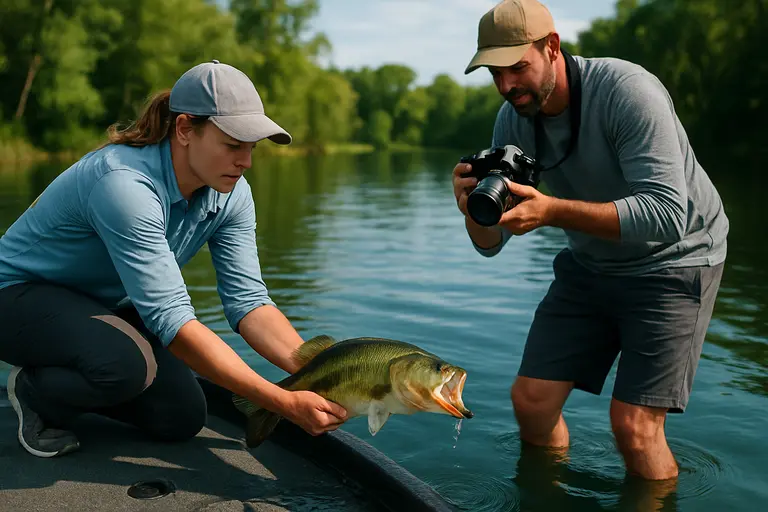
Harvest Limits And Size Protection
Kansas adopted statewide black bass limits through a Permanent Administrative Regulation published on July 10, 2025. The rule set black bass, including largemouth, spotted, and smallmouth bass, at a daily creel limit of 5 fish with a 15-inch minimum total length limit, according to the Kansas Register regulation.
That 15-inch line is a stronger size filter than Louisiana’s 12-inch Basin minimum, but the two states are not managing the same waters with the same biology or fishing culture. A cautious comparison is better than a ranking. Louisiana’s Basin waters received a reduction in daily take and a new minimum. Kansas maintained a statewide framework with a higher minimum. Both approaches use the same broad conservation tools: fewer fish removed each day and a size threshold below which bass stay in the system.
For bass anglers, the practical takeaway is simple: do not rely on memory from past trips. A legal fish on one water may not be legal on another. A club angler traveling from Louisiana to Kansas, or from a Kansas farm pond mindset to a public reservoir event, has to reset around the local rule sheet.
Gear Method Clarity In Kansas
The Kansas research also identifies a regulation change effective February 5, 2026, clarifying that live sport fish can only be caught and released legally when allowed methods are used. The listed methods in the research are hook and line, trotlines, setlines, tip-ups, hand fishing, snagging, and floatlines. For bass tournaments, hook and line is the central method, but the clarification still matters because it draws a boundary around unauthorized gear that could harm sport fish populations.
That is where tournament rules and state rules should meet. Event directors should not assume anglers understand the difference between legal recreational methods and legal tournament methods. Most bass events are already stricter than general law, but clarity prevents disputes. It also protects the host organization when questions come from agency staff, sponsors, or local residents watching fish handling at the ramp.
The same planning mindset applies beyond Louisiana and Kansas. Heat closures, species protections, and access rules are increasingly part of event logistics across freshwater communities; related coverage of how fishing closures push conservation plans shows why directors need rule checks built into the planning calendar, not handled the night before launch.
Louisiana And Kansas Bass Regulation Changes
Community Measures Worth Tracking
Bass Regulation Changes are only the starting line for conservation analysis. The useful work now is tracking what happens after implementation. For Louisiana Basin waters, that means watching whether the 12-inch minimum and 5-fish daily limit are paired with angler compliance, clear signage, and future agency sampling. For Bussey Brake Reservoir, the key question is whether the larger maximum length rule and temporary livewell allowance for fish over 22 inches support both trophy documentation and safe release behavior. For Kansas, the statewide 15-inch minimum and 5-fish daily limit give clubs a consistent reference point, but local outcomes will still depend on fishing pressure, habitat, recruitment, and enforcement.
As an angler and event organizer, I would treat these changes as a cue to tighten local habits rather than as a reason to make big claims. Pre-tournament meetings should state the active rule, the measuring process, and the release expectation. Sponsors should be invited into that message because they benefit from healthy fisheries as much as anglers do. Community groups should ask for agency data when it becomes available and avoid declaring success before trend information exists.
The clearest supported impact today is behavioral: anglers in affected Louisiana waters can keep fewer black bass than before and must meet a minimum size; Kansas anglers operate under a 15-inch statewide black bass minimum and 5-fish daily creel; Bussey Brake anglers face a more specific size structure aimed at protecting certain bass while allowing limited big-fish weighing. The biological impact is the part that needs time, surveys, and honest reporting. That is where local fishing communities can help most—by following the rules, teaching them well, and keeping conservation tied to the places where tournaments actually launch.