

Lake Hartwell has already moved from a proven championship stop to a measured Bass Pro Tour case study. The difference matters. A lake can have name value, but a tour-level venue has to combine fishable scale, launch access, tournament history, public-use suitability, and a host community that can absorb event pressure without making the lake feel closed off from regular anglers.
From my side as an angler and event organizer, Hartwell checks those boxes with more hard evidence than most reservoirs. The available research shows a large, accessible lake with repeated national tournament use, a first Bass Pro Tour event completed on February 19-22, 2026, and a scheduled return to the Bassmaster Classic spotlight on March 19-21, 2027. What we should not do is claim local spending figures or attendance impacts that are not in the research. The stronger argument is simpler: Hartwell has the physical and civic setup that tournament directors need, and local fishing communities can plan around facts instead of hype.
Lake Hartwell Gives Tournament Directors Room To Test Anglers
Lake Hartwell Scale Separates Patterns
The lake’s first tournament advantage is its size. South Carolina’s lake profile lists about 56,000 acres of water, roughly 962 miles of shoreline, an average depth near 45 feet, and a maximum depth of 185 feet in the state lake description. Those numbers are not just brochure material. They shape how a Bass Pro Tour event can be built.
A field of top professionals needs room to spread out, especially in a format where every scorable bass can matter. Large acreage reduces the chance that the event becomes a single-community hole race. Shoreline length and depth variation give anglers room to choose between pockets, points, deeper structure, and seasonal bait movements. That does not guarantee easy fishing. It creates a broad test where decisions carry weight.
Hartwell’s average and maximum depths also matter because they allow both shallow and offshore approaches to exist in the same event window. In February, when the 2026 Stage 2 event was held, that kind of water profile gives anglers several ways to manage changing conditions. Some may commit to bank-related patterns. Others may use deeper breaks or bait-driven areas. The lake’s scale gives tournament organizers a fairer test because the venue does not force one narrow style from the first cast.
Access Points Matter Beyond The Weigh-In
Access is the part of tournament planning that casual viewers can miss. The same South Carolina lake profile notes more than 23,000 acres of public land around the reservoir, about 45 boat ramps, five marinas with pumpouts, and multiple public fishing access points and piers. For a local angler, that means the lake is not built only around one ramp or one marina. For an event crew, that means logistics have more workable options.
That access also affects community impact. A major tournament can bring attention to a lake, but residents still need to fish, launch, work, and travel around the event footprint. Multiple ramps and public areas make it easier for organizers and local partners to separate tournament operations from everyday public use. That is not a minor issue. A tournament that strains a host town can lose support quickly, even if the fishing is strong.
| Venue Factor | Verified Or Reported Detail | Why It Matters For A Tour Event |
|---|---|---|
| Water Size | About 56,000 acres | Allows a professional field to spread out |
| Shoreline | About 962 miles | Creates varied banks, pockets, and transitions |
| Depth | Average near 45 feet; maximum 185 feet | Supports shallow and deeper tournament decisions |
| Public Access | About 45 ramps and several public fishing areas | Helps event logistics and local angler access |
| Public Land | More than 23,000 surrounding acres | Supports recreation beyond the tournament launch |
Tournament Credentials Are Backed By Repeated Use
The 2026 Bass Pro Tour Debut Is Now A Useful Case
Hartwell’s Bass Pro Tour profile changed on February 19-22, 2026, when it hosted Stage 2. The research notes identify that event as the lake’s first Bass Pro Tour stop. It featured 51 top professional anglers, a $600,000 purse, and a $125,000 top prize. Those details matter because they show the lake was not being tested in a small exhibition setting. It was asked to support a full professional event with serious competitive and financial stakes.
For Lake Hartwell, that record now gives future organizers a recent reference point. A completed Bass Pro Tour event tells sponsors, local officials, and tournament staff how the lake handled launch routines, media attention, fish-catching pressure, and event pacing. It does not answer every question for future dates, because weather, water level, seasonal timing, and fish movement change. It does give the venue a current professional baseline.
Classic History Raises The Bar
The lake’s Bassmaster Classic history adds a different kind of evidence. Research provided for this article lists four prior Bassmaster Classic championships at the lake before 2027: 2008, 2015, 2018, and 2022. The 2027 Bassmaster Classic is scheduled for March 19-21, 2027, and the research identifies Hartwell as the most-visited venue in Bassmaster Classic history once that event is counted.
That history helps explain why professional circuits continue to return. Repeat use is not automatic praise; it is an operational signal. A lake has to produce a fair competition, host a large field and media presence, and give fans and local partners a reason to stay involved. Hartwell’s record across both Classic and MLF/FLW activity points to a venue that has been tested from several event angles. The research also notes 92 historical MLF/FLW events on the lake, including two BFL All-Americans.
The community lesson is that host towns are no longer just scenery for bass tournaments. Launch facilities, lodging corridors, civic coordination, and local tackle shops all become part of how an event is judged. That point connects with the same issue discussed in our analysis of bass tournament host towns: a lake’s competitive value and a town’s readiness have to work together.
Water Status And Fishery Diversity Shape The Event
Class A Use Does Not Mean No Caution
Water-use status is one of the clearest public-interest facts in the research. The EPA review report states that the reservoir is designated as a Class A surface water in South Carolina, a classification tied to suitability for uses including swimming, boating, fishing, drinking water, and agricultural or industrial uses in the EPA review report. For tournament planning, that supports Hartwell’s standing as a public recreation waterbody, not just a competition stage.
That does not mean every environmental question is settled by one classification. Anglers and organizers still need to follow state rules, fish-care expectations, and event procedures. From a cautious planning view, the useful point is that the lake’s official use classification aligns with the activities a fishing tournament depends on: boating, angling, and public recreation.
Species Mix Creates Choices
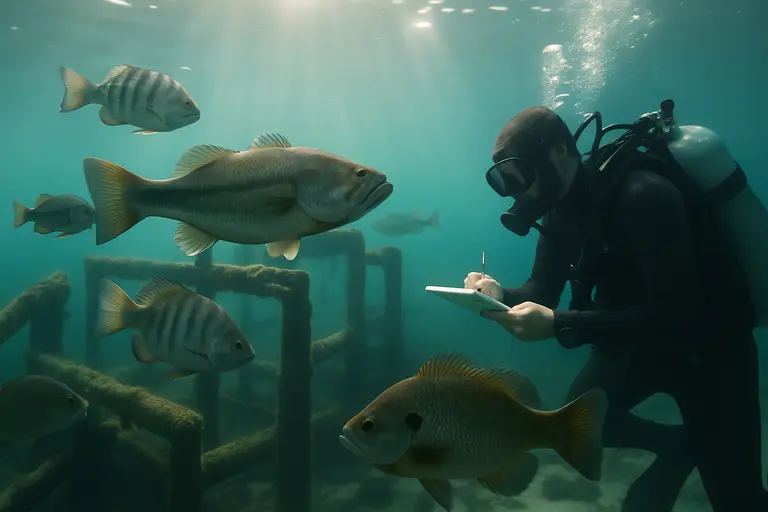
The research identifies a broad fish community that includes largemouth bass, spotted bass, striped bass, hybrid bass, black crappie, bluegill, redear sunfish, yellow perch, catfish, and other species. For Bass Pro Tour purposes, the black bass mix is the main competition story, but the wider forage and predator system influences how anglers read the lake.
A mixed bass fishery can force tough calls. Largemouth and spotted bass may reward different areas, retrieves, and timing. That creates a better professional test than a venue where nearly every angler is pushed into the same pattern. The research also notes annual striped and hybrid bass stocking by Georgia and South Carolina agencies in the range of approximately 500,000 to 1,000,000 fish. That stocking fact is not the reason a bass tournament succeeds, but it does show that the reservoir is managed as an active recreational fishery across more than one user group.
For local anglers, this matters after the camera boats leave. A national event can expose productive structure, seasonal patterns, and pressure points. Responsible community planning should balance that attention with public access, fish care, and continued respect for non-tournament users. Broader sports-event readers can explore more related content by visiting Sports Wire News, but Hartwell’s strongest case remains rooted in fishing-specific infrastructure.
Lake Hartwell Bass Pro Tour Fit
Lake Hartwell works as a Bass Pro Tour venue because the evidence lines up across several categories rather than resting on one headline. It has verified scale, deep and shallow water, extensive shoreline, public ramps, marinas, public land, major-event history, and official surface-water use status that supports boating and fishing. It also has a recent Bass Pro Tour event in the books from February 19-22, 2026, which gives organizers a current reference rather than only relying on older championship memories.
The cautious read is the fairest one. Hartwell should not be praised with unsupported claims about dollars spent, crowds drawn, or guaranteed catch rates. What can be said from the available research is strong enough: this is a large, accessible, repeatedly tested tournament lake with the kind of fishery variety and community infrastructure that professional bass events need. For anglers, sponsors, and local organizers, that is the real measure of a premier stop.