

Upper Mississippi bass fishing can punish anyone who treats river bass like lake fish with current. Michael Harlin’s Bassmaster Open win mattered because it showed how quickly a river tournament can turn when grass, wind, shallow water, and decision-making collide. The lesson was not simply that Harlin caught them; it was that he adjusted when his best-looking program started losing shape.
This is the kind of result that fits real bass tournament strategy. A winning river pattern is rarely one perfect spot. It is usually a sequence of decisions that keeps an angler close enough to active fish while avoiding dead water, bad timing, and pressure.
Harlin’s Win Was Built On Adaptation, Not Comfort
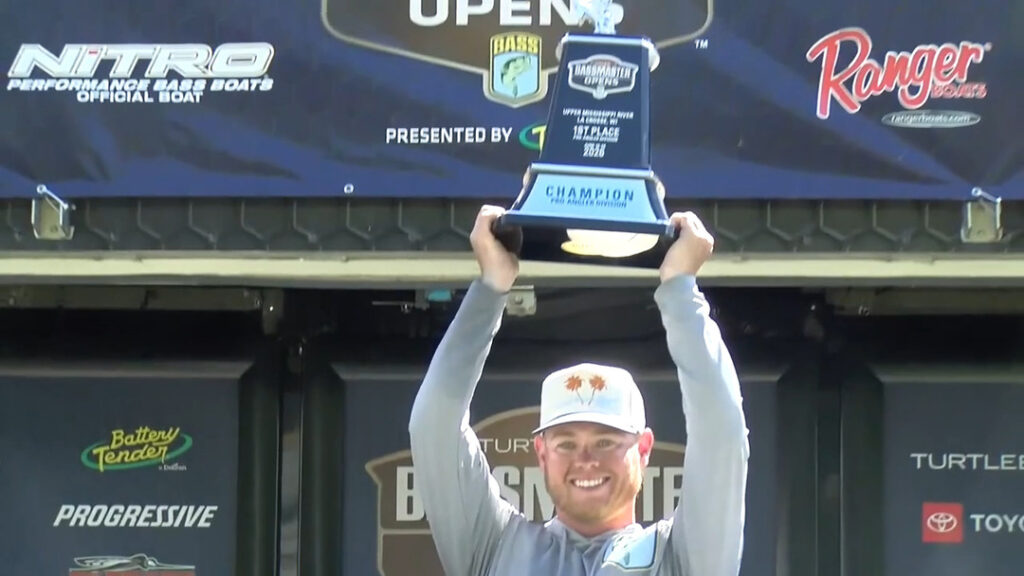
Harlin won the 2026 Turtlebox Bassmaster Open at the Upper Mississippi River with 47 pounds, 1 ounce, earning a 2027 Bassmaster Classic berth through his Upper Mississippi River win. That final number matters, but the path to it says more about how river tournaments are won.
He started the event far from the top, then climbed with a stronger second day before finishing with the heaviest final-round bag. River systems give anglers many ways to be wrong: wrong pool, wrong grass, wrong wind, wrong access, wrong timing. Harlin’s climb showed the value of reading each day instead of trying to force the previous one.
River bass reward flexible confidence. The angler has to believe in the pattern, but not so much that he ignores what the river changes.
Grass Was The Opportunity And The Problem
Grass is one of the most important forms of river cover because it creates ambush lanes, oxygen, shade, and feeding edges. It can also become frustrating when water level, wind, and fish position move against the angler.
Harlin’s key water involved shallow grass, but the final day did not simply repeat the previous day. Wind disrupted the grassmat bite, and the better move became finding a way to make fish react in another part of the system.
That is the river lesson. The same habitat can be productive one day and awkward the next. Grass does not stop being good, but the way bass use it can change fast.
| River Factor | Why It Changes The Bite | Smarter Tournament Response |
|---|---|---|
| Wind over grass | Can disrupt visibility and target control | Shift angles or find protected grass |
| Falling water | Can pull bass out of shallow cover | Check nearby lanes and open-water edges |
| Current | Positions bass more precisely | Cast with better line and angle control |
| Backwater access | Can create risk and reward | Balance fish quality with travel safety |
| Visible strikes | Bass reveal location before biting | Make longer, cleaner follow-up casts |
The Upper Mississippi Demands More Than One Plan
The Upper Mississippi is not a simple bank-beating venue. Pools, backwaters, grassbeds, current seams, and shallow flats can all matter, but not equally every day.
Harlin’s event showed why river anglers need a backup plan that still fits the original logic. If the main grass bite gets disrupted, the answer is not always to abandon shallow fish. It may be to find a different grass area, a different lane, a different bait, or a less affected pocket.
The mistake is treating a backup plan like a random Plan B. A useful backup should be related to the winning idea, not a desperate swing at completely different water.
Why River Bass Expose Bad Timing
River bass can be aggressive, but timing still rules. A backwater may reload for a short window. A grass edge may produce only when current and bait line up. A frog bite may need calm enough water for fish to track properly. A soft jerkbait can suddenly become better when bass are roaming instead of buried.
That is why Harlin’s win has value beyond the result. It showed that timing is not a soft detail. It is often the pattern.
Bassmaster’s final weigh-in gallery shows how close the top of the field became, with Tom Monsoor second at 45-14 and Ryan Michl third at 45-13. Those small margins make every late adjustment matter more.
The Next Signal Is How Anglers Handle Moving Water
The takeaway for future river tournaments is not that every angler needs Harlin’s exact bait or exact grassbed. The bigger signal is whether the field can keep up when the river changes.
Watch how anglers react to wind, water movement, and pool choices. Watch whether they protect their best areas or burn too much time trying to recreate an old bite. River tournaments often reward the angler who recognizes that yesterday’s best water may still be useful, but only if fished differently.
The best river decisions are rarely dramatic. They are usually small, precise moves made before panic takes over.
Upper Mississippi bass fishing remains one of the clearest tests of adaptation because the river never lets anglers fish on autopilot for long. Harlin’s win reinforced the central rule: grass, current, and confidence matter, but the angler who adjusts fastest usually owns the final hour.
FAQ’s
Who won the 2026 Bassmaster Open at the Upper Mississippi River?
Michael Harlin won the 2026 Turtlebox Bassmaster Open at the Upper Mississippi River with a three-day total of 47 pounds, 1 ounce, earning a 2027 Bassmaster Classic berth.
Why is the Upper Mississippi difficult for bass tournaments?
The river changes quickly because of current, wind, water level, grass condition, and pool choice. Anglers have to adjust without losing too much time moving between areas.
What can weekend anglers learn from Harlin’s win?
The biggest lesson is to keep a related backup plan. If the best grass or shallow bite changes, adjust angle, bait, or location before abandoning the whole pattern.