

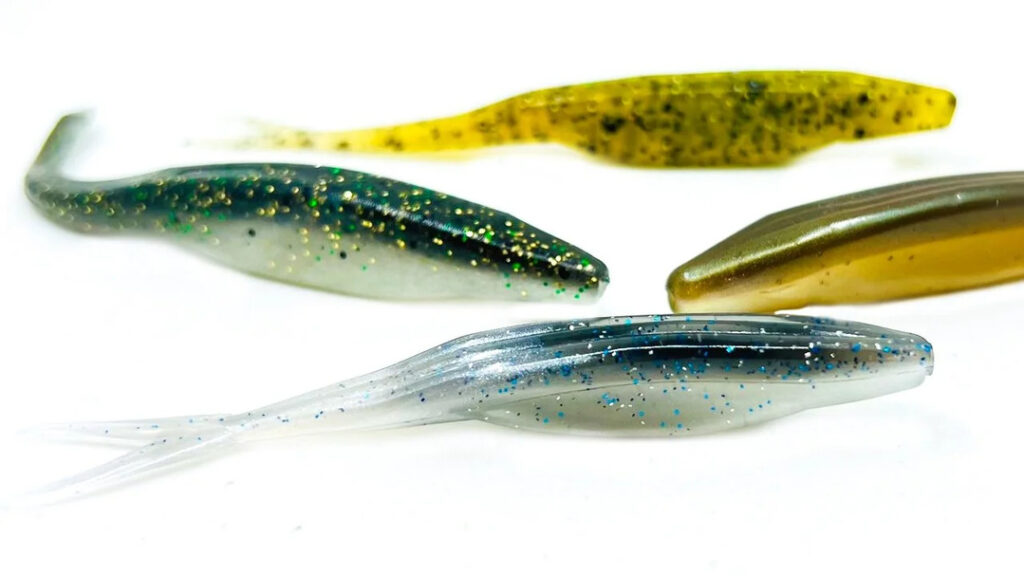
The unweighted fluke technique keeps surviving every new wave of bass-fishing technology because it solves a problem electronics cannot fix by themselves: making a roaming, herring-fed bass commit. On lakes like Murray, where postspawn fish can suspend, slide, chase, vanish, and reload in the same morning, the soft jerkbait still gives anglers a rare mix of speed, subtlety, and panic.
That is why Lake Murray’s May 2026 Elite event felt less like a simple lure showcase and more like a reminder. Bass anglers love novelty, and strange soft plastics have earned their place in the conversation, but the same logic behind weird lures taking over bass fishing right now also explains why the plain-looking fluke remains dangerous: pressured bass often eat the bait that looks alive without looking forced.
The Unweighted Fluke Technique Still Matches The Herring Problem
Blueback herring do not behave like lazy forage. They roam, flash, accelerate, and pull bass away from obvious targets. That makes herring lakes difficult for anglers who want every fish to sit on a textbook stump or dock corner.
The fluke fits that chaos because it does not have one fixed personality. It can be skipped, twitched, burned, paused, drifted, or killed over a target. That matters when bass are not pinned to the bottom but are instead using points, brush, cane piles, and subtle high spots as ambush lanes.
The Lake Murray Top Lures breakdown showed how much the event leaned into herring-lake thinking. The lesson is not simply that a soft jerkbait caught fish. The sharper takeaway is that anglers needed a lure that could move through open water while still teasing fish that were relating to structure without sitting directly on it.
That is the fluke’s real edge. It lets an angler fish fast enough to cover water but quietly enough to avoid turning every cast into a warning shot.
Herring Bass Punish The Wrong Kind Of Aggression
A lot of anglers misunderstand herring-lake fishing because they equate speed with recklessness. Yes, these bass can chase. Yes, topwaters, walking baits, and fast-moving presentations can trigger violent bites. But herring bass also get conditioned quickly, especially when the field is rotating through the same points, brush piles, and offshore lanes.
That is where the unweighted fluke becomes more than a “throw it and twitch it” bait. It is a pressure-management tool.
An aggressive hard bait often announces itself immediately. A fluke slips into the same zone with less splash, less hardware, and less mechanical rhythm. Its best move is not always the twitch. Sometimes it is the pause after the twitch, when the bait hangs, slides, or slowly fades like a wounded herring that lost the school.
That pause can be the whole deal.
Pressure changes the bite. Bass that would crush a topwater at 7:30 a.m. may only follow by 10. The fluke gives them one more reason to finish the job, especially when the sun gets higher, the boat traffic builds, or the best offshore places get recycled by multiple anglers.
Where The Fluke Becomes More Than A Bank Bait
The common mistake is treating a fluke like a shallow-only tool. It absolutely belongs around shade, docks, grass edges, and shallow wolf packs. But on herring lakes, the better question is not “How shallow can I fish it?” It is “Where can I keep it above bass that are looking up?”
That is why high spots, cane piles, brush, long points, saddle areas, and postspawn transition zones matter. Bass using those places are often positioned to feed upward. The fluke’s job is to pass through the upper part of the strike zone without sinking too quickly or overpowering the setup.
South Carolina’s blueback herring profile helps explain why this forage creates such a different game. Herring are not just another baitfish in the system. Their movement and schooling behavior help shape how predators position, especially when bass are recovering from the spawn and shifting toward open-water feeding patterns.
For everyday anglers, this means the best fluke cast may not be at the visible target. It may be across the invisible lane beside it.
Boat position matters. A cast that runs across the crown of a high spot can be ordinary. A cast that crosses the same crown from a better angle, then drifts over the deeper edge, can look like an isolated herring making a fatal mistake.
Fluke Versus Other Herring-Lake Presentations
The fluke does not replace every bait in the box. It earns its value because it overlaps with several techniques while keeping its own identity. The best anglers know when it is the primary weapon and when it is the follow-up bait that turns followers into biters.
| Presentation | Best Situation | Main Strength | Main Risk |
|---|---|---|---|
| Unweighted fluke | Roaming fish, high spots, pressured herring bass | Natural glide and subtle triggering power | Easy to overwork or fish too slowly |
| Walking topwater | Active schooling fish and low-light windows | Draws fish from distance | Can fade when pressure or sun rises |
| Jerkbait | Suspended fish with clearer lanes | Precision depth and cadence control | Too mechanical when fish are wary |
| Swimbait | Covering open water and matching bait size | Steady profile and search power | Less erratic than fleeing forage |
| Drop shot | Fish seen on electronics but refusing moving baits | Vertical control and patience | Slower and less efficient for roaming bass |
The table shows why the fluke remains so hard to kill as a tournament tool. It sits between power and finesse. It can draw a reaction, but it can also look helpless. It can cover water, but it does not feel loud.
That middle ground is exactly where many postspawn herring bites live.
The Retrieve Is Usually The Difference Between Close And Caught
Most bad fluke fishing looks too neat. The cadence is predictable: twitch, twitch, pause; twitch, twitch, pause. That can work, but herring lakes often reward a retrieve that looks less like a pattern and more like panic.
The bait should not always move the same distance. Some twitches should make it jump. Others should barely kick it sideways. Sometimes the best move is a sharp burst followed by a long fall. Other times, the bait needs to skip across the surface like it is trying to escape.
The angler’s eyes matter, too. Watch for followers. Watch for nervous water behind the bait. Watch for a bass that appears and disappears without striking. Those fish are giving away mood, speed preference, and position. The next cast should not be a repeat. It should be an adjustment.
Followers are feedback. If fish trail but do not eat, change something small before changing the whole pattern. A longer pause, a different cast angle, a softer twitch, or a slightly different bait color can turn inspection into commitment.
The hookset also deserves restraint. Many anglers pull the fluke away too soon because the bite looks visual and exciting. A herring-lake bass may slash, miss, turn, and come back. The best response is often to keep the bait alive for one more beat, then drive the hook when the line loads.
The Next Test Is Not The Lure, It Is The Timing
The fluke will keep catching bass on herring lakes because the forage keeps forcing bass into open-water decisions. The bigger question is whether anglers can read the timing well enough to use it correctly.
Postspawn fish move in waves. Some are guarding fry. Some are sliding out. Some are chasing herring around points. Some are suspended over brush or cane. That mix creates opportunity, but it also creates false confidence. Catching two fish on a fluke does not mean every bass in the lake is ready for the same retrieve in the same zone.
The signals worth tracking are simple but demanding: where bait is moving, whether bass are looking up, how much fishing pressure a place has absorbed, and whether the best bites are coming from structure, open lanes, or the transition between the two.
Timing beats tackle. The same fluke that looks magic during a feeding window can look dead when the fish slide off or stop chasing. The angler who understands that does not abandon the bait too quickly. He changes angle, speed, target depth, and cadence before blaming the lure.
That is the real reason the unweighted fluke technique still matters. It is not a nostalgia bait, and it is not just a beginner-friendly soft plastic. It is a clean, adaptable answer to one of bass fishing’s hardest questions: how to make a fast, pressured, herring-focused fish believe it has found an easy meal before the moment disappears.