

Let’s be honest – nobody actually reads the fine print until they’re facing disqualification for that questionable hook set. We’ve all been there, staring at the rulebook like it’s ancient hieroglyphics while the tournament director gives us that disappointed parent look.
In this section, we’ll dissect the bureaucratic poetry of competition regulations with the enthusiasm of a tax attorney at happy hour. We’re talking horsepower limits that would make a NASCAR engineer blush and scoring systems more complex than your fantasy football league.
I’ll break down why that emergency kill switch isn’t just decorative. And how understanding proper fishing etiquette could save you from becoming the event’s villain origin story. Think of this as your legal pre-game – because nothing ruins a day on the water like discovering your entry fee just bought you a front-row seat to the rules committee’s disappointment.
From boat specifications that read like aerospace engineering manuals to tackle restrictions that would confuse a patent lawyer, we’re diving deep into the framework that separates champions from cautionary tales.
Unwritten Etiquette
While rulebooks cover the technicalities, tournament culture has its own set of social codes. These unwritten tournament rules help distinguish respected anglers from those who become cautionary tales. They are the unspoken rules that make a difference.
Imagine showing up to a partner’s $70,000 bass boat with more rods than a medieval armory. This isn’t about being prepared; it’s about overdoing it. The art of sharing a boat requires the same skill as a NASA engineer.
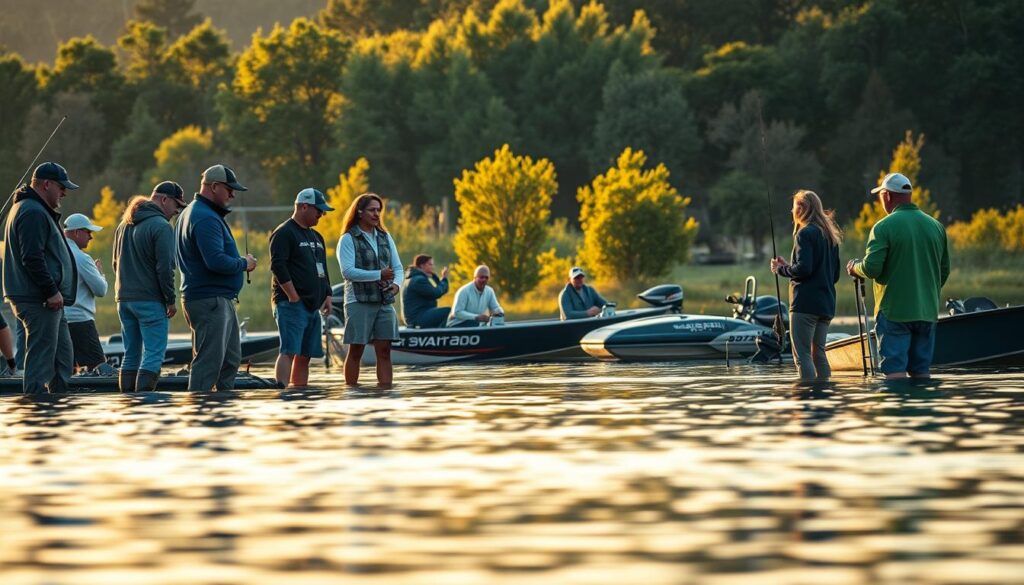
Financial etiquette is another area to be careful with. When your partner says “chip in for gas,” they mean it. Properly sharing expenses shows respect for the big investment boat owners make in this sport.
Casting mindfulness is key to being a pro. Your partner isn’t just avoiding your lure; they’re protecting expensive equipment. Every cast should be thought out, not reckless.
Spot confidentiality is also important. When someone shares their secret fishing spot, it’s not for your fishing vlog. Treat these spots like state secrets, because in tournament fishing, they are.
Launch assistance is a test of character. Watching someone struggle with dock lines while you organize tackle is not helpful. Teamwork starts before the first cast.
These unwritten codes are the heart of tournament etiquette. They keep the sport civilized. Without them, fishing tournaments could turn into chaos, like Lord of the Flies but with better gear.
Learn these social contracts, and you’ll find people wanting to fish with you. Ignore them, and you’ll be the one everyone hopes doesn’t get picked.
Conflict Resolution
Ever seen two anglers argue over a fish’s length like Supreme Court justices? Welcome to the world of tournament fishing. It’s a place where disputes are common, but how you handle them makes all the difference.
The protest window closes after 15 minutes. You need a witness who isn’t your fishing buddy. Speak calmly to the tournament director. Their word is final – accept it graciously.
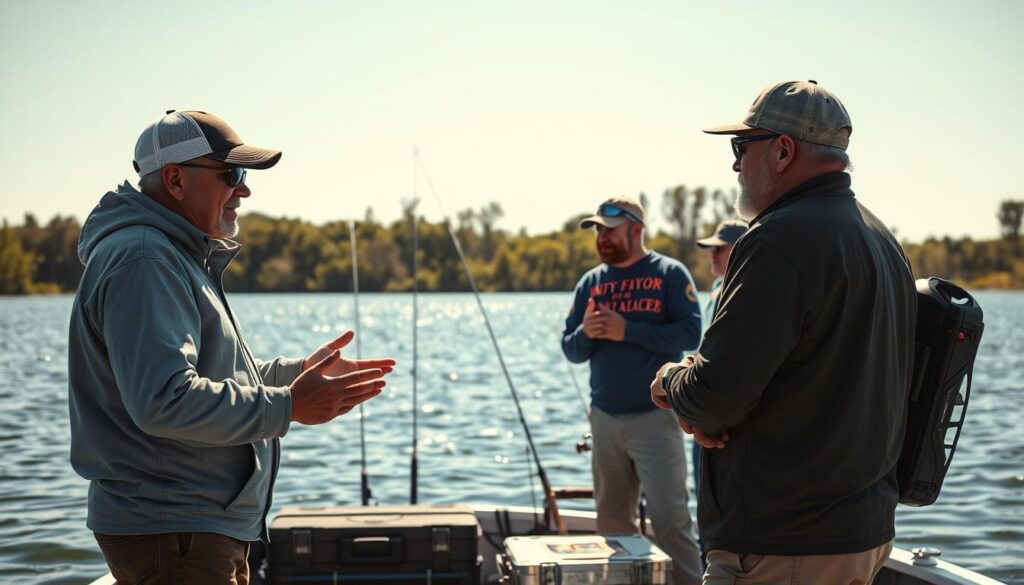
Cell phones are banned during competitions. That hotspot tip phone? It’s a big no-no. Stick to the basics – just you, the fish, and your skills.
Sportsmanship means staying calm under pressure. No throwing tantrums when you lose. No making snide comments at weigh-ins. Everyone’s here for the love of fishing at bass lake tournaments.
Here are the key protest procedure essentials:
- 15-minute filing deadline
- Independent witness requirement
- Director’s absolute authority
- Zero tolerance for electronic assistance
The real prize isn’t just the biggest bass. It’s keeping your dignity when you don’t win. Remember, nobody wins when arguments ruin the fun of fishing.
Weigh-In Conduct
The weigh-in station is where fishing dreams get their final check. It’s filled with rules and penalties that hurt more than a sunburn. It’s not just about the weight—it’s a precise performance where every detail matters.
Being late can cost you big. Show up five minutes late, and you lose weight. Tournament directors take pounds off with the skill of an IRS agent. It’s a test of your time management and fishing etiquette.
Dead fish penalties can turn your catch into a loss. Each dead bass means losing ounces. Proper fish care is as important as your casting.
Measuring fish needs the precision of a diamond appraiser. Fish must be presented without touching. The measuring board decides if your 15-inch bass counts.
Challenging the scales needs perfect timing. You have one chance to argue the weight. Too aggressive or too passive, and you lose pounds. It’s a balance of assertiveness and fishing etiquette.
Managing your livewell is like a stock portfolio. Constantly decide which fish to keep and which to release. The wrong choice means throwing money away.
Knowing these rules is key to success. It’s not just about following rules—it’s about mastering the unwritten code of conduct. The weigh-in station is where skill and compliance meet.
In tournament fishing, avoiding penalties is as important as catching fish. The scale measures your detail and respect for the sport.
Spectator & Media Guidelines
Tournaments turn lakes into stages where fans cheer us on. They should stay far enough to see but close enough to feel the excitement. It’s okay to cheer loudly, but don’t disrupt the event. Giving fishing tips without being asked is a big no-no.
Media folks and fans should focus on the sport’s integrity, not drama. Not everyone with a camera is a pro, but Bassmaster’s rules guide media interactions. The aim is to build a community, not cause trouble.
These events are a mix of fierce competition and joyous celebration. Your actions as a fan or media member shape the sport’s future. It’s not just about catching fish; it’s about keeping the tradition alive for others.