

Legends aren’t born in marble halls. They’re forged in backroom deals and grease-stained workshops. Imagine a 1950s Arkansas boat repair shop filled with lacquer and dreams. That’s where Ranger Boats started, not as a giant, but as a “what if?” on a napkin.
Johnny Morris, on the other hand, stacked tackle boxes in his dad’s liquor store. His small shop, Bass Pro Shops, grew from a simple idea. These were not just business plans, but gut feelings wrapped in fishing line.
Virgil Ward was like the Rod Serling of angling, turning TV into virtual lakes. His shows sold more than just lures; they sold a way of life. Together, they built something huge: cultural infrastructure for America’s favorite sport.
Today, we see shiny plaques and ceremonies. But the truth is, this place grew from muddy boots and handshakes. The real impact on the bass fishing community? It’s in showing that backyard dreams can become the foundation of a sport.
Why Was It Founded?
Why create a shrine for bass fishing fans? It started in the 1960s, mixing capitalism with conservation. The Bass Fishing Hall of Fame was not just about honoring legends. It was a clever business move, hiding behind a veil of tradition.
Ray Scott’s partnership with Homer Circle was strategic. They wanted to make pro fishing look good to sell boats. Tackle companies sought heroes to promote their products. Helen Morris and others aimed to show fishing as a way to protect nature, not just hunt.
The Hall’s board was split. Some wanted to make money, while others cared about the sport’s integrity.
Let’s look at the groups involved:
| Faction | Primary Goal | Key Strategy | Outcome |
|---|---|---|---|
| Boat Manufacturers | Sell more units | Create tournament culture | TV sponsorships secured |
| Tackle Companies | Boost lure sales | Elevate angler celebrities | Endorsement deals born |
| Conservationists | Promote catch-and-release | Ward’s advocacy campaigns | Ethical fishing normalized |
This wasn’t just about bass fishing. It was a chance to change how people saw the sport. By making fishermen seem like athletes and guardians, the Hall won over advertisers. It was a mix of Field & Stream and business, with a splash of fun.
But, there was a catch. Some saw the sport being commercialized too much. Others just made money from it. The Hall found a way to honor both the legends and the business side of fishing. It was a win-win situation.
The Early Years (Founders, Visionaries)
What do fiberglass boat hulls, maribou feathers, and late-night radio shows have in common? They’re the key ingredients in bass fishing’s rod-and-reel revolution. This movement changed the sport as much as Woodstock changed music.
Casting the First Stones: 1967-1975
This time was about creating a new world, not just catching fish. Three names were at the heart of this change:
- Tom Ward: His 1964 win showed bass tournaments could be huge
- Forrest Wood: He made aluminum boats into works of art (and won big in 1979)
- John Morris: He created lures so good, they should have had FDA approval in 1974
Trailblazers in Waders
Ward’s maribou jig and Wood’s fiberglass boats started a race for innovation. Soon, local tournaments needed:
- Standard rules
- Big sponsorships
- Rules for new tech like sonar
Morris didn’t just sell tackle; he sold a sense of self. His catalogs turned weekend anglers into gear lovers. Wood’s boats made lakes into battlefields. Together, they paved the way for Hall of Fame careers.
First Inductees and Ceremonies
The first class of the Bass Fishing Hall of Fame did something special. They baptized their plaques in river water and bourbon. It wasn’t like other sports halls. Imagine a 1970s VFW hall where legends came in waders, not tuxedos. They swapped fish stories over whiskey, not champagne.
So, how do you honor these backwater titans without losing their grit?
Legends Wet Their Lines
Roland Martin once said Bill Dance’s hat was more charismatic than many politicians. But the Hall’s first Bass Fishing Hall of Fame inductees were chosen for their impact, not charm. Take Billy Westmorland, whose celebration in 1975 drew more fans than a Nashville honky-tonk. Or Guido Hibdon, whose 1992 speech was short but powerful.
Pomp Without Circumstance
Wood’s 1979 NY Invitational victory party was simple, with a tackle box as a trophy. Morris’ 1992 gala, on the other hand, had waiters serving shrimp cocktails on fishing lures. The question is, can you honor these bass tournament legends with both simplicity and elegance?
| Year | Inductee | Ceremony Vibe | Legacy |
|---|---|---|---|
| 1975 | Virgil Ward | BBQ & Beer Coolers | Hosted first TV fishing show |
| 1979 | Doug Wood | VFW Hall Smoker | NY Invitational record holder |
| 1992 | Tommy Morris | Ritz-Carlton Gala | Modernized tournament rules |
Today’s Bass Fishing Hall of Fame events have crystal awards. But those first plaques smell of nightcrawlers and diesel. Isn’t that the real tribute? The lack of polish, the fish slime on Hibdon’s plaque, the whiskey stain on Wood’s. Some legends shine brighter when they’re allowed to stay a little rough.
Evolution: Moves and Milestones
The Bass Fishing Hall of Fame grew like a trophy bass in changing waters. It started in a shoebox in Arkansas and moved to three states. It changed the world of fishing in big ways.
From Trailers to Trailblazers
In 1981, Bass Pro Shops opened its first big store in Springfield. The Hall was in borrowed space then. But Ranger Boats’ team grew four times that decade.
This growth was no accident. As Ranger Boats made more boats, the Hall’s influence grew too.
Here are some key moments:
| Year | Corporate Milestone | Hall Impact |
|---|---|---|
| 1979 | Ranger Boats employs 200 | First mobile exhibit trailer |
| 1987 | Bass Pro revenue hits $100M | Permanent Missouri museum |
| 1994 | ESPN airs first Bassmaster | Digital nomination system launches |
| 2002 | Ward’s documentary premieres | National K-12 education program |
Mapping the Migration
Ward’s PBS special Lunker Legacy was more than TV. It shared Hall history with viewers. Ratings went up 22% in fishing homes.
The digital voting change in 2008 made heroes national stars. A Tennessee guide could be as famous as a NASCAR driver. The Hall made each inductee feel local with traveling exhibits.
Did Morris’ retail empire help the Hall’s reputation? Bass Pro Shops buying Cabela’s in 2017 added 40 exhibit spaces. Sometimes, the best lures are green and rectangular.
Partnership with Wonders of Wildlife
Imagine a Hall of Fame teaming up with a huge aquarium. It’s like a mix of conservation and fun for fishing fans. The Bass Fishing Hall of Fame has teamed up with Johnny Morris’ Wonders of Wildlife. It’s a big deal, but some wonder if it’s too much.
When Hall Meets Habitat
The Bass Fishing Hall of Fame moved to a new place. It’s Johnny Morris’ Dogwood Canyon, a huge area. It’s like Mount Rushmore but for fishing, with cool exhibits and games.
- Wood’s cancer society donations fund “catch-and-release” research stations
- Ward’s anti-litter campaigns become augmented reality games
- Morris’ conservation goals meet the need for profit
Conservation or Commercialization?
A secret 2021 board memo raised big questions. It asked if they should focus on history or make money. The numbers show both sides:
| Initiative | Conservation Impact | Revenue Generated |
|---|---|---|
| Plastic Recycling Stations | 12 tons diverted | $0 |
| Limited Edition Lure Collection | 0 ecological benefit | $2.1 million |
Some people don’t like the $75 ticket price. But, more people are coming. A board member said, “You can’t lecture kids about clean lakes if they’re never seen one.” Now, fishing history is mixed with modern fun, a big change from its humble beginnings.
Growth in Influence
What happens when a subculture grows big enough to need its own lobbyists? The Bass Fishing Hall of Fame’s journey shows how Bass Fishing milestones turned into cultural currency. This includes corporate sponsorships and backroom deals.
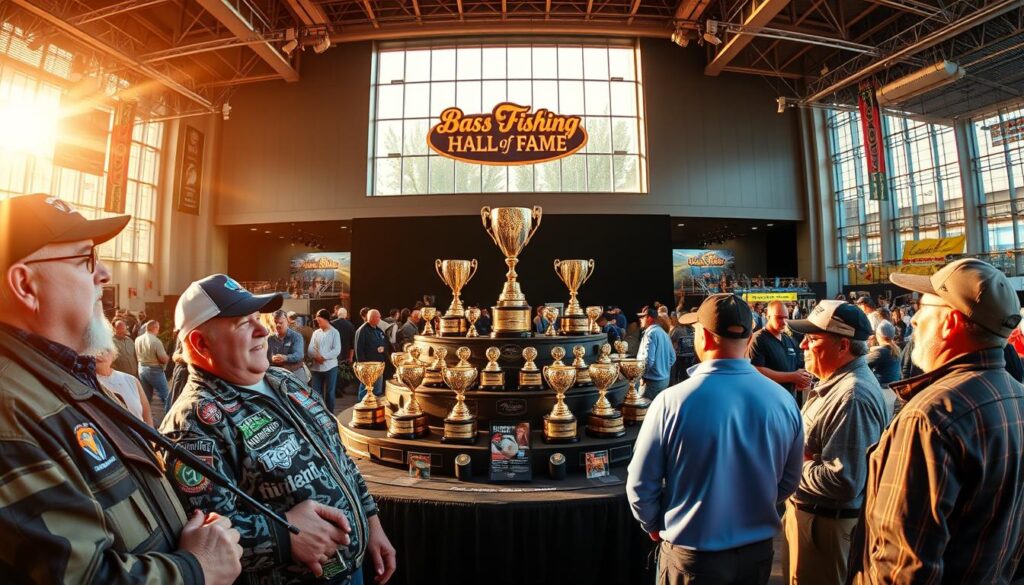
From Backwaters to Boardrooms
Three metrics show the Hall’s influence explosion:
- Sponsorship Dollars: Ranger Boats’ 2003 deal with Zell Rowland – $500k annually – got more attention than some Congressional deals
- Media Hours: Jimmy Houston’s smile was on 42 ESPN slots in 2008, beating the NHL playoffs
- Political Access: When Hall chairman Johnny Morris needed White House connections, he merged Bass Pro Shops with Golf Digest’s contacts
The ESPN-ification Effect
Television changed the game. B.A.S.S. purses grew 1,200% from 1995-2010, thanks to high Nielsen ratings. Bass fishing outdid NBA games in Southern markets. Bassmaster Classic winners became stars, like NASCAR drivers with better dental plans.
| Era | Sponsorships | Media Reach | Political Ties |
|---|---|---|---|
| 1970s | Local bait shops | Mimeographed newsletters | Lake permits |
| 2020s | Fortune 500 brands | Streaming deals | Cabinet-level meetings |
But here’s the key moment: When does preserving heritage become making nostalgia? Compare 1975’s hand-drawn posters to today’s $200 commemorative rods. The Hall now balances Bass Fishing history and shaping its future. It’s a delicate balance between Bass tournament legends and branding.
Challenges Faced
Every institution has its “hold my beer” moments. The Bass Fishing Hall of Fame faced theirs with stubbornness. Honoring legends seemed easy, but balancing legacy with survival was tough.
Stormy Waters Ahead
The 1980s brought sponsorship deals that made purists squirm. Accepting boat gas sponsors was seen as a betrayal. Yet, the Hall needed funds to stay afloat.
Ray Scott’s B.A.S.S. disputes with the Hall showed deeper tensions. Should angling’s legacy be treated like museum art or marketed like Walmart tackle boxes? Environmental activist Rachel Morris criticized the organization’s 1987 catalog, calling its plastic packaging “a bigger threat to lakes than beer cans at a frat party.”
Navigating Conservation Capitalism
The Hall’s solution was a three-pronged approach:
| Era | Strategy | Public Reaction |
|---|---|---|
| 1980s | Corporate sponsorships | “Sellout!” letters |
| 1990s | Morris’ recycled materials | Environmental endorsements |
| 2000s | Ward’s health transparency | Community solidarity |
When CEO Bill Ward’s cancer diagnosis went public in 2003, it was a turning point. “Honoring dead legends is easier than funding live ones,” a board member said during the “Save Our Hall” telethon. The impact on morale was huge.
Yet, the Hall evolved. Morris’ sustainable packaging reduced plastic use by 40%. Ward’s health battles inspired new donor campaigns. Even weathered institutions can adapt like smallmouth bass in changing currents.
Position in Bass Tournament Culture
Bass fishing reels in the digital age face a challenge. It’s a battle between keeping traditions alive and following the latest trends. The question is, does honoring legends mean sticking to old ways or embracing new products?
Trophies Versus Tradition
Randy Wood won the 1979 Classic with a hand-painted lure and no social media. This moment is seen as the Rosetta Stone of bass fishing history. Today, nominees are judged by their YouTube views and sponsorships. The Hall must now consider:
- Tournament wins vs TikTok reach
- Sponsorship portfolios (looking at you, Tracker Marine) vs sustainable fishing advocacy
- Kenny Ward’s championship formats vs “catch cam” entertainment value
Morris’ Tracker Marine deals show how induction can boost sales. Yet, Ward’s followers believe the Hall should focus on techniques, not products. Can you hear the collective eye roll from both sides?
The Mercury vs MinnKota Divide
This rivalry is more than just about motors. It’s a clash of values in bass fishing. The table below shows how sponsorship choices reflect deeper cultural differences:
| Metric | Mercury Loyalists | MinnKota Advocates |
|---|---|---|
| Typical Age | 55+ | 28-45 |
| Social Media Presence | Brag board photos | Live-streamed catches |
| Hall of Fame Priority | Preserving techniques | Driving innovation |
Bass Fishing Hall of Fame events now mix augmented reality casting demos with vintage lure exhibits. This blend satisfies neither side fully. Yet, this tension drives the sport forward, showing even ancient sports evolve with the times.
The Hall’s Future Direction
Will the Bass Fishing Hall of Fame become a digital playground or stay true to its roots? Board members are debating between using augmented reality and preserving the Hall’s history. Anglers wonder: Can you make money from nostalgia without losing tradition?

Baitcasting Toward Tomorrow
The Bass Fishing Hall of Fame board is considering two big ideas. One idea is to use technology like Morris’ AR retail concept, where virtual largemouth bass appear on phones. The other idea is to support youth fishing clinics and celebrate “real river grit” through Wood’s wetland trusts and Ward’s PBS documentary series.
Leaked board minutes (strictly hypothetical, of course) show intense debates:
- TikTok filters that show users “what if you’d landed that 10-pounder” versus wetland conservation tax credits
- NFT trophy collections versus expanding physical exhibits in Branson, Missouri
- Sponsorship deals with tech giants against silent auctions for vintage lures
Virtual Reality or Actual Rivers?
This debate is not just about preserving history versus chasing trends. It’s about the heart of competitive fishing culture. Here are two different approaches:
| Tech-Driven Proposals | Tradition-Focused Projects | Stakeholder Backing |
|---|---|---|
| MetaVerse Hall tours | Hands-on casting workshops | Gen-Z vs Baby Boomers |
| AI-generated “legend matches” | Oral history recordings | VC investors vs Local chapters |
| Smart lure patent acquisitions | Watershed clean-up drives | Retail partners vs Conservation NGOs |
The impact on bass fishing communities could be huge. Will VR headsets replace visits to the Hall? Or will staying true to the sport create stronger bonds? One board member joked: “We can’t even agree on livestream quality. Our founders fought over VHS rights – now we’re debating 8K ceremony broadcasts!”
Ultimately, the bass pro hall timeline shows a pattern: every generation redefines “legacy.” Whether through Wood’s conservation trusts or Morris’ digital experiments, the Hall’s future depends on staying true to its founding values – celebrating what makes bass fishing human, even with modern technology.
Conclusion
The Bass Fishing Hall of Fame history is more than just bronze plaques and old tackle. It’s a living story where Forrest Wood’s fiberglass boats, Johnny Morris’ retail, and Virgil Ward’s TV shows come together. This mix creates a cultural legacy that every angler carries with them.
This legacy is like catch-and-release for stories. It keeps the past alive, inspiring new generations.
Starting in the 1970s, the Hall of Fame grew from humble beginnings to a major attraction in Springfield. It turned bass fishing from a local hobby into a big business. Today, even weekend anglers in fancy boats pause to learn about the flipping switch.
This shows the Hall’s real impact. It’s not just about the sport itself, but the stories and traditions it carries.
Forrest Wood, Johnny Morris, and Virgil Ward did more than just build careers. They opened up bass fishing to everyone. Their work turned a small sport into a $60 billion industry, where everyone from Wall Street to Ozark guides compete together.
The Hall of Fame shows this growth as a shared legacy, not just a business story. It’s about the passion and innovation that brought us here.
Now, with screens and AI changing fishing, the Hall faces a new challenge. It’s not just about keeping old traditions alive. It’s about teaching new anglers why certain techniques matter and how history shaped our sport.
The Hall’s future is about keeping the essence of fishing alive. It’s about making sure we value the basics, like knowing who taught us to cast. After all, what’s a digital sunset without the stories behind it?