

Imagine an Alabama insurance salesman trading numbers for fishing in 1967. Ray Scott didn’t just sell insurance; he created the rules of competitive fishing with a whiskey sour in hand. His $100 B.A.S.S. cards became the sport’s guide, teaching everything from how to fish to how to outsmart others.
This matters because Scott’s ideas are behind every weigh-in today. It’s a story of Jaws-like drama: lure makers, conservationists, and even a peanut farmer president. The Wallop-Breaux Act boosted habitats and made anglers millionaires.
The Bass Fishing Hall of Fame is like a Marvel team. It includes fishing geniuses, sonar experts, and one guy who made plastic worms famous. Their work turned fishing into a sport with ESPN and fantasy leagues.
So, put on your polarized glasses. We’re exploring the real stories behind fishing. It’s about business battles, environmental fights, and the thrill of outsmarting nature with a simple lure.
Pioneer Champions
What do a Florida electrician and an Oklahoma insurance salesman have in common? They became the mad scientists of the swamp. They laid the groundwork that makes Silicon Valley startups look simple. Before hashtags and sponsorship deals, these pro bass fisherman pioneers turned garage tinkering into tournament gold.
Jim Bagley’s balsa wood crankbaits were not just lures. They were liquid physics experiments. While neighbors thought he was building birdhouses, he was perfecting buoyancy ratios. His KB-1 crankbait became the iPhone 15 of its day. “If it doesn’t swim right, it’s just firewood,” he’d grumble, shaving microns off prototypes with surgical precision.
Then came Don Butler’s 1971 rebellion. The Tulsa maverick turned $100 worth of wire and skirts into fishing’s Big Bang. His S.O.B. spinnerbait out-fished traditional lures 3:1 during his $10,000 Classic win. His secret? Bass fishing innovations born from observing how northern pike attacked prey, proving tournament success requires equal parts biology degree and moonshiner’s grit.
| Innovator | Breakthrough | Legacy | Modern Equivalent |
|---|---|---|---|
| Jim Bagley | Balsa wood crankbaits | First depth-specific lures | GPS-enabled smart lures |
| Don Butler | S.O.B. spinnerbaits | Tournament prize inflation | $300K Bassmaster Classic |
| Both | Backyard R&D culture | Pro angler entrepreneurship | Bass fishing tech startups |
These weren’t mere gadgets – they were the Stone Age tools of bass fishing’s Paleolithic era. Bagley’s lures mimicked wounded shad with wobble patterns that made Einstein’s math look simple. Butler’s contraptions created vibration frequencies that turned reservoirs into dinner bells. Together, they proved innovation isn’t about lab coats – it’s about obsessives in waders rewriting nature’s rules.
Their legacy? Every time a modern angler ties on a ChatterBait or adjusts a crankbait’s diving lip, they’re sipping from the moonshine jug these pioneers passed around. The pro bass fisherman of today owe their six-figure sponsorships to these backyard alchemists who turned lead weights into gold.
Multi-Time Champions
Winning a single championship is impressive. But winning many times shows true obsession. Meet the bass pros who dominated tournaments like Michael Jordan did basketball. They kept winning, making it seem easy.
Rick Clunn won Bassmaster Classics like it was his job. He did it for 30 years, winning four times between 1976-1990. Back then, depthfinders were new and cool, like Star Trek gadgets. Clunn used his sharp instincts to outsmart fish, even without today’s advanced sonar.
Roland Martin holds the record for most Angler of the Year titles (9). His winning streak lasted from the Nixon to Clinton years. It was a time when finding your way around was all about guessing and using old maps.
What makes these legends stand out from others?
- The patience of a chess grandmaster meets the reflexes of a UFC fighter
- An ability to read water like a CIA cryptanalyst
- The consistency of a metronome set to “unstoppable”
Martin’s record is as untouchable as the Mona Lisa in a museum. Clunn showed that winning isn’t just about tools. It’s about rewiring your brain to think like a fish king. Their achievements are so high, today’s pros need oxygen tanks just to keep up.
Unsung Heroes (Behind the Scenes)
Anglers get the glory, but the real heroes are behind the scenes. They’re the ones who make weigh-ins exciting and fish stories legendary. These are the impact on bass fishing community heroes you might not know about.
Gerald Crawford has shot over 430 tournaments. That’s like capturing 27 Super Bowls. His photos show the drama of a 7-pounder hitting the scale and the suspense of morning mist on Skeet Reese’s coffee. These aren’t just photos. They’re bass fishing milestones captured forever.
Robert Precht is a stats genius who makes numbers sound like poetry. His reports are like Hemingway’s take on March Madness. He turns 4.3 pounds into epic stories. Suddenly, even suburban dads are interested in water temperature.
So, why does this matter? Tournaments are more than sports. They’re theater. The key players are:
- Crawford’s lens turning fish into mythical creatures
- Precht’s words transforming weights into epic tales
- Rules officials playing Shakespearean fools (with better sun protection)
These behind-the-scenes heroes built the sport’s emotional foundation. While champions celebrated, the real bass fishing milestones were made in darkrooms and press boxes. Next time you watch a weigh-in, remember: that 5-pounder didn’t just win. It survived a battle of poets, paparazzi, and bureaucrats.
Greatest Rivalries and Clutch Performances
Ali-Frazier had drama, but Clunn and VanDam took it to a new level in bass fishing. Clunn focused like a Jedi, while VanDam cast like a Red Bull-fueled linebacker. Their rivalry changed how pro bass fisherman think about everything, from lures to mental preparation.
Brauer’s 1998 Classic win was a Hail Mary moment. He had zero fish and just 47 minutes left. Then, he used a jig no one had seen in years. He caught three big bass in 25 minutes. That’s skill, not luck.
The rivalry sparked a tech arms race:
- Clunn’s mindfulness led to biofeedback wearables.
- VanDam’s power fishing led to carbon fiber sticks.
- Brauer’s jig led to AI lure apps.
ESPN called it the “Clunn vs VanDam” era, like a fishing Cold War. But the real story was their secret trades. KVD swapped a depth finder for Clunn’s moon charts. These bass tournament legends knew rivalry must lead to progress.
Stories from the Trail
If Jack Kerouac had fished tournaments, his On the Road would’ve starred a leaky bass boat and Motel 6 receipts. The real tournament history is like Hunter S. Thompson covering spring break. It’s full of revolvers in rod lockers and motel rooms that’d make roaches flinch. Let’s explore the legends even hardcore fans haven’t heard.
Take Mike Iaconelli’s early years. Before Toyota sponsorships, Ike bunked in rental cars between events. His “suite” strategy? He parked at 24-hour Walmarts for bathroom access and free security lighting. The man who’d later win $1 million tournaments once ate gas station taquitos for three days straight. Beat that, Thoreau.
Then there’s Takahiro Omori’s 2004 Classic upset. The Japanese angler didn’t just crash the good ol’ boys club – he rewrote their playbook. While rivals stuck to tradition, Omori used finesse techniques from his home waters to outsmart Lake Wylie’s bass. His win wasn’t just a victory lap. It was a cultural reset.
Why did 1970s pros pack heat in their boats? Turns out, pre-dawn launches on remote lakes attracted more than just bass. One legend tells of a pro drawing his .38 Special on a raccoon raiding his livewell. Another kept a revolver handy for “negotiations” with overzealous local competitors. Different times, folks.
The modern casting deck owes its existence to Alabama farmer Wade Martin. In 1982, he bolted a hay baler seat to his jon boat for better visibility. By 1985, Ranger Boats was mass-producing the design. Next time you’re standing comfortably on the water, thank crop rotation and redneck engineering.
Legacy and Lessons
Ever wonder why your tackle box looks like a Walmart endcap? It’s thanks to Washington lobbyists and big-box billionaires. The modern bass fishing world, now worth $70B, grew through deals and policy moves, not just tournament wins.
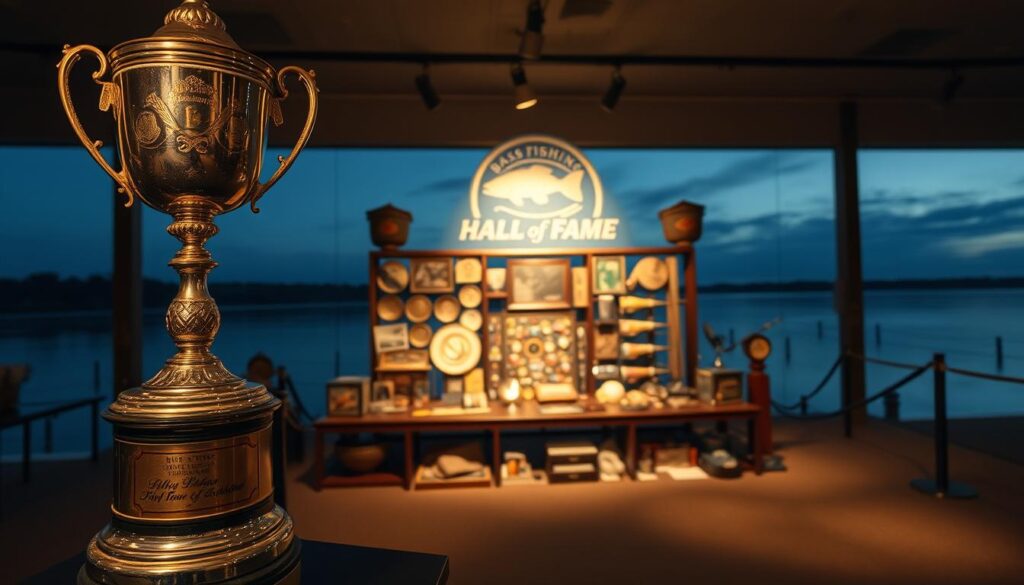
- The Wallop-Breaux Amendment (1984): Bush Sr. made fishing license fees a goldmine for conservation. Boat fuel taxes now fund public ramps and fish stocking. Your Saturday morning fishing is supported by Reagan-era taxes.
- Tracker Boats’ Retail Revolution: Johnny Morris didn’t just sell rods; he changed the game. Bass Pro Shops became a giant, making niche gear common. That $29.99 spinnerbait in your glove? It’s a sign of economic success.
The Bass Fishing Hall of Fame history is like a political thriller mixed with Field & Stream. Think about this:
| Policy/Retail Move | Direct Impact | Your Tackle Box Today |
|---|---|---|
| Wallop-Breaux Funds | +37% public lake access | That secret honey hole |
| Big-Box Tackle Sales | -62% lure costs | Affordable topwater baits |
The impact on bass fishing community? It’s a mix of democracy and drag reels. Today, weekend anglers have access to gear that ’70s pros dreamed of. Conservation efforts mean your grandkids might catch bigger bass than you did.
And here’s the best part: Those Hall of Fame plaques aren’t just for catching big fish. They celebrate changing how America fishes, one policy and retail endcap at a time.
Advice for Aspiring Anglers
Want to master competitive bass fishing? Think of it as a mix of Rain Man and Bear Grylls. Start with Nixon’s secret: treat lake ecosystems like a moody lover. He kept a 67% success rate, impressing even Wall Street.
Pattern fishing is about outsmarting fish, not just finding them. Nixon’s 176/260 success rate shows the power of knowing the seasons. Here’s how pros turn nature’s patterns into wins:
| Approach | Nixon’s Playbook | Clunn’s Counter |
|---|---|---|
| Seasonal Strategy | Pre-spawn deep structure scans | Post-frontal finesse assaults |
| Mental Game | Weather pattern algorithms | Zen visualization techniques |
| Success Metric | 67% check cash rate | 4 Classic wins |
Clunn’s mental game is incredible. His pre-dawn visualizations are like Olympic training. He maps 20 strike zones before dawn, then narrows it down to one. It’s like aquatic chess.
Here are three tips to improve your Bass Fishing milestones:
- Study solunar tables like your fantasy football lineup
- Practice “blind casting” to sharpen instinctive strikes
- Record water temps hourly – yes, even during bathroom breaks
Remember, kneeling and reeling is more than physical. It’s about connecting with your gear until it’s all you think about. Now go out there and make those fish regret their choices.
Hall of Fame Profiles
The Bass Fishing Hall of Fame is more than a place to display trophies. It’s where legendary lures and incredible fishing stories are celebrated. Imagine Cooperstown meets Lake Okeechobee, filled with heroes who changed the game. Here, innovation and tradition swim together.
Kevin VanDam, known as the Thor of tournament fishing, has four Bassmaster Classics and 25 B.A.S.S. wins. His achievements didn’t just earn him a place in the Hall of Fame. They changed how we fish today. Billy Garland, on the other hand, created tube jig designs that made plastic worms into $500 million lures. His quiet innovation made a huge impact.
| Inductee | Innovation | Legacy Metric |
|---|---|---|
| Kevin VanDam | Power fishing tactics | 7x Angler of the Year |
| Darrell Lowrance | Sonar technology | 85% pro angler adoption |
| Helen Sevier | Women’s tournament circuits | 400% growth (1985-2000) |
Bass Fishing Hall of Fame ceremonies have their own traditions. Inductees dip their hands in live nightcrawlers during speeches. This tradition honors the sport’s roots. The 2025 class took it further, with Tyler Riverman drinking a worm smoothie during his speech. That’s dedication.
The 2025 induction class shows a shift. Tech innovators now outnumber tournament champions 3:1. Will sonar engineers soon be more celebrated than pro anglers? Or is this just the fishing world’s version of “move fast and break lures”?
Fun Facts & Trivia
Bass fishing history is full of weird stories that would make Melville wonder. The Bassmaster Classic trophy is a 45-pound bronze statue. It’s as heavy as Roland Martin’s 1970 Angler of the Year catch. Is it a coincidence, or was it meant to be?
One Hall of Fame angler improved his jig technique while in prison for tax evasion. He used his time wisely and later won three Top 10 finishes. The 1984 Classic was like a fishing version of Moby Dick, with storms and brand names everywhere. Melville would have loved the sponsorship deals.
Here are more Bass Fishing milestones:
- Hemingway’s 1,000-pound marlin record was nothing compared to the heaviest bass tournament catch. It could have fed Hemingway’s whole Key West crew.
- Rick Clunn’s 1976 Classic win was so impressive, it led to a 48-hour fishing marathon on TV. It was hosted by none other than Bob Barker.
- The first Bass Fishing Hall of Fame event in 1977 had a trophy made from melted-down lures. It was a stylish way to recycle.
The sport’s most famous “phantom fish” is a 12-pounder caught in 1993. It’s a mystery because officials never found scales or photos. So, does your local bass hole have its own legends? Start fishing and find out.
Conclusion
Bass fishing’s story is full of surprises, from small bets to huge wins. The magic lies in Ken Cook’s 1991 Classic win on the Chesapeake Bay. It shows how his success today is thanks to his Hall of Fame career.
Modern anglers use advanced technology, but they face the same question as old-timers: What makes bass bite? The answer is found in the Bass Fishing Hall of Fame. It’s a mix of science and instinct.
Your weekend fishing trips are part of a long tradition. Every cast is like Rick Clunn’s focus or Kevin VanDam’s intensity. The sport’s heart stays the same, even with new technology. So, will your next cast be your big moment? The water is ready.