

As winter lingers in the colder regions of the United States, anglers start to feel the strain of being cooped up indoors. The urge to fish grows with each passing day spent swapping stories, watching YouTube tutorials, and sorting through tackle boxes. For devoted bass anglers, spring represents a much-anticipated opportunity when bass shake off their winter sluggishness and feed aggressively in preparation for the coming spawn.
There’s a buzz in the air as soon as ice-out arrives. No matter where you live, spring offers some of the year’s hottest action and your best shot at landing a new personal best. While much of this advice comes from grinding it out on northern lakes after a long freeze, these tactics work anywhere the seasons bring a significant change in water temperature. Southern anglers, don’t be afraid to try these strategies in your local reservoirs or river systems they just might help you out-fish the crowd when the weather warms.
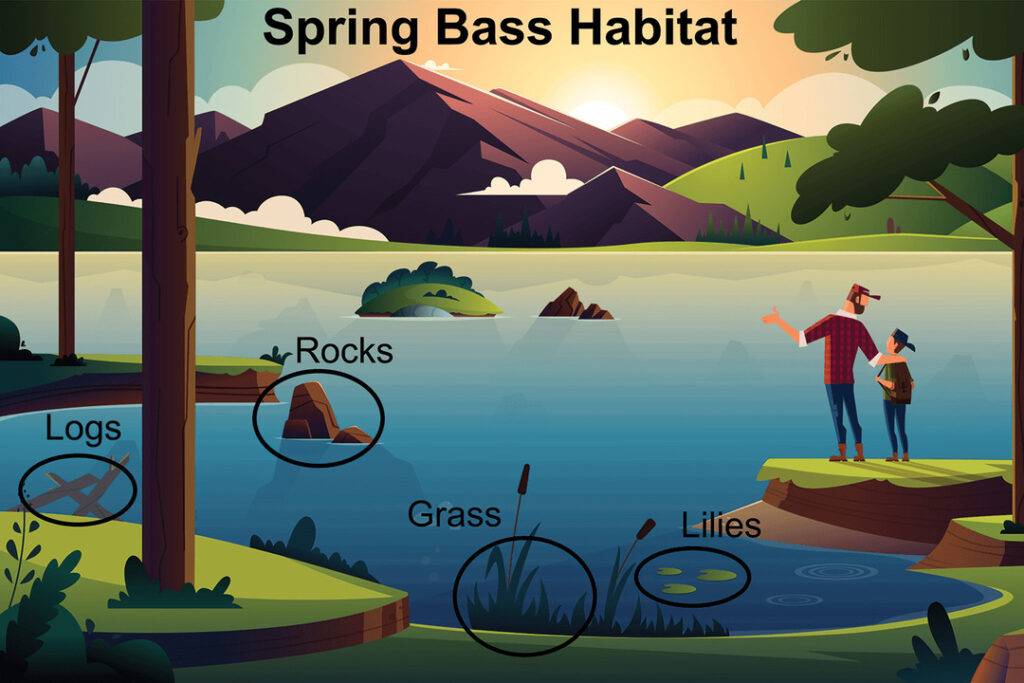
Pre-Spawn: Key Habitats and Bass Behavior
As soon as the first patches of open water appear, bass begin a transition from deep wintering areas to productive pre-spawn spots. When lake temperatures are still frigid and the ice has just receded from shorelines and boat ramps, it pays to understand where bass set up and how to coax strikes from them.
- Key structures and locations: Focus on areas such as rocky points, shallow coves, emerging weed beds, and drop-offs near warmer inflows. These holding spots provide quick access to both safety and food and often warm up faster than the chilly main lake.
- How bass behave: Both largemouth and smallmouth are triggered by the gradual increase in sunlight and water temperature. They cruise into shallower water looking to bulk up before the rigors of spawning. Since they’re hungry but not overly active, precise presentations make all the difference.
Essential Gear for Spring Bass Fishing
Having the right equipment is vital as conditions in early spring can be unpredictable and change quickly. Here’s what to keep ready:
- Rods and Reels: Medium-action spinning or baitcasting combos provide versatility for working a variety of lures in both open and cover-laden water.
- Line selection: Opt for fluorocarbon for low visibility and sensitivity or braid with a fluoro leader for strength and casting distance in clearer water.
- Terminal tackle: Stock up on a mix of weights, hooks, and jig heads to match your chosen techniques and local reservoir rules.
Go-To Lures and Techniques
Success in early spring often depends on matching your tactics to water temperature and fish mood. Here are proven approaches for both largemouth and smallmouth:
- Jerkbaits: Neutral-buoyancy jerkbaits worked with long pauses are deadly for lethargic bass in cold, clear water.
- Swimbaits: Paddle-tail or finesse swimbaits mimic the natural movement of baitfish. Drag them slowly along bottom contours or through transition zones.
- Chatterbaits and Crankbaits: As water warms, add more vibration and flash. Chatterbaits and shallow-running cranks trigger reaction bites as bass become more energized.
- Hair jigs: Especially early and for smallmouth, subtle hair jigs dragged slowly near the bottom can tempt even the wariest fish.
Experiment with retrieve speeds, depth, and cadence until you connect sometimes a short hop or pause is all it takes.
Dress for the Elements and Practice Safety
Early spring means unpredictable weather: cold fronts, rain, and even lingering snow on the banks. Wear layered, waterproof clothing and keep extra gloves and beanies handy. It’s easy to underestimate wind chill when focused on fishing.
Always check local conditions and let someone know where you’ll be. Early season water is dangerously cold, so take safety precautions seriously if launching a boat or wading.
Experiment and Adjust to Local Conditions
No two lakes, rivers, or reservoirs are exactly alike. Be ready to adapt, monitor water temperature, and pay attention to subtle signs like baitfish movement or sun-soaked shorelines. Bass can shift locations and feeding behavior rapidly during the unpredictable spring period.
Don’t hesitate to think outside the box with presentations or to switch locations if your go-to spots don’t produce. Spring is for experimentation and for discovering new honey holes just as the bass are most active.
Wrapping Up
Spring is a prime time to chase giant bass, with a mix of anticipation and opportunity in every cast. With the right mix of gear, keen observation, and a willingness to adapt to the unpredictable conditions that define early-season fishing, anglers across the country can tap into some of the year’s most exhilarating bass action. Whether you’re thawing out up north or welcoming warm rain in the south, these tips will set you up for success and, hopefully, a new personal best on the spring bass bite.