

Bass Lake Ontario fishing is a reminder that a lake does not need tournament fame, giant ledges, or endless acreage to teach serious bass lessons. A smaller Canadian waterbody can make every cast feel more deliberate because cover, clarity, pressure, and boat movement show up faster. That is why Bass Lake near Orillia works as more than a destination note; it is a clean case study in how anglers should think before they pick up a rod.
The appeal is the same lesson that runs through good small-water fishing: compact lakes reward anglers who pay attention before they start guessing. The official Bass Lake Provincial Park activities page lists bass sportfishing, boating, paddling access, and a bass season that begins on the last Saturday of June. That combination frames the lake as accessible, seasonal, and easy to underestimate.
Bass Lake Ontario Fishing Starts With Scale
Big lakes can hide bad choices. A huge reservoir gives anglers room to keep running, keep changing baits, and keep blaming the next creek arm. Bass Lake Ontario fishing does not offer that same escape.
On smaller waters, the lake answers quickly. If wind is pushing into one side, if the shade line is shrinking, if clear water is making fish cautious, or if weekend traffic is pushing bass tighter to cover, the clues are close enough to compare. Small lakes expose sloppy decisions because there are fewer places for a weak pattern to hide.
The key is to treat the lake’s size as information. Instead of asking where every bass might be, a smart angler asks which zones offer food, comfort, and safety right now.
Small Lakes Make Every Decision Louder
Bass behavior is often explained as if fish are making dramatic, long-distance moves all day. On smaller lakes, many better adjustments are shorter and more subtle. Bass may slide from the outside edge of weeds to inside shade, shift from open shoreline to a dock shadow, or move from a bright bank to a wind-brushed stretch.
That is where small-water fishing becomes more technical than it looks. The lake may appear simple from the ramp, but simple water can create hard choices.
| Small-Lake Clue | What It Can Mean | Smarter Angling Response |
|---|---|---|
| Clear shallow water | Bass may see anglers and boats earlier | Make longer casts and use quieter presentations |
| Weed edges | Bass may use vegetation as ambush cover | Fish edges, holes, and shade pockets carefully |
| Boat traffic | Fish may tuck tighter to cover or slide deeper | Target less obvious banks and quieter corners |
| Panfish activity | Forage may be concentrated nearby | Match size and pace before changing locations |
| Wind on shoreline | Food and oxygen may collect on one side | Check active banks before calm, lifeless water |
The best clue is rarely one factor by itself. It is usually the overlap.
Clear Water Turns Shoreline Cover Into A Test
Regional paddling information for the Bass Lake Shoreline describes the lake’s shallow, clear water, which is exactly the kind of condition that can punish casual fishing. Clear water gives an angler visibility, but it gives bass the same advantage.
Loud entries, heavy boat shadows, careless bank approaches, and repeated casts over the same fish can shut down a stretch before the lure has a chance. Clear water rewards distance and restraint, especially around docks, weed clumps, laydowns, and shaded pockets.
This is where many anglers misunderstand cover. They look for the biggest object. Bass often want the best-positioned object. A small patch of weeds beside deeper water can beat a dramatic-looking shoreline.
Mixed Species Change The Bass-Fishing Puzzle
Bass Lake is useful because it is not a one-note bass pond. With largemouth bass, smallmouth bass, perch, and sunfish in the broader fishing picture, anglers have to think about how predator and prey behavior overlap.
Panfish activity near weeds may point toward shallow feeding lanes. Perch can keep bass interested around edges and scattered vegetation. Smallmouth may use cleaner, firmer areas differently than largemouth, which can be more comfortable around vegetation, shade, and softer ambush cover.
The smart move is not to overcomplicate the tackle box. Let the lake tell you whether bass are reacting, feeding, following, or ignoring. The first good-looking bank is not always the right one if the life around it is missing.
Pressure Separates Smart Casts From Random Casts
Because Bass Lake Provincial Park includes day use, camping, paddling, boating, and swimming access, anglers should think beyond fish habitat. Human activity becomes part of the pattern. Not every pressured fish leaves the area, but many change how they use it.
On clear, smaller waters, a shoreline that looks perfect at sunrise may fade after repeated paddling traffic, beach activity, or boats moving through a narrow zone. Pressure becomes part of the structure because bass relate not only to weeds and shade, but also to disturbance.
The next signal to monitor is simple: watch where activity is increasing and where quiet water remains. A protected corner, a less obvious weed stretch, or a shaded bank away from the busiest access can gain value as the day moves on.
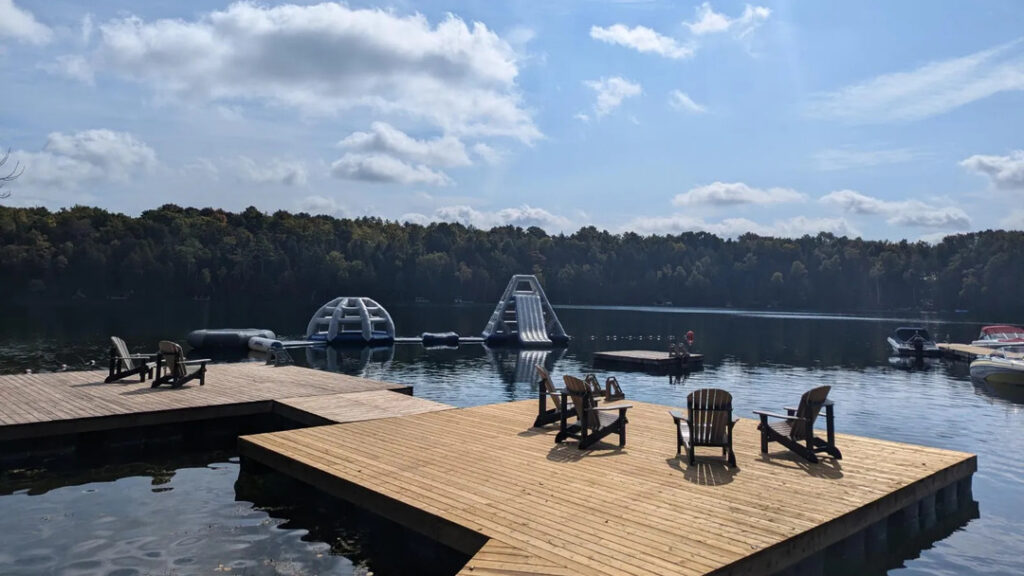
The Lesson Travels Far Beyond Ontario
Bass Lake Ontario fishing matters because it teaches a portable skill: how to reduce a lake before the lake reduces your confidence. Start with scale. Study water clarity. Watch wind. Respect pressure. Treat weeds, docks, shade, and forage as connected clues rather than separate targets.
That lesson applies whether an angler is fishing in Ontario, the Midwest, the South, or a neighborhood lake after work. One bite can be a clue. Two bites in the same type of place can become a direction.
Bass Lake’s value is not only that it gives anglers a place to fish. It gives them a way to think. For anyone trying to improve, Bass Lake Ontario fishing is a reminder that the smartest cast often happens before the lure ever touches the water.
FAQ’s
Yes. Bass Lake Provincial Park lists bass sportfishing as one of its activities, with bass season beginning on the last Saturday of June. Anglers should always check current Ontario fishing rules before planning a trip.
Bass Lake is compact, clear, accessible, and pressured enough to force better decisions. Anglers can practice reading weeds, shoreline cover, boat traffic, wind, and shallow-water clues without needing a massive reservoir.
Start with water clarity, wind direction, weed edges, and human activity. On smaller clear lakes, bass often respond more to quiet approaches and precise positioning than constant lure changes.