

Bass fishing grass lines year round isn’t about memorizing spots—it’s about understanding how vegetation reshapes bass behavior as conditions shift. Anglers who treat grass as static cover miss the bigger picture. The edge you’re fishing in June is not the same structure you’re casting to in October.
That’s why experienced anglers treat grass lines as living structure that evolves. If you’ve already spent time studying broader bass fishing strategies, this is where those ideas sharpen into something far more precise: knowing how different grasses behave, and how bass reposition around them as seasons change.
Why Grass Lines Are More Than Just “Edges”
A grass line isn’t just a border between vegetation and open water. It’s a moving intersection of oxygen, forage, light penetration, and temperature. Those factors rarely stay constant for long.
Hydrilla might create a dense canopy in summer, while coontail stays softer and more scattered. Eelgrass often thrives in clearer systems, influencing how far bass roam before committing to cover. Each plant creates a slightly different ecosystem—and bass respond accordingly.
The real opportunity lies in recognizing subtle shifts in positioning, not just finding grass itself. That’s where most anglers fall behind.
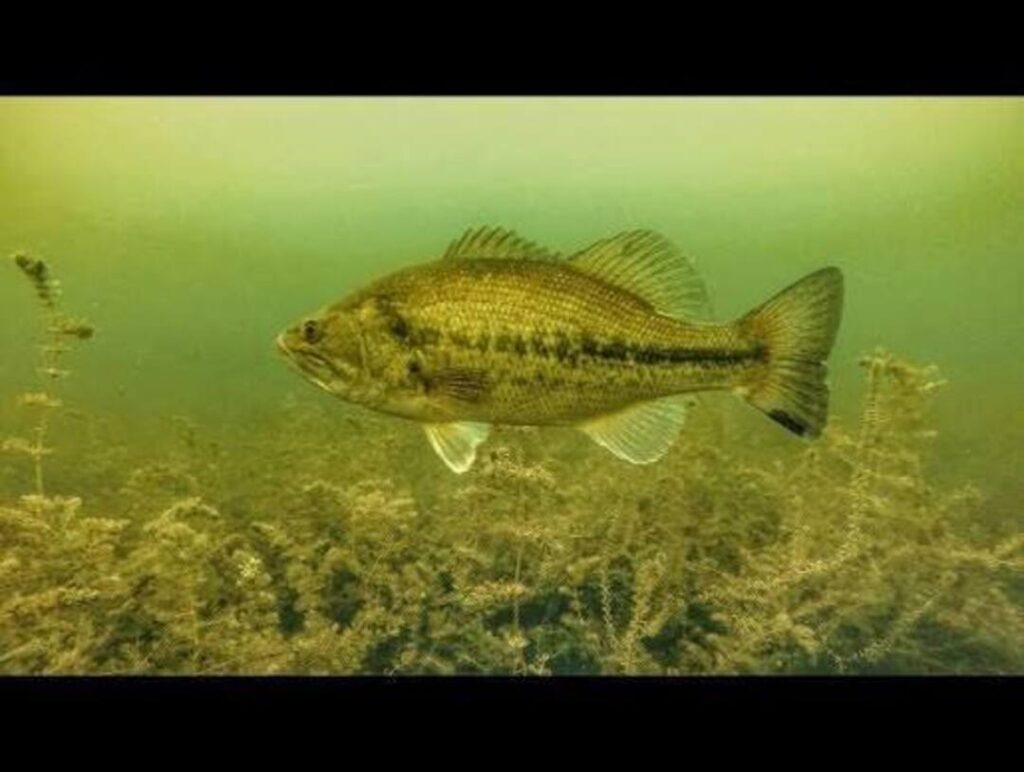
Seasonal Breakdown of Grass Types and Bass Positioning
Understanding how each major grass type behaves across the year gives you a repeatable framework instead of guesswork.
| Grass Type | Spring Behavior | Summer Behavior | Fall Behavior | Winter Behavior |
|---|---|---|---|---|
| Hydrilla | Early growth near warming shallows | Thick mats, strong shade | Edges thin, fish roam | Sparse but still holds fish |
| Milfoil | Expands quickly, attracts spawning fish | Dense but patchy edges | Breaks apart, creates lanes | Dies back significantly |
| Eelgrass | Stable, supports clear-water feeding | Fish cruise edges actively | Gradual thinning | Minimal impact in cold water |
| Coontail | Loose growth, scattered cover | Moderate density, flexible | Holds baitfish as others die | One of the few remaining covers |
This table highlights a critical truth: bass don’t just “relate to grass”—they relate to how that grass is changing.
Hydrilla and Milfoil: The Heavy Hitters
Hydrilla and milfoil dominate many fisheries for a reason—they create predictable bass behavior when you understand their growth cycles.
Hydrilla grows aggressively and forms thick surface mats in warm months. That canopy blocks sunlight, creating cooler water underneath. Bass slide under it during high sun and position near irregularities like points, holes, or transitions to harder bottom.
Milfoil, on the other hand, tends to be more fragmented. It forms edges, pockets, and lanes that bass use as ambush corridors. In spring, milfoil often becomes a staging ground for spawning fish.
There’s a biological reason for this. Submerged aquatic vegetation like hydrilla alters oxygen levels and provides habitat for forage species, which is well documented in aquatic plant ecosystem dynamics.
That means when hydrilla thickens, it’s not just cover—it’s a feeding system.
Eelgrass and Coontail: The Overlooked Producers
Eelgrass and coontail rarely get the same attention, but they quietly produce some of the most consistent bites of the year.
Eelgrass thrives in clearer water and doesn’t form the same dense mats as hydrilla. That changes how bass use it. Instead of burying into shade, bass often cruise edges, especially during low-light periods.
Coontail is even more subtle. It doesn’t root in the same way, which allows it to drift and create scattered patches. In late fall, when other vegetation dies off, coontail often becomes one of the last remaining covers.
That makes it a late-season lifeline for bass, especially in northern or high-pressure fisheries.
If you’re fishing a lake where grass seems “gone,” coontail is often the missing piece.
How to Adjust Your Presentation Through the Year
The biggest mistake anglers make is using the same presentation regardless of season. Grass lines demand constant adjustment.
In spring, bass are aggressive and shallow. Moving baits like chatterbaits or swim jigs excel along emerging grass edges. The key is covering water and finding where fish are staging.
Summer flips the script. Thick vegetation means you need to penetrate it. Punching rigs, frogs, and heavy jigs become essential. Fish aren’t roaming—they’re tucked into specific shade pockets.
Fall introduces movement again. As grass thins, baitfish scatter, and bass follow. This is where reaction baits shine along broken grass edges.
Winter simplifies everything. Remaining grass—often deeper or sparse—becomes a holding area. Slower presentations dominate, and location matters more than lure selection.
The common thread is simple: match your approach to the density and health of the grass, not just the calendar.
The Signals Most Anglers Ignore
Grass lines don’t change randomly. They respond to water clarity, temperature swings, and even fishing pressure.
Clear water allows deeper grass growth, which shifts bass positioning offshore. Stained water limits growth depth, compressing fish into tighter zones.
Weather plays a role too. A sudden cold front can push bass tighter into grass edges or bury them deeper inside. Meanwhile, prolonged heat can increase oxygen demand, pulling fish toward thicker vegetation.
There’s also a growing awareness around how aquatic vegetation influences entire ecosystems, including fish populations, as outlined in coastal vegetation habitat insights.
These are the signals that separate casual success from consistent results.
Where the Real Opportunity Is Right Now
Fishing pressure continues to increase on most public waters. That makes obvious grass lines less reliable.
The opportunity lies in identifying transition zones within the grass itself—places where one type blends into another, or where depth changes subtly along the edge.
A hydrilla line that transitions into milfoil isn’t just a change in vegetation—it’s a shift in how bass position, feed, and react to lures.
Most anglers fish the edge. Few study the differences along it.
That’s the gap worth exploiting.
The Takeaway That Changes Everything
Mastering bass fishing grass lines year round isn’t about finding more grass—it’s about understanding how bass interpret it as conditions evolve. Each season reshapes vegetation, and each type of grass tells a slightly different story.
The anglers who stay consistent aren’t guessing. They’re reading those changes, adjusting faster, and targeting the subtle differences others overlook.
That’s where the next bite usually comes from—and why this approach keeps working long after the obvious patterns fade.