

The Banks Shaw Lake Eufaula win mattered because it looked like the kind of tournament early summer keeps producing: unstable weather, a narrow shad-spawn window, and a field forced to decide when to leave the obvious bite. Shaw did not just win with 52 pounds, 10 ounces on June 7; he won by surviving the morning chaos and trusting the more stable fish after the lake changed.
That is the part anglers should pay attention to. Early June can tempt everyone into chasing the first active bite they see, but tournament fishing often belongs to the angler who knows when the first pattern has given enough. For readers following competitive fishing through our tournament coverage, Lake Eufaula offered a clean lesson in timing, restraint, and confidence under pressure.
Banks Shaw Lake Eufaula Win Was Really About Timing
Shaw’s victory in MLF’s Tackle Warehouse Pro Circuit Stop 5 at Oklahoma’s Lake Eufaula came with a $100,000 payday and a move into the Angler of the Year lead. The official MLF recap had him finishing first with 52-10, followed by Dylan Nutt at 51-12, Cal Lane at 51-7, and Drew Boggs at 50-10.
That margin says plenty. A one-bite tournament is not always decided by the biggest swing. Sometimes it is decided by the angler who makes the cleanest transition.
Shaw started the final day in third place, with Lane and Boggs still in front of him. But the conditions had shifted hard. Heavy rain had turned shallow creek water into a moving problem for some of the leaders, while Shaw had positioned himself around main-lake fish that were less exposed to the worst of the change.
The winning decision was not simply where Shaw fished; it was when he trusted each part of the pattern.
In early-summer events, timing is rarely clean. The shad-spawn bite can make a lake feel generous at daylight, then vanish fast enough to make an angler question everything. Shaw used that morning window to settle the day, then leaned on deeper brush when the shallow bite no longer offered the same ceiling.
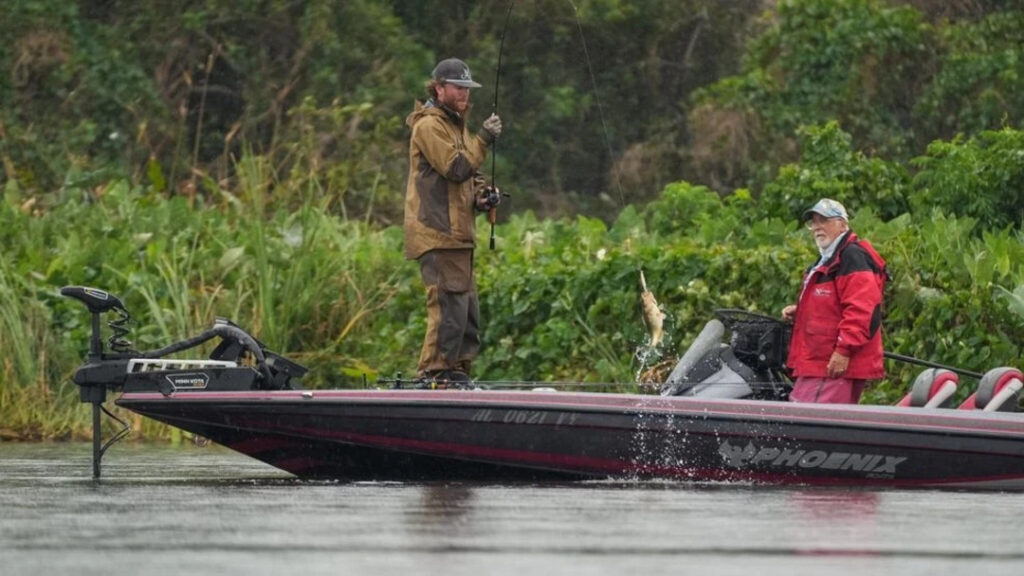
The Shad Spawn Gave Him A Floor, Not The Whole Tournament
The shad spawn is one of the most seductive patterns in bass fishing because it can make the lake look easier than it is. Bass group around bait, reaction baits get crushed, and the best stretches can produce fast weight.
But a shad spawn also has a clock on it.
Once the light changes or the bait movement slows, the same area can become ordinary. That is where Shaw’s approach becomes more useful than a basic winner recap. He used the morning shad activity as a foundation, not a trap.
His best early work came around isolated rock tied to gizzard shad activity. That detail matters because it was not random bank fishing. Isolated rock gave the shad something to use and gave bass a predictable ambush point. In a pressured tournament, that kind of specificity separates a pattern from a hope.
Shaw’s morning bait choice also fit the job: a vibrating jig profile that could cover water, match bait movement, and trigger fish before the window closed. The lure was not magic. The timing and target selection gave it meaning.
A less disciplined angler might have stayed with that pattern too long. Shaw did not. He took what the morning offered and then shifted toward fish that were more likely to hold as the day stretched.
Rain Turned Shallow Water Into A Liability
The weather made Lake Eufaula more than a fishing contest. It became a decision test.
MLF’s event coverage noted a wet Day 2, with downpours affecting anglers across the field and conditions changing as the tournament tightened. The problem was not just rain falling from the sky. It was what that rain did to water level, current, clarity, and fish positioning.
For anglers leaning hard on shallow creek fish, the sudden influx created risk. Rising water and stronger flow can move bait, reposition bass, muddy key stretches, and make a productive area feel unfamiliar by the next morning. Sometimes the best shallow pattern becomes a trap because the fish are still technically there, but the clean bite is gone.
Shaw avoided the worst version of that problem by leaning more on main-lake stability. That does not mean shallow water was wrong for everyone. It means the final-day conditions punished anglers who needed shallow areas to behave the same way they had before the rain.
| Tournament Factor | How It Changed The Event | Why It Mattered |
|---|---|---|
| Heavy rain | Made shallow creek water less predictable | Forced anglers to judge stability, not just history |
| Morning shad spawn | Created an early bite window | Helped Shaw build confidence before shifting |
| Isolated rock | Concentrated bait and bass | Turned a broad pattern into precise targets |
| Deeper brush | Held more stable fish later | Gave Shaw a stronger afternoon path |
| Final-day pressure | Tightened decision-making | Rewarded anglers willing to leave fading water |
That is the real lesson from the final day. Bad weather does not always kill the bite. It often exposes which pattern has staying power.
Deeper Brush Became The More Stable Bet
Once Shaw moved away from the morning shad program, deeper brush became the separator. He fished around Longtown and near the dam, using his sonar window later in the day and staying around brush that held bass in deeper water.
That adjustment was not passive. It required slowing down, reading what was actually around the brush, and not dismissing piles that looked crowded with other species. Bass do not always present themselves cleanly. Sometimes the winning fish are buried in a mess of life, structure, and uncertainty.
Stable fish are not always easy fish. They are simply more dependable once the shallow pattern starts losing shape.
Shaw’s deeper approach also fit the way early-summer bass transition. After the spawn and during shad activity, some fish stay shallow, especially when bait and cover line up. Others begin sliding toward offshore structure, brush, breaks, and areas where they can feed without living at the mercy of every weather swing.
That is why this win feels so useful for regular anglers. The lake does not have to be Lake Eufaula for the lesson to apply. When a morning reaction bite fades, the next question should be simple: are the fish still shallow but tighter, or have the better ones shifted to stable structure?
Shaw found the version that mattered most.
The Angler Of The Year Race Adds Real Pressure
Shaw’s win did more than add another trophy. It pushed him into the 7 Brew Angler of the Year lead with the regular season still pointing toward Lake Champlain in July. The MLF Pro Circuit results now carry more weight because the next event is not just another stop; it is a pressure test with a season title attached.
That changes the way this victory should be viewed. Shaw did not just beat one lake. He strengthened a season-long argument that his decision-making travels.
There is a difference between catching them once and repeatedly finding the right lane under changing formats, fisheries, and pressure. Eufaula rewarded an angler who could fish fast in the morning, slow down when needed, trust deeper fish, and make a significant run during a limited window.
Those are not separate skills. They are the modern tournament package.
Forward-facing sonar gets attention because it changes how anglers see fish, and it clearly played into the afternoon brush program. But the more complete takeaway is broader than electronics. Shaw still had to choose when to use that tool, which water deserved the time, and when a gamble was worth the run.
Eufaula’s Message Should Travel Beyond One Trophy
The next signal to watch is whether more early-summer tournaments follow the same split pattern: morning bait activity first, deeper structure second, and weather acting as the pressure point between them.
That pattern is especially dangerous because it gives anglers just enough success early to make the wrong decision later. A quick shad-spawn limit can feel like proof that the day is solved. It might only be proof that the first chapter is over.
For weekend anglers, the adjustment is practical. Start with the active bite, but do not marry it. Watch the light. Watch the wind. Watch what rain does to creeks, current, and water color. If the fish stop showing themselves, either tighten to the best shallow cover or slide toward deeper structure that can hold fish through the heat of the day.
The Banks Shaw Lake Eufaula win is a reminder that early summer bass fishing is not won by one pattern alone. It is won by connecting patterns before the lake forces the move. Shaw took the shad-spawn window seriously, refused to let it define the whole day, and found the deeper brush fish that made the difference. For anglers trying to read June bass, that is the takeaway worth carrying to the next launch.