

Lake Norman did not simply produce another close Bassmaster Open finish; it exposed how narrow the margin has become between good fishing and winning fishing in the postspawn window. Lake Norman postspawn tactics matter right now because Cole Huskins’ 47-pound, 14-ounce victory, decided by only 2 ounces over Kyoya Fujita, turned a familiar May pattern into a sharper lesson about timing, judgment, and adaptation. The result showed how bass use docks, low water, wake baits, swimbaits, and deep-water access when the spawn starts to unwind.
Why Lake Norman Postspawn Tactics Matter Now
The postspawn is one of the most misunderstood periods in tournament bass fishing because it rarely looks clean on the water. Anglers want a simple label: spawning, postspawn, topwater, docks, offshore, herring, brush, shade. Lake Norman refused to give them one. The field had to deal with fish in multiple stages, a lake level that sat noticeably low, and bass that could reward both reaction presentations and slower precision work.
That is why Huskins’ win deserves a closer read. The headline is the margin, but the story is the process behind it. He did not win because one bait dominated every situation or because one stretch of bank stayed perfect for three days. He won because he stayed stubborn about the right kind of water while remaining flexible enough to change the presentation when the moment demanded it.
For anyone trying to understand current tournament bass fishing, Lake Norman postspawn tactics now offer a useful snapshot of the sport’s direction. The best anglers are no longer choosing between shallow instinct and technical precision. They are blending both, often within the same hour, and that blend creates the real edge.
The Tournament Was Close Enough To Reward One Decision
A 2-ounce win is almost uncomfortable to analyze because it strips away the comfort of broad explanations. A single keeper, a single cull, a single missed opportunity, or one cast made again instead of abandoned can decide the standings. Huskins’ final-day adjustment matters for that reason. It reminds me that tournament fishing is not only about finding the winning pattern; it is about recognizing when the pattern needs one more angle.
His winning total of 47-14 beat Fujita’s 47-12, with Carson Orellana, Cody Abbott, and Cody Hoyle also finishing close enough to make the event feel like a real shootout rather than a runaway. That kind of leaderboard says something about Lake Norman. The fishery gave multiple anglers enough quality to contend, but it did not give anyone much room for sloppy execution.
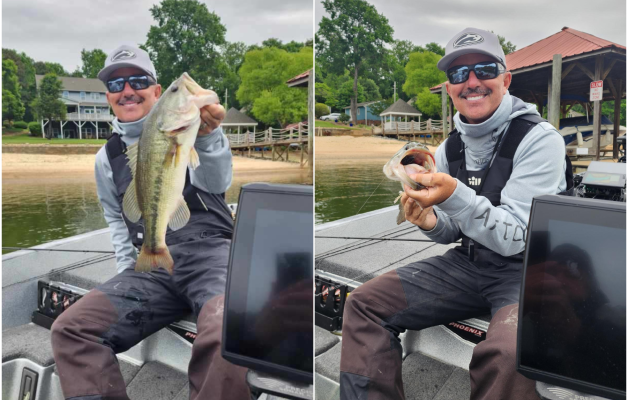
The decisive fish came on a Neko-rigged worm around a main-lake dock pier near deeper water, after Huskins had already worked that place repeatedly. A dock was not merely a dock. It was a postspawn resting station, a place where a recovering or transitioning bass could hold close to depth, shade, and cover. The cast mattered, but the location mattered more.
Postspawn Is A Transition, Not A Pattern
The word postspawn can make anglers think the fish have all left the bank and started acting the same. They have not. Some bass are still tied to spawning areas. Some are recovering. Some are feeding around bluegill, shad, or herring activity. Some are using docks as shade. Some are sliding toward deeper structure. On a lake like Norman, that creates complexity rather than certainty.
This is why I hesitate when anglers ask for “the” postspawn bait. The better question is where the fish are in the transition and what they can be made to do. A wake bait may call up fish that are willing to track near the surface. A swimbait may imitate the right forage profile and cover water efficiently. A Neko rig may clean up pressured fish that still want an easy meal but will not chase hard.
Postspawn fishing rewards anglers who can read energy levels. Are fish aggressive enough to move? Are they simply suspended around shade? Are they using the deepest end of a dock because the bank has gone stale? Those questions create better decisions than simply rotating through popular baits and hoping the lake confirms a plan.
Low Water Changed The Conversation
Lake Norman’s low water was more than a background condition. Low water can reposition bass, reduce shallow cover, make some docks less productive, expose normally useful targets, and concentrate fish around the remaining structure with adequate depth. It can also make the obvious places even more obvious, which increases pressure and forces anglers to refine their presentations.
For postspawn fish, water level changes can be especially important because the fish are already moving. When shallow cover loses appeal, the best available targets may be those that offer a clean path between spawning areas and deeper water. That makes main-lake docks, pier ends, brush, and shade lines more than visual targets. They become transition routes.
The low-water factor also explains why precision mattered. When water pulls away from the bank, an angler may need to fish the highest-percentage part of a target rather than the whole target. The front of a dock, the deep end of a pier, the shade line closest to depth, or a single corner with better access can carry more value than a long stretch of unproductive shoreline.
What The Bait Choices Really Signal
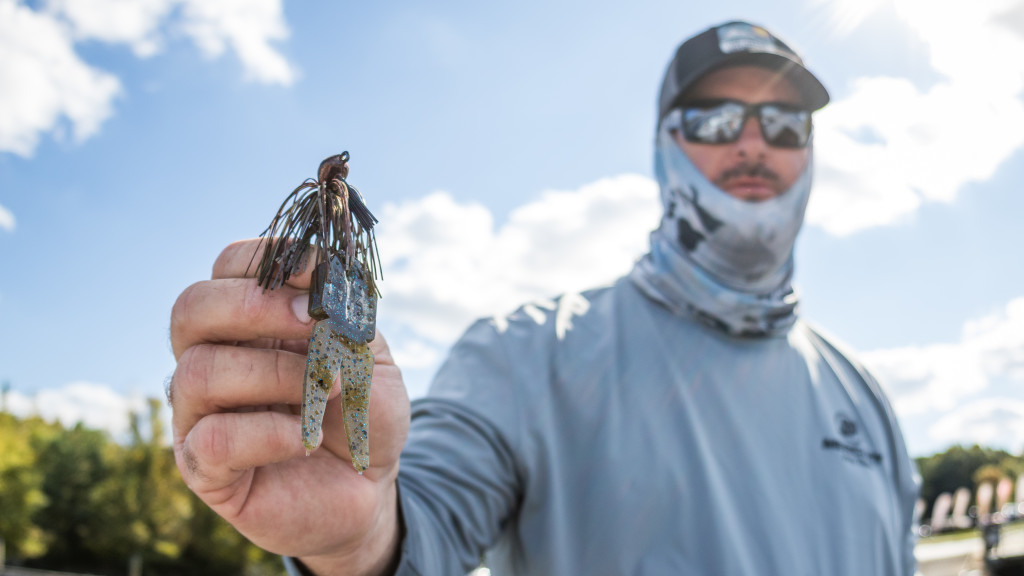
The tournament’s Lake Norman lure breakdown showed a wide mix of wake baits, swimbaits, Neko rigs, buzzbaits, glide-style profiles, jigs, and soft plastics. That range is not random. It reflects a postspawn fishery where the bass were catchable in several moods, but not always in the same mood for every angler or every hour.
Huskins’ reported mix of a wake bait and a Neko-rigged worm is a particularly telling combination. One presentation creates presence and draws reaction. The other slows down and asks a fish to commit in a more controlled strike zone. That pairing makes sense on a lake where docks, low water, and deep access all intersect.
Fujita’s swimbait approach also fits the event. Swimbaits are powerful in a postspawn setting because they can match baitfish movement, cover water, and tempt better-than-average bass without looking as intrusive as some louder reaction baits. A swimbait gives the angler mobility while still presenting something that can catch quality.
The takeaway is not that every angler should copy a bait list. The better lesson is range. May bass fishing often demands a surface tool, a moving tool, and a cleanup tool. Leave one of those categories out, and the day can become needlessly narrow.
| Tournament Signal | What It Suggested | Practical Takeaway |
|---|---|---|
| Low water | Less shallow cover and more selective dock targets | Focus on the best depth-related sections |
| Postspawn movement | Bass using recovery routes and feeding windows | Fish between spawning pockets and deeper water |
| Wake bait success | Fish willing to track near the surface | Use visual baits around shade and calm lanes |
| Neko rig success | Pressured fish still catchable with precision | Revisit high-percentage targets slowly |
| Swimbait strength | Forage-driven fish responding to natural profiles | Cover water without abandoning quality bites |
Docks Were Not Just Cover
Docks are easy to oversimplify. Anglers see shade, posts, cables, walkways, ladders, floats, brush, and skipping lanes. But in a postspawn event, the best docks usually have something more specific. They sit near a route fish already want to travel.
That is what made the dock-pier detail from Huskins’ win stand out. A main-lake dock near deep water is not the same as a shallow dock tucked far inside a pocket. The first can intercept bass leaving or resting after spawning. The second may still hold fish, but it can become less reliable as the transition advances. The difference is not cosmetic. It is positioning.
Good dock fishing also requires a willingness to return. A dock that looks right may not produce at 9 a.m. and may still be the right dock at 1 p.m. Light angle, boat traffic, wind, forage movement, and fish recovery all change the target’s potential. Huskins catching a key fish after revisiting water speaks to discipline, not luck alone.
That lesson matters for weekend anglers as much as tournament anglers. Many people fish a dock once, make three casts, and leave. Better anglers ask whether the dock is structurally right, then decide whether timing or presentation caused the blank. That distinction creates better clarity.
The Wake Bait And Neko Rig Contrast
The contrast between a wake bait and a Neko rig captures the entire personality of this event. A wake bait is visible, confident, and often emotional. It lets an angler fish with pace and draw fish from a distance. A Neko rig is quieter, more surgical, and often better after a target has already seen pressure.
That contrast is useful because postspawn bass can be moody. A fish may not want to chase all the way to the boat, but it may rise enough to show itself. Another fish may ignore a moving bait yet eat a subtle worm presented correctly. The angler who notices these clues has more control over the day than the angler who commits blindly.
There is also a mental component. Reaction baits keep an angler engaged, but finesse baits can test patience. The challenge is knowing when patience is strategic rather than passive. In Huskins’ case, slowing down with the right bait in the right place turned into the difference between nearly winning and winning. That is a hard-earned lesson.
What This Says About Modern Opens Fishing
The Bassmaster Opens have become brutally efficient proving grounds. They attract local specialists, future Elite Series contenders, established names, and young anglers with refined technical skills. Winning now requires more than local knowledge or one favorite pattern. It requires versatility under pressure.
Lake Norman highlighted that reality. Huskins had proximity and history, but history alone did not win. Fujita’s near miss showed how dangerous elite-level presentation skills can be. The rest of the top finishers showed there were multiple viable lanes, but only one angler converted the event’s most important late opportunity.
That is why this tournament should be read as more than a regional Carolinas story. It reflects where competitive bass fishing is heading: tighter margins, more diverse bait packages, sharper decision-making, and less tolerance for wasted time. The Opens reward anglers who combine confidence with fast correction.
The Risk Of Reading Too Much Into One Win
Every tournament creates temptation. Anglers want to buy the winning baits, copy the dock pattern, and assume their home lake will respond the same way. That can help, but only if the lesson is translated carefully. Lake Norman is a specific fishery with its own water level, forage, docks, and timing.
The risk is mistaking a result for a universal formula. A wake bait may be excellent where fish are willing to track shallow. It may be less effective in dirty water, heavy wind, or a lake where postspawn fish move differently. A Neko rig may shine around pressured docks, but it can become inefficient if the fish are scattered and aggressive. The tool must fit the water.
The smarter reading is contextual. Ask what each bait solved. Ask why the winning dock mattered. Ask how low water changed the target list. Ask why main-lake access beat more isolated shallow cover at the decisive moment. Those questions turn a tournament recap into analysis.
Career Momentum Is Part Of The Story
A Bassmaster Open win is not only about one week. It changes how an angler is discussed, watched, and measured. It can influence confidence, sponsor attention, points positioning, and future opportunities. That pressure cuts both ways. A win creates momentum, but it also raises expectations.
The Lake Norman event already carried that kind of weight before the first cast, and the result made it more meaningful. For readers following the larger stakes around the event, a broader look at career momentum and big-bass pressure helps frame why this win mattered beyond the final ounces.
Huskins’ victory also shows why local confidence still matters in national-level competition. Familiarity can help an angler understand which docks are worth revisiting, which areas have the right depth, and when a subtle change might trigger one better fish. But local knowledge becomes dangerous if it hardens into stubbornness. The winning version is selective adaptation.
What Weekend Anglers Can Apply
Tournament stories become more useful when they translate into ordinary fishing decisions. The first practical lesson is to stop treating postspawn as a single pattern. Fish are moving, resting, feeding, and repositioning across small areas. Build a plan that covers multiple moods.
Second, separate docks by function. A dock near deep water, especially on the main lake or close to a transition route, deserves more attention than a dock that merely looks good. The best targets usually combine shade, depth, access, and forage. That mix creates opportunity.
Third, carry contrast. A wake bait, swimbait, and finesse worm do different jobs. One searches, one imitates, one finishes. When a fish follows but will not eat, slow down. When a target feels right but does not produce, return under better timing. When the shallow bite fades, look for nearby depth rather than abandoning the area entirely.
Finally, respect the clock. Postspawn windows can be short. A strong morning bite may collapse, while a dock bite may improve with sun. The angler who watches those changes carefully gains efficiency without needing to run the entire lake.
The Bigger Meaning Of Lake Norman
The reason this event will stay relevant is not only the 2-ounce margin. It is the way the lake forced anglers to solve several problems at once. Low water changed the map. Postspawn movement changed the fish. Docks demanded precision. Swimbaits and wake baits kept bigger bites in play. Finesse finished the job when power alone was not enough.
That combination is exactly what makes modern bass fishing compelling. It is not purely instinctive, and it is not purely technical. The best performance comes from the space between the two. An angler has to feel the lake, but also interrogate it. He has to commit, then adjust. He has to trust a target without becoming trapped by the first presentation.
Lake Norman postspawn tactics matter now because they show how small decisions carry large consequences when bass are between phases and tournament fields are packed with talent. The opportunity for anglers is clear: learn from the pattern without copying it blindly. The risk is equally clear: reduce a complex win to a shopping list and miss the deeper signal. The next time a May lake looks scattered, low, and difficult to define, Lake Norman should remind us that the winning fish may not require a new area at all. It may require one more thoughtful cast, with the right bait, in the right piece of water.