

The surface strike is one of the few moments in fishing that still feels genuinely electric. Right now, as more anglers look for techniques that combine simplicity, precision, and excitement, topwater fishing stands out as both a high-skill tactic and one of the most visually rewarding ways to catch bass.
I keep returning topwater lures because they do more than create drama. They force better decisions about timing, lure selection, and hook discipline, and they reveal just how aggressively bass will attack when conditions line up.
Why Topwater Fishing Stands Out
Topwater fishing holds a special place in bass angling because it puts every part of the strike in plain view. Instead of feeling a subtle tap or watching a line move sideways, I see the fish commit. That directness is part of the appeal, but it also makes topwater a revealing technique. It shows where bass are positioned, how actively they are feeding, and how they respond to movement on the surface.
This style of fishing is especially effective when bass are willing to rise and feed upward. That usually happens when light levels are lower and fish feel comfortable moving shallow. In those moments, a surface bait is not just exciting. It is practical, efficient, and capable of drawing aggressive reactions from fish that might ignore a lure running deeper in the water column.
Topwater fishing matters because it combines visual feedback with genuine fish-catching power.
When Topwater Lures Work Best
The most reliable windows for topwater fishing are early morning and evening. Those low-light periods consistently produce the best action because bass are more likely to cruise shallow water, use shoreline cover, and attack prey near the surface. I have found that these windows are often short, but when they open, they can be incredibly productive.
During the first part of the morning, bass often feed before the sun climbs high enough to push them tighter to cover or slightly deeper water. In the evening, the reverse happens. As light fades and water cools, fish become more active near the surface again. That rhythm is one of the reasons topwater remains such a dependable seasonal and daily pattern.
A few conditions make these feeding windows even stronger:
- Low light at sunrise and sunset
- Calm to lightly rippled water
- Shallow cover such as grass, pads, docks, and shoreline edges
- Active baitfish or bluegill presence near the surface
Many anglers lose confidence in topwater too quickly by throwing it at the wrong time of day. While surface baits can still produce under clouds or around thick cover, their strongest and most consistent performance usually comes during those first and last feeding periods.
Choosing The Right Topwater Lure
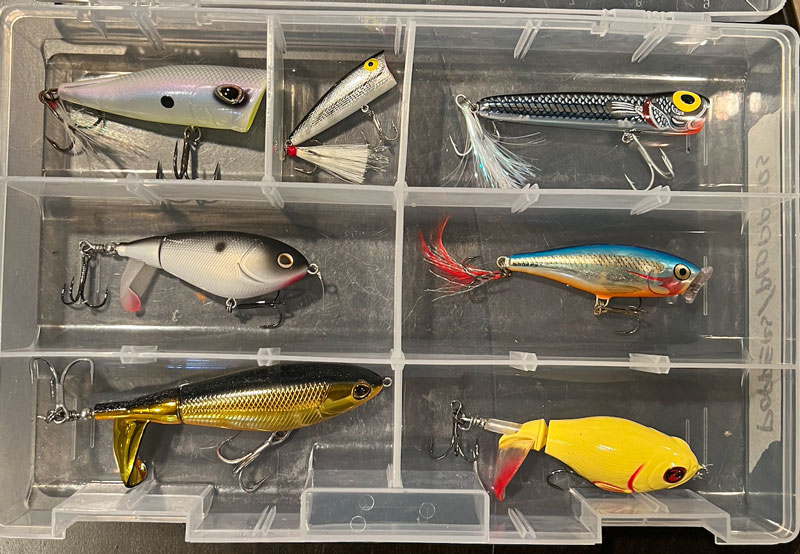
Not every topwater bait is designed to do the same job. Frogs, poppers, and walking baits all create surface commotion, but they target different situations and present different signals to bass.
| Lure Type | Best Use | Ideal Conditions | Main Advantage |
|---|---|---|---|
| Frog | Fishing over heavy cover | Lily pads, grass mats, thick vegetation | Weedless presentation in places other lures cannot go |
| Popper | Slower, precise surface presentation | Calm water, points, docks, pockets | Creates a focused splash-and-pause action |
| Walking Bait | Covering water and locating active fish | Open water, flats, edges, baitfish activity | Side-to-side motion draws strikes from a distance |
Frogs are the best option when the surface is thick with vegetation. I rely on them when I need to pull a bait across grass mats, through lily pads, or over shallow cover where exposed hooks would snag constantly. Frogs invite violent strikes in tight quarters, which is exactly what makes them so effective in heavy cover.
Poppers are more controlled and deliberate. Their value comes from the way they spit water forward and then pause in place. I use them when I want to work slowly around precise targets such as dock corners, rocky points, and calm shoreline pockets. They are especially useful when bass appear interested but not committed to chasing a faster-moving bait.
Walking baits are built for range and movement. Their side-to-side action imitates a baitfish trying to escape, and they are excellent for searching broad areas where active bass may be spread out. When I need to find aggressive fish quickly, a walking bait is often my first choice.
The Hookset Mistake That Costs Fish
The most common mistake in topwater fishing happens after the most exciting part of the cast. A bass explodes on the lure, the angler reacts instantly, and the bait comes flying back with no fish attached. I have seen it countless times because the visual strike creates a powerful urge to set the hook too early.
The better move is to wait a split second before driving the hooks home.
That brief pause gives the bass time to actually take the bait. Surface strikes often look more complete than they are. A fish may slash at the lure, push water around it, or miss on the first attempt before turning back to engulf it. Reacting purely to the splash can pull the bait away before the fish has it.
Here is the sequence I trust most:
- Watch the strike without jerking immediately
- Feel for the weight of the fish
- Set the hook only after the lure is fully taken
That fraction of a second can be the difference between a missed blowup and a solid hookup.
This becomes especially important with frogs, where the strike is often violent but the fish may not have fully compressed the bait yet. In those moments, patience is not hesitation. It is a technique.
Why Topwater Fishing Rewards Precision
Topwater fishing may look straightforward, but it exposes every weakness in an angler’s presentation. The cast has to land where the fish expects prey to appear. The retrieve has to match the lure’s design. The pause has to come at the right moment. Small mistakes are easy to spot because everything happens on the surface.
That is one reason I consider topwater such a useful discipline for serious bass anglers. It sharpens awareness and forces control. A frog worked too fast across a mat loses realism. A popper retrieved without a pause becomes repetitive. A walking bait that never changes cadence can fail to trigger fish that want a brief hesitation before committing.
The best topwater anglers pay close attention to small adjustments, including:
- Retrieve speed
- Cadence and pauses
- Casting angle to cover
- Surface conditions and light levels
These details matter because topwater success often depends on triggering a reaction, not simply placing a lure in the water.
Why This Matters Right Now
Topwater fishing remains one of the most exciting methods in bass angling, but its real value is deeper than the spectacle of a surface blowup. It teaches timing, restraint, and precision while giving anglers a direct way to target active fish during key low-light windows.
That matters right now because bass fishing is often framed as increasingly technical and gear-driven. Topwater cuts through that noise. It rewards sharp observation, smart lure choice, and the discipline to wait just long enough before setting the hook. When the light is low and a bass detonates beneath the bait, the lesson is immediate: the most exciting technique on the water can also be one of the most effective.