

In a sport often measured by weigh-ins, trophies, and television moments, legacy can be harder to define. That is why the Bass Fishing Hall of Fame matters right now: as bass fishing grows more commercial, more global, and more crowded with personalities, the question of who truly shaped the sport has become more urgent, not less.
I see the Hall as more than a ceremonial institution. At this point in the sport’s development, it functions as a cultural ledger, a place where bass fishing decides which stories deserve permanence and which contributions rise above the churn of tournament cycles and industry trends.
A Hall Built From A Simple Idea
The origin story is refreshingly modest. The Bass Fishing Hall of Fame did not begin as a lavish museum concept or a major corporate initiative. It began with a conversation, the kind that happens on a fishing trip when the pace slows enough for big ideas to surface. A small group of anglers and industry figures recognized a glaring omission in American sporting culture: bass fishing, despite its massive participation and outsized commercial footprint, had no dedicated hall of fame to honor its pioneers.
That absence mattered. Bass fishing had already become a major recreational and competitive force, with its own stars, media ecosystem, boat and tackle innovations, and a loyal following that treated the sport as a way of life. Yet it still lacked the kind of institutional recognition that baseball, football, and motorsports had long enjoyed. The founders were not simply trying to create an awards banquet. They were trying to correct what they saw as a cultural imbalance.
I think that ambition helps explain why the Hall’s earliest phase remains so compelling. It was driven by conviction rather than convenience. The people behind it believed bass fishing had matured enough to deserve a formal historical record, and they were willing to build one from scratch.
Why Recognition In Bass Fishing Took So Long
To understand the Hall’s significance, it helps to understand the sport’s identity problem. Bass fishing has long occupied a strange space in American life. It is hugely popular, highly organized, and commercially influential, but it has often been underestimated by those outside the sport. For decades, that disconnect shaped how bass fishing was discussed in mainstream culture. It was either romanticized as simple outdoor recreation or dismissed as niche entertainment, even as it developed a sophisticated tournament structure and an economy that touched manufacturing, media, travel, conservation, and retail.
The Hall emerged as a response to that tension. It was not only about celebrating champions. It was about declaring that bass fishing had a lineage worth preserving. That meant honoring anglers, certainly, but also boat builders, tackle innovators, promoters, broadcasters, conservation advocates, and industry architects whose work gave the sport its modern shape.
That broader mission is one reason the Hall has aged well. It did not reduce greatness to tournament wins alone. It recognized that bass fishing was built by a network of people, some visible and some not, and that the sport’s identity depended on remembering all of them.

The Inaugural Era Set The Tone
When the Hall moved from idea to institution, its early inductees sent a clear message about standards. The first class included foundational figures whose influence reached across competition, promotion, media, and product development. These were not merely popular names. They were people who changed the way bass fishing was organized, televised, marketed, and understood.
That first wave of recognition did something important: it established that the Hall would operate at the level of sport-building significance. The standard was not temporary fame. It was structural impact. The individuals recognized in those first years helped create modern tournament fishing, expanded the national profile of bass angling, introduced innovations in boats and equipment, and made the sport legible to wider audiences.
From a journalistic standpoint, that matters because institutions reveal themselves early. A weak hall of fame becomes a popularity contest. A serious one signals, almost immediately, that it intends to shape memory rather than simply reward celebrity. The Bass Fishing Hall of Fame chose the second path.
The Early Struggle For A Permanent Home
Prestige today can make the Hall feel inevitable, but it was not. In its early years, the organization pursued the ambitious idea of a stand-alone home in Hot Springs, Arkansas, a city already intertwined with bass fishing history. The concept had symbolic force. A dedicated facility would have given the sport a physical landmark, a destination that said bass fishing belonged in the American museum landscape.
But ambition does not always align with economic reality. A feasibility study made clear that the original stand-alone vision would be difficult to sustain in that location. For many organizations, that kind of setback becomes the beginning of decline. It is easy to imagine a smaller institution losing momentum, retreating into banquet culture, and becoming a ceremonial body with limited public relevance.
Instead, the Hall adapted. That pivot was crucial. Rather than clinging to an impractical model, it reimagined how the mission could survive and expand. In hindsight, that period of uncertainty may have strengthened the institution. It forced leaders to think less about real estate and more about purpose. What, exactly, was the Hall preserving? How could it balance recognition, education, and public access? And how could it become more than an annual event?
Those questions pushed the organization toward a more durable future.
From Professional Honor To Broader Cultural Mission
One of the most revealing developments in the Hall’s evolution was the decision to broaden its identity beyond the strictly professional lane. That shift reflected an important truth about the sport itself. Bass fishing is not sustained only by elite competition. It also lives through weekend anglers, conservation work, media storytelling, tackle development, youth participation, and the traditions that pass from one generation to the next.
By widening its lens, the Hall became more faithful to the sport it claimed to represent. It acknowledged that bass fishing is both an industry and a culture. It belongs to tournament circuits and to public lakes. It is televised and local, commercial and personal. The people who define it are not always the ones standing on the winner’s podium.
I view that transition as one of the institution’s smartest moves. It preserved prestige while making the Hall more intellectually honest. Greatness in bass fishing can come from competition, but it can also come from invention, stewardship, education, or the ability to bring the sport into public consciousness. A hall that ignores those forms of influence would misread its own subject.
The Move That Changed Everything
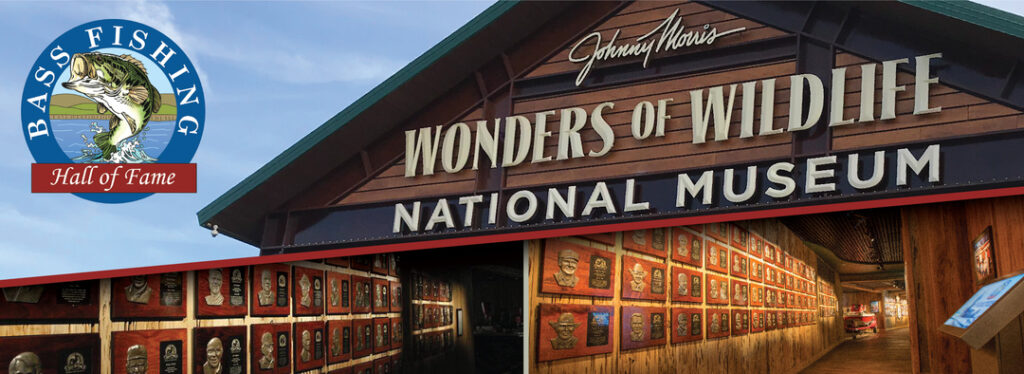
The Hall’s permanent placement inside Johnny Morris’ Wonders of Wildlife National Museum and Aquarium in Springfield, Missouri, marked the turning point from aspiration to lasting presence. This was the breakthrough the institution needed. Instead of existing mainly as an annual honor, the Hall gained a public home within one of the country’s most visible conservation and outdoor heritage destinations.
That changed the scale of the project. Visitors could encounter the history of bass fishing not as an abstract roll call of names but as a curated story told through artifacts, displays, and context. The sport’s legacy became tangible. Old trophies, pioneering equipment, memorabilia from foundational eras, and the visual language of tournament history could all live in one place.
This matters more than it may appear. A sport without an archive becomes vulnerable to amnesia. As formats change and media cycles accelerate, even transformative figures can fade into caricature or disappear into nostalgia. A public-facing hall resists that erosion. It says memory should be built, not merely assumed.
In practical terms, the Springfield home also elevated the Hall’s prestige by placing it within a major national venue tied to the wider outdoor world. That physical legitimacy reinforced the symbolic legitimacy the founders had been chasing from the start.
What Makes The Honor Prestigious
Prestige in any hall of fame depends on selectivity, seriousness, and continuity. The Bass Fishing Hall of Fame has increasingly benefited from all three. Induction is not treated as routine. The process carries the weight of debate, legacy, and comparison across eras. That is exactly what a hall of fame should do. It should force the sport to wrestle with standards.
The prestige also comes from range. This is not an award for one hot decade or a single streak of tournament success. It is recognition of enduring contribution. Some honorees transformed competitive bass fishing through titles and longevity. Others changed the business through engineering, manufacturing, or media. Others still helped preserve the sport’s history or broadened its cultural reach.
That layered view of contribution is what gives the Hall credibility. It understands that a sport is built by ecosystems, not just individuals. The result is an honor that feels expansive without becoming vague.
There is also a subtler reason the award carries weight: it is one of the few places where bass fishing formally interprets itself. In that sense, induction is not only about celebrating a person. It is about making an argument about what the sport values.
Why The Hall Resonates In This Moment
The timing of the Hall’s growing relevance is no accident. Bass fishing is now navigating a more complicated era than the one that produced its earliest legends. The sport is bigger, more professionalized, more branded, and more fragmented across tours, platforms, audiences, and media formats. The old consensus around who matters most is harder to maintain.
At the same time, bass fishing is more historically self-aware than ever. Fans care about lineage. Industry veterans care about preservation. New audiences want context for the names and innovations that built the modern sport. That is why the Hall has fresh urgency. It serves as a stabilizing institution at a time when the sport’s present can feel noisy and overproduced.
I also think the Hall resonates now because legacy has become part of bass fishing’s business model. Brands sell heritage. Tours sell milestones. Media sells nostalgia and comparison. In that environment, a serious institution that distinguishes between marketing mythology and actual contribution becomes more valuable.
That value is visible in the Hall’s recent cycles of induction and special honors. Each new class does more than add names. It reopens the conversation about who built bass fishing and how the sport should remember itself as it enters its next phase.
More Than An Award, A Statement About Identity
The Hall’s most important achievement may be that it has outgrown the narrow idea of a trophy room. It now functions as a statement about bass fishing’s identity. It affirms that the sport has a real history, a real architecture of influence, and a real obligation to preserve both.
That may sound lofty for an institution connected to a recreational and competitive pastime, but it is exactly the right frame. Bass fishing is not a fringe curiosity. It is a durable part of American outdoor culture and a significant economic engine. Its leading figures shaped manufacturing, broadcasting, conservation awareness, and sport promotion in ways that reach far beyond tournament results.
The Hall gives that story form. It provides a mechanism for seriousness. It takes a world that is often described through excitement and spectacle and asks a harder question: what, when stripped of hype, actually lasts?
Why This Matters Right Now
The Bass Fishing Hall of Fame matters right now because bass fishing is at an inflection point between memory and reinvention. The sport is modernizing rapidly, but the more it evolves, the more essential it becomes to preserve the people and ideas that made it possible in the first place.
What began as a humble effort to give bass fishing the recognition it lacked has become one of the sport’s highest honors and one of its most important institutions. In my view, that transformation says as much about bass fishing’s maturity as it does about the Hall itself. A sport that takes its history seriously is a sport that understands its future will be judged by more than who wins next weekend. It will be judged by what it chooses to remember now.