

I’ve tried just about every bass fishing setup out there, but nothing has surprised me more than wacky rig bass fishing. It’s one of those techniques that looks almost too simple to work until you see how effective it actually is.
The first time I used a wacky rig, I remember thinking, “There’s no way this awkward setup will outperform traditional rigs.” But within minutes, I had a strike. Then another. And another.
That’s when it clicked: this isn’t just a beginner-friendly rig it’s a precision tool for triggering bites when nothing else works.
Understanding the Natural Fall Advantage
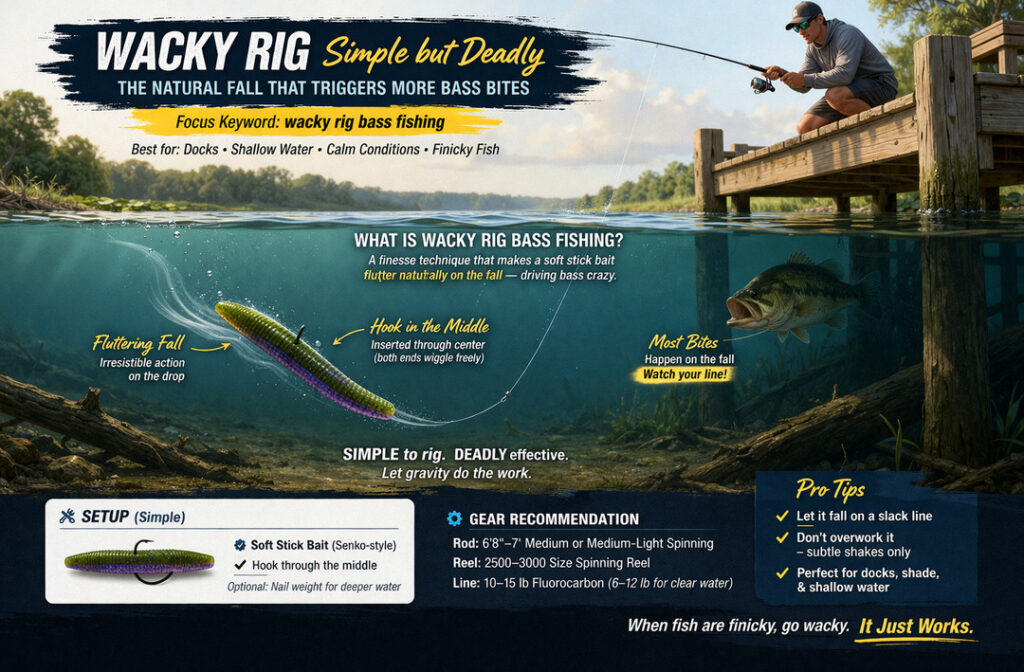
What makes wacky rig bass fishing so powerful is its ability to mimic something incredibly realistic a slow, fluttering, vulnerable bait.
Instead of a straight, controlled descent like a Texas rig, the wacky rig causes the bait to:
- Wiggle on both ends as it falls
- Move unpredictably in the water column
- Stay in the strike zone longer
From my experience, this erratic yet natural motion is what drives bass to strike. It doesn’t look aggressive or forced it looks like an easy meal drifting downward.
And for bass, easy meals are hard to ignore.
The Setup: Simple but Strategic
One of the reasons I keep coming back to wacky rig bass fishing is how easy it is to set up. But don’t mistake simplicity for lack of thought every part of the rig plays a role.
The core setup involves:
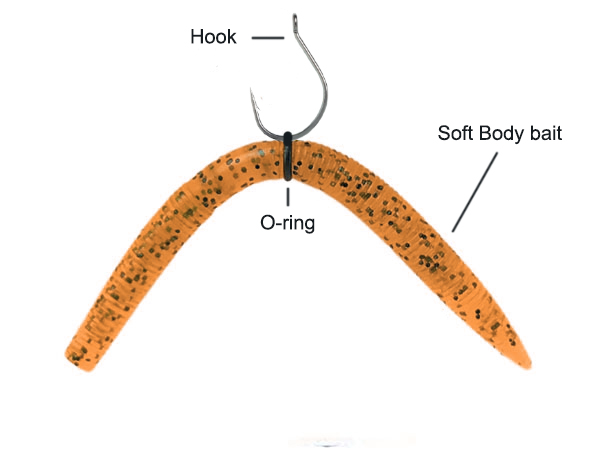
- A soft stick bait (commonly a Senko-style worm)
- A hook placed directly through the middle of the bait
- Optional: a light nail weight for added depth control
That’s it. No complicated components, no excessive adjustments.
What I’ve learned over time is that placement matters. Hooking the bait dead center ensures both ends move freely, creating that signature flutter that makes the rig so effective.
Where This Rig Truly Shines
If there’s one thing I’ve noticed, it’s that wacky rig bass fishing excels in specific environments and when you’re in the right spot, it can feel unstoppable.
I’ve had the most success using it around:
- Docks and shaded structures
- Shallow flats
- Calm, clear water conditions
These are areas where bass tend to be cautious. They’re not chasing fast-moving lures they’re observing, waiting, and reacting only when something looks convincing.
That’s exactly where the wacky rig dominates. It doesn’t force a reaction it invites one.
The Technique: Less Is More
One of the biggest lessons I’ve learned with wacky rig bass fishing is that doing less often leads to more success.
When I cast the rig, I resist the urge to overwork it. Instead, I:
- Let it fall naturally on a slack line
- Watch carefully for any movement or twitch
- Occasionally give it a subtle lift or shake
But most of the time, the magic happens on the drop.
This is something every angler needs to understand: the fall is the presentation. You’re not trying to make the bait do something dramatic you’re letting gravity and design do the work.
And more often than not, that’s when the bite comes.
Reading the Bite: The Subtle Signals
Unlike aggressive strikes you might get with reaction baits, bites on a wacky rig are often subtle and easy to miss.
I’ve learned to pay close attention to:
- Line movement
- Sudden slack
- A slight “tick” or hesitation
There have been countless times when I didn’t feel a thing but saw the line move sideways. That’s your cue.
Set the hook confidently, because chances are, a bass has already committed.
Why It Works on Finicky Fish
In pressured waters, bass become smarter. They’ve seen it all crankbaits, spinnerbaits, jigs. They learn to ignore what doesn’t look natural.
This is where wacky rig bass fishing becomes a game-changer.
Its effectiveness comes from:
- A non-threatening presentation
- A slow, natural descent
- Minimal noise and disturbance
From my perspective, it’s one of the best techniques for targeting bass that are:
- Suspicious
- Inactive
- Highly pressured
It doesn’t challenge the fish it tempts it.
Gear That Maximizes Success
While the rig itself is simple, using the right gear can make a noticeable difference.
I prefer:
- A medium or medium-light spinning rod
- A smooth spinning reel
- Light line (fluorocarbon or braid with leader)
This setup allows for better sensitivity, which is crucial when detecting subtle bites. It also helps maintain the natural fall that makes the rig so effective.
The Science Behind the Technique
The success of wacky rig bass fishing isn’t just anecdotal it aligns with what we understand about fish behavior.
Bass are opportunistic feeders. They respond strongly to:
- Slow-moving prey
- Irregular motion
- Easy feeding opportunities
Organizations like the Bassmaster have long emphasized finesse techniques in pressured conditions, reinforcing the effectiveness of natural presentations. From my experience, the wacky rig checks all these boxes in a way few other setups can.
Simplicity That Delivers Results
When I think about why wacky rig bass fishing works so well, it comes down to one key idea: it doesn’t try too hard.
It’s not flashy. It’s not aggressive. It’s not complicated.
Instead, it relies on subtlety, realism, and timing three elements that consistently trigger bites, especially when other techniques fail.
Over time, I’ve come to see the wacky rig not as a backup plan, but as a primary strategy one that delivers when conditions are tough and fish are hesitant.
If there’s one technique I’d recommend to anyone looking to improve their success on the water, it’s this one. Because sometimes, the simplest approach is also the most effective.