

When tackling trophy fish or venturing into challenging waters, the power and security of your fishing knots take on greater importance. Creating a double line where the fishing line is folded to double its thickness at the knot offers increased strength, better shock absorption, and added durability at critical connection points. This reinforcement is particularly useful when connecting to heavy leaders or rigs, and can mean the difference between a memorable catch and a heartbreaking break-off.
Evaluating Double Line Knots: Methods and Materials
To determine which double line knots hold up best under pressure, a recent survey inspired by Sport Fishing magazine challenged experienced anglers to tie their most reliable knots on both braided (PowerPro) and monofilament (Berkley) lines. Each participant was instructed to tie three examples of their chosen knot using both line types.
The knots were then subjected to rigorous testing with professional-grade equipment, specifically the International Game Fish Association’s Instron 5543 tensile tester. This machine provided consistent, average breaking strengths for each tested knot, offering a clear comparison to the raw strength of the lines themselves.
- PowerPro braid: Averaged a straight pull breaking strength of 43.1 pounds.
- Berkley mono: Averaged a dry breaking strength of 44.1 pounds.
A knot that could match the line’s pound-test rating without failing below it would be considered ‘100 percent’ efficient.
The Top Performer: The Bimini Twist Stands Out
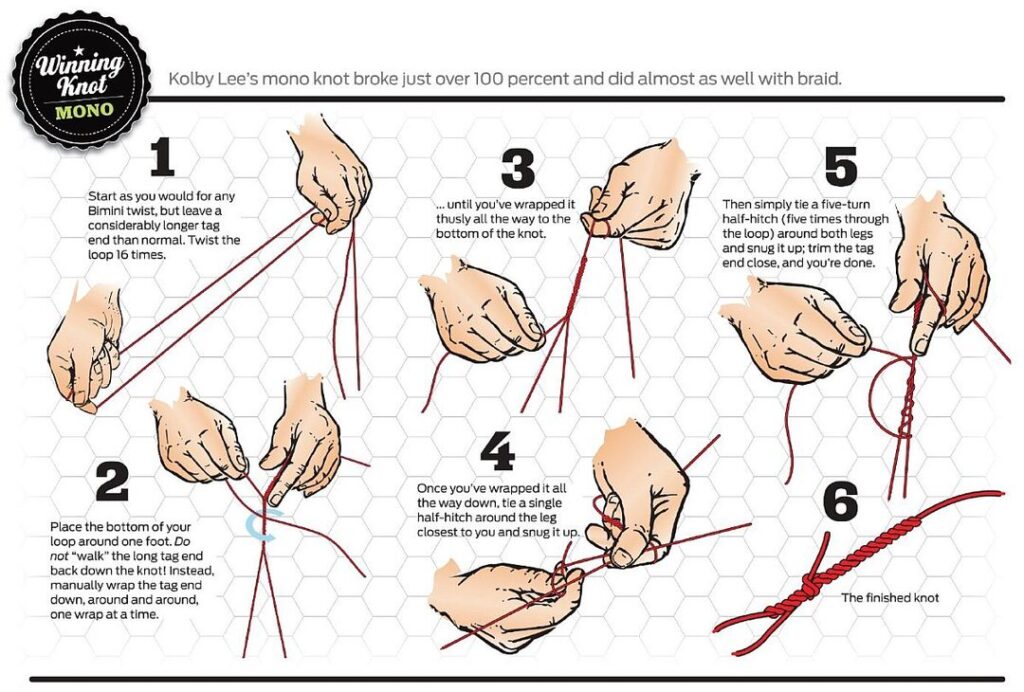
Among all the knots tested for doubling lines, the Bimini Twist has consistently excelled for both braids and mono. This knot is celebrated for its ability to maintain a very high percentage of the line’s original strength when tied correctly, often coming closest to that desired 100 percent mark, especially when compared to other options.
The Bimini Twist excels thanks to its smooth profile, excellent shock resistance, and the fact it distributes tension evenly through dozens of wraps, reducing the risk of a single area failing under load.
High-Strength Alternatives to the Bimini Twist
While the Bimini Twist stole the show, other knots were also put to the test:
- Homer Rhode Loop: Known for its ease and reliability, especially in mono.
- Spider Hitch: Faster to tie and popular among offshore anglers.
- Australian Plait: Praised for its neatness and strength, although it can be a bit more technical to master.
Step-by-Step: Tying the Bimini Twist Double Line Knot
Here’s how you can tie the classic Bimini Twist—one of the most respected double line knots in angling:
1. Create a Loop
- Take your main line and double it back on itself, forming a long loop.
2. Start the Twists
- Hold both strands together. Begin twisting the loop by rotating it over itself at least 20–25 times for mono or up to 50 times for braid.
3. Form the Base
- While maintaining tension on the tag end and standing end, pull them apart slowly. This causes the twists to coil back over themselves, forming a tight spring.
4. Secure the Knot
- Keep tension and guide the twists to stack up neatly. Lock the structure by wrapping the loose end around both sides of the double line several times, then pass the tag through the loop and tighten.
5. Finish and Test
- Trim any excess, moisten the knot, and give it a strong, steady pull to ensure everything cinches tight and smooth.
Pro Tips for Tying Strong Double Line Knots
- Use the right number of turns: Braids typically require more twists than mono for maximum grip and security.
- Moisten before tightening: Reduces friction that can weaken the line.
- Practice regularly: Consistency and smoothness come with repetition.
- Test knots under controlled tension: Use a digital scale or pull firmly to check security before fishing.
Surprising Outcomes and Practical Takeaways
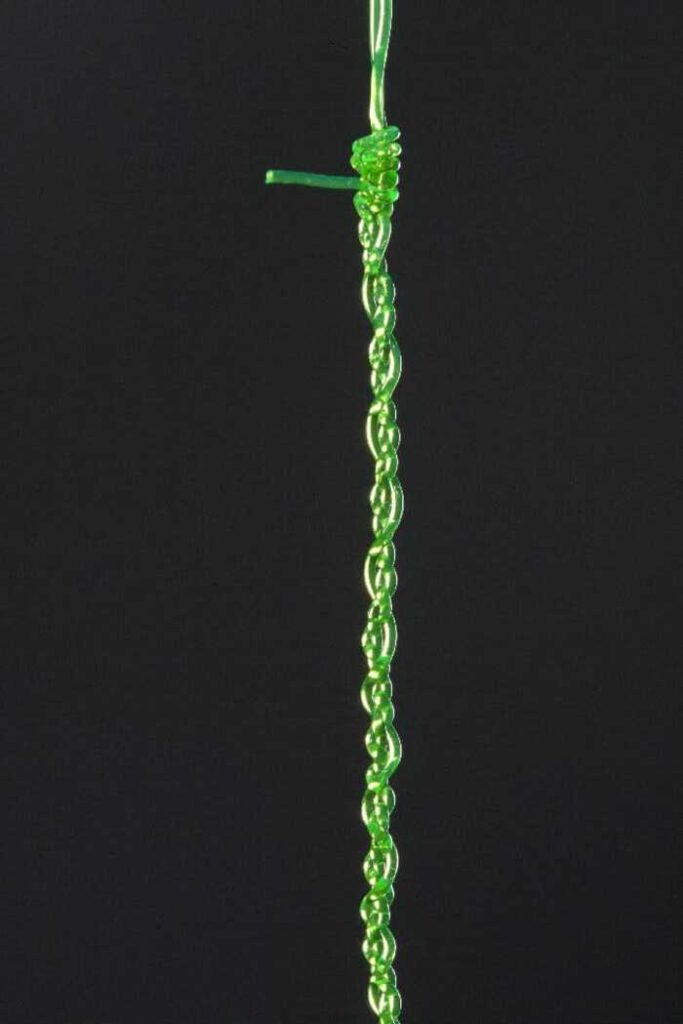
Not every knot managed to reach or even approach the raw breaking strength of its line. Wetting mono before knotting, precision in wrapping, and careful tightening were all factors that impacted final strength. In dry lab tests, the Bimini Twist time and again outperformed rivals, making it a go-to for anglers looking for peak performance without unnecessary complications.
Final Thoughts: Choosing the Right Double Line Knot
Securing your double line with a proven, high-strength knot is key to maximizing your setup’s reliability. The Bimini Twist remains a leader for both braid and mono lines, but practicing and mastering a few alternatives like the Spider Hitch or Australian Plait may give you valuable flexibility.
Above all, practice is essential well-tied knots make sure your fishing adventures end with stories of triumph, not tackle failure. By mastering the high-strength double line knot, you equip yourself for every big bite that comes your way.