

CPR Tournaments Maryland organizers and anglers had a sharper compliance question after the November 2, 2026 public comment deadline passed: how should catch-photo-release events prepare if Maryland’s proposed black bass tournament permit expansion moves forward? I read this less as a paperwork story and more as an event-design story. A permit system changes how directors schedule waters, how anglers document fish, how sponsors judge event quality, and how clubs show that competition can support local fisheries rather than simply draw pressure from them.
CPR Tournaments Maryland Permit Strategy
What The Proposed Rule Would Change
The proposal summarized for the Maryland General Assembly’s AELR review would modify COMAR 08.02.01.11 so that a non-possession tournament using catch-weigh-release or catch-photo-release formats would need a black bass tournament permit if the event is held exclusively in Maryland or spans up to two adjoining jurisdictions, such as Virginia or Potomac River Fisheries Commission waters, according to the official regulatory synopsis. The same synopsis describes the existing permit trigger as narrower: at least 10 boats, a specific physical weigh-in or entry location, and a reward or incentive for black bass.
For a club director, the practical lesson is simple: design the event as if documentation will be reviewed. That means written rules, a clear boundary map, a defined tournament window, and a scoring process that can be explained to a first-time entrant without a phone call to the director at safe light. If the proposal becomes final, directors who already keep those records will be in a better position than clubs that rely on informal text threads and after-the-fact judgment calls.
Why The Comment Deadline Matters After It Passed
Because the public comment period had closed by November 5, 2026, the useful work for anglers shifted from persuasion to preparation. That does not mean every detail is settled. It means local clubs should preserve the comments they submitted, keep their board minutes, and document any operating changes they make in response to the proposal. If a rule affects small weeknight trails, kayak groups, or multi-jurisdiction Potomac events, the strongest future discussion will come from records, not memory.
For organizers who want a deeper Maryland-specific companion piece, the site’s prior Maryland black bass tournament input breakdown is the natural place to pair with this event-planning checklist.
Permit Changes Shift The Organizer’s Job
From Weigh-In Control To Data Control
Traditional weigh-in events put control at the ramp or stage. Catch-photo-release events move that control to the submission system. The tournament director is no longer only asking whether anglers followed a check-in time. The director is asking whether each fish image shows the full fish, the measuring board, the identifier, the mouth position, and the tail position clearly enough for consistent scoring.
That is where permit readiness and competitive fairness meet. A clean photo standard protects the angler who catches a legal fish under pressure. It also protects the director when another competitor challenges a measurement. In my own event work, the best disputes are the ones prevented by a rule sheet that tells anglers what will be accepted before they ever launch.
Small Clubs Need Repeatable Systems
The proposed permit expansion would matter most to events that may not have treated a photo-release derby like a regulated tournament before. A small club does not need a corporate-level operations manual, but it does need repeatable steps. The same identifier format should be used by every entrant. The same measurement rounding rule should apply to every fish. The same protest window should apply after results are posted.
A network note: For those interested in related topics, World Football Idol serves a different audience in the same publishing group, but our focus remains on fishing tournament operations because the local details are specific to Maryland waters, bass handling, and event permits.
Photo Scoring Rewards Clean Systems
CPR Tournaments Maryland Photo Standards
For CPR Tournaments Maryland anglers, photo quality is not a side task. It is part of the competition. A fish that is caught quickly and photographed poorly can become a scoring loss. A fish handled too long for a better image can become a fish-care problem. The better system is to practice the photo routine before the first event day.
Anglers should test their board, phone angle, identifier placement, and app workflow at home or during practice. Directors should define whether the mouth must be closed, whether pinched tails are allowed, how ties are broken, and what happens when glare hides the mark. None of those choices should be left for judgment after a high-ranking fish appears on the leaderboard.
- Use one approved measuring board list or a clear standard for acceptable boards.
- Require the identifier to be visible in every scoring photo.
- State the measurement rule for the tail and mouth before competition begins.
- Set a deadline for submissions and a separate deadline for protests.
- Keep a written record of denied fish and the reason for each denial.
Angler Preparation Is A Scoring Edge
The best photo-release competitors build muscle memory. They know where the board sits in the kayak or boat. They know how to wet the board, control the fish safely, and take a readable image without turning one catch into a five-minute scramble. That preparation does not require secret tackle. It requires a repeatable process under ordinary local conditions: wind, rain, low light, glare, and a fish that will not sit still.
Fish Care Is A Competitive Advantage
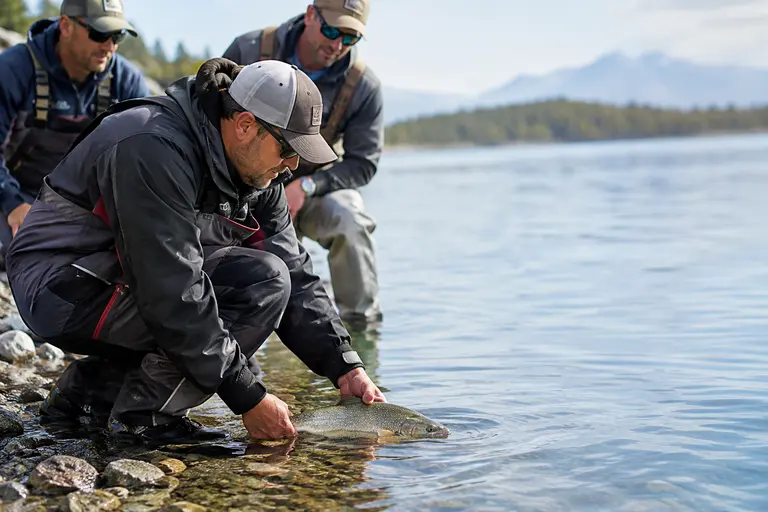
What The Mortality Research Supports
Maryland’s DNR response to possession-limit comments gives the permit debate a biological reason. For tournaments involving live wells or fish kept all day before weigh-in, the agency cited total post-release mortality in late June or July events ranging from 19% to 25%, with some conditions near 34%; the same document also reported that, in a Potomac River tournament analysis under the 12-inch season, 70% of dead fish collected were 15 inches or larger, according to the DNR response document.
That evidence does not prove every CPR event is harmless. It does support a narrower point: removing all-day live-well holding addresses a known stress point. A photo-release format still needs good handling. Warm water, long air exposure, dry surfaces, and repeated repositioning for photos can work against the conservation benefit the format is meant to provide.
Handling Discipline Belongs In The Rules
Directors should write fish-care expectations into the event rules rather than treat them as etiquette. Anglers should be told to prepare their camera before lifting the fish, wet the measuring surface, keep the fish low over the board, and return the fish promptly after the photo. If a tournament wants credibility with agencies, landings, sponsors, and community partners, fish care cannot be a speech at the captain’s meeting only.
| Event Area | Risk If Ignored | Practical Fix |
|---|---|---|
| Permit Scope | Event may be run under the wrong assumption | Check jurisdiction, species, format, and boat count before posting rules |
| Photo Rules | Good catches may be denied or challenged | Publish examples and use consistent measurement standards |
| Fish Handling | Photo-release benefits may be reduced | Require fast, prepared measurement and release routines |
| Records | Directors cannot answer agency or angler questions | Keep submissions, results, protests, and rule versions filed |
Sponsors Should Value Compliance And Data
Local Support Needs Trust
For tackle shops, marinas, restaurants, conservation groups, and small businesses, a photo-release tournament is not only a logo placement opportunity. It is a public-facing event tied to local water. Sponsors should ask directors how fish are scored, how results are verified, and whether the event’s format reduces avoidable stress on bass. That is not red tape. It is brand protection for the sponsor and credibility for the club.
The sponsorship pitch should be specific. Instead of promising vague exposure, directors can show a clean rule sheet, a fish-care policy, a reporting plan, and a past example of final standings. That gives a sponsor something concrete to support: a fair competition that respects the resource and gives local anglers a reason to gather around Maryland waters.
Data Can Strengthen The Community Case
If a club records event dates, waters, participation, submitted fish, rejected photos, and weather notes, it builds a useful archive. The data does not need to claim more than it can prove. It can still help directors compare event formats, spot recurring rule problems, and explain to community partners why photo-release competition deserves a place beside traditional weigh-in tournaments.
CPR Tournaments Maryland Practices Worth Keeping
A Practical Standard For The Next Rule Cycle
The strongest response now is not panic. It is better event craft. Clubs should treat the proposed permit framework as a reason to tighten the parts of competition that already decide outcomes: clear eligibility, clean photos, fair scoring, quick release, and records that stand up after the trophies are handed out.
CPR Tournaments Maryland events can give anglers a competitive format that fits conservation goals, but only if directors and competitors do the daily work. A good permit file, a clear rule sheet, and a fast release routine will not catch the winning fish. They will make sure the winning fish counts, the resource is respected, and the local community can keep supporting tournaments with confidence.